
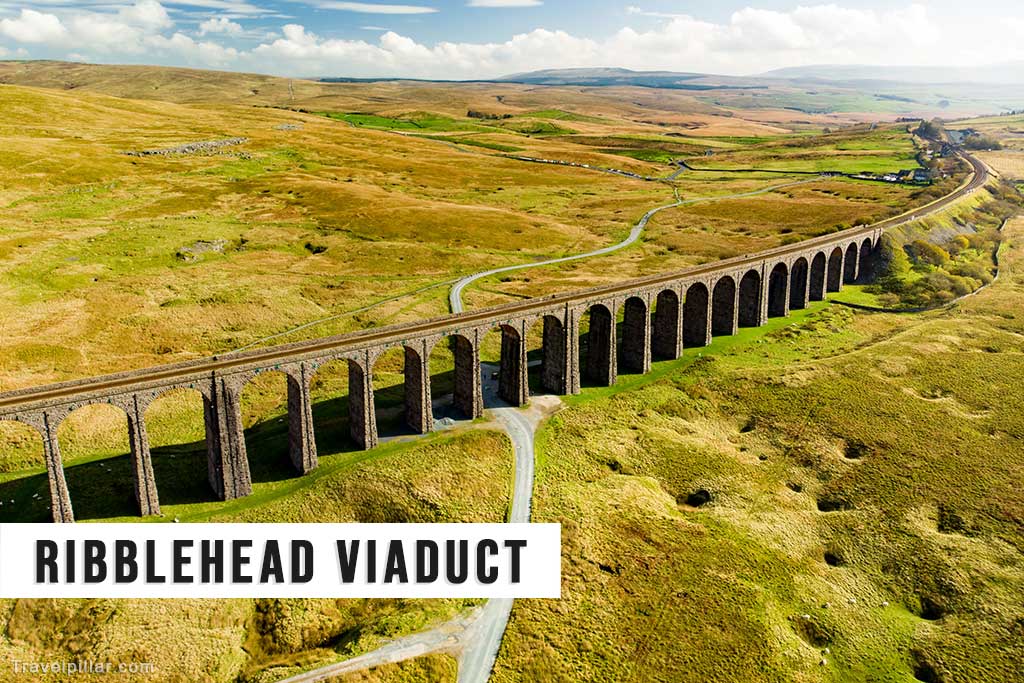
Ribblehead Viaduct is a striking and iconic railway viaduct located in the Yorkshire Dales National Park in Northern England. This remarkable structure is celebrated for its architectural and engineering significance and is a testament to the railway heritage of the region.
Built between 1870 and 1874 as part of the Settle-Carlisle Railway, Ribblehead Viaduct was a remarkable engineering achievement of its time. The viaduct consists of 24 arches and spans the Batty Moss valley, carrying the railway line across rugged terrain and the River Ribble. The arches rise to a height of approximately 32 meters (105 feet) above the valley floor, making it an impressive sight against the surrounding hills and moors.
The construction of Ribblehead Viaduct was no small feat, involving the labor of hundreds of workers who faced challenging working conditions, adverse weather, and the isolation of the site. The viaduct is a symbol of the dedication and skill of those who built it, as well as the grandeur of Victorian-era railway engineering.
The viaduct is now a Grade II* listed structure, and it remains in active use, with passenger and freight trains passing over it regularly. The viaduct also holds a special place in the hearts of railway enthusiasts, who come to admire the architecture and take in the breathtaking landscapes of the Yorkshire Dales.
Ribblehead Viaduct is a popular location for photographers, hikers, and tourists, who can access the viaduct via a public footpath. The viaduct’s grandeur against the backdrop of the Dales’ rolling hills and vast skies creates a captivating scene and offers a glimpse into the history of rail travel in the region.
The viaduct’s enduring significance and architectural charm make it a cherished and admired attraction within the Yorkshire Dales National Park.
Google map 4.8/5 (Ribblehead Viaduct)
Google map (Ribblehead Viaduct Car Park)