
Philosophy is one of humanity’s oldest and most influential fields of study. For more than 2,500 years, philosophers have explored some of life’s biggest questions: What is truth? What makes a good life? How should society be governed? What can we really know? Their ideas have shaped politics, science, religion, ethics and education, influencing civilisations across the world.
From the academies of ancient Greece and the teachings of China to the universities of medieval Europe and the thinkers of the Enlightenment, philosophy has continually challenged people to question accepted beliefs and think critically about the world around them. Many philosophical ideas that first emerged centuries ago continue to influence modern debates about justice, democracy, human rights, science and personal responsibility.
Understanding the great philosophers provides valuable insight into the development of human civilisation. Whether studying ancient Greece, Imperial China, the Renaissance or the modern world, their writings help explain how many of today’s political systems, scientific methods and moral values evolved.
Ancient Philosophy
Laozi
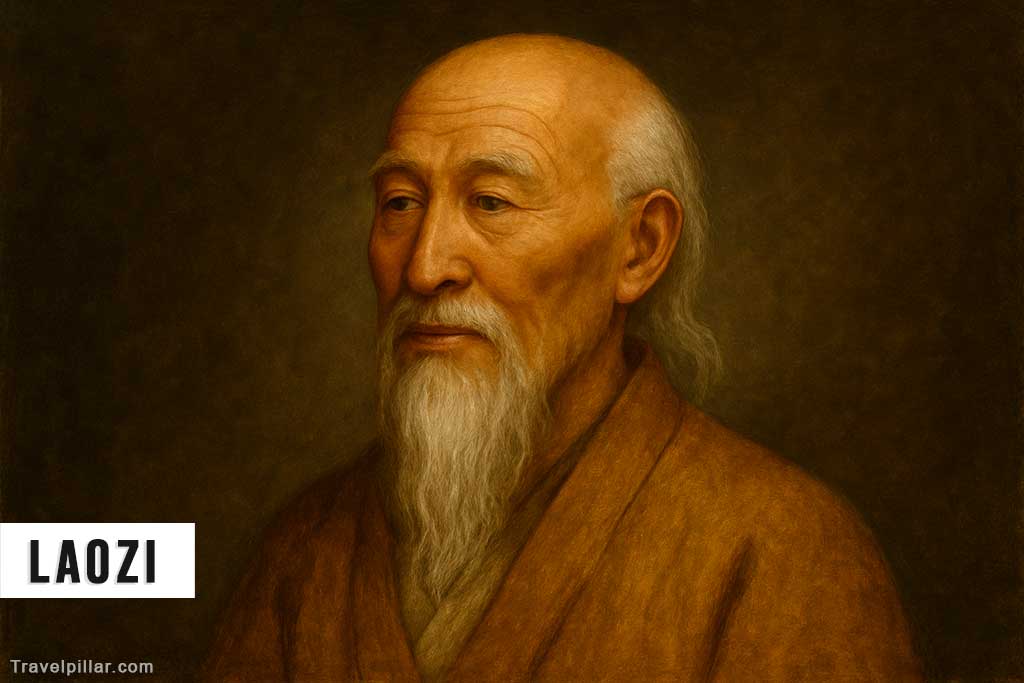
Laozi, also known as Lao Tzu, is traditionally regarded as the founder of Daoism (Taoism), one of China’s most influential philosophical traditions. Although little is known with certainty about his life, he is believed to have lived during the 6th century BC and is credited with writing the Dao De Jing (Tao Te Ching). His philosophy emphasises harmony with nature, simplicity, humility and the principle of wu wei, often translated as “non-action” or effortless action. Laozi’s teachings have profoundly influenced Chinese philosophy, religion and culture for more than two thousand years.
Confucius

Confucius (551–479 BC) was one of the most influential philosophers in Chinese history. His teachings focused on morality, education, family relationships and good government, arguing that a stable society depends upon virtuous leaders and respectful relationships between individuals. His ideas were later compiled in the Analects and became the foundation of Confucianism, which shaped Chinese government, education and social values for over two millennia. His influence also spread throughout Korea, Japan and Vietnam, making him one of history’s most important ethical thinkers.
Socrates
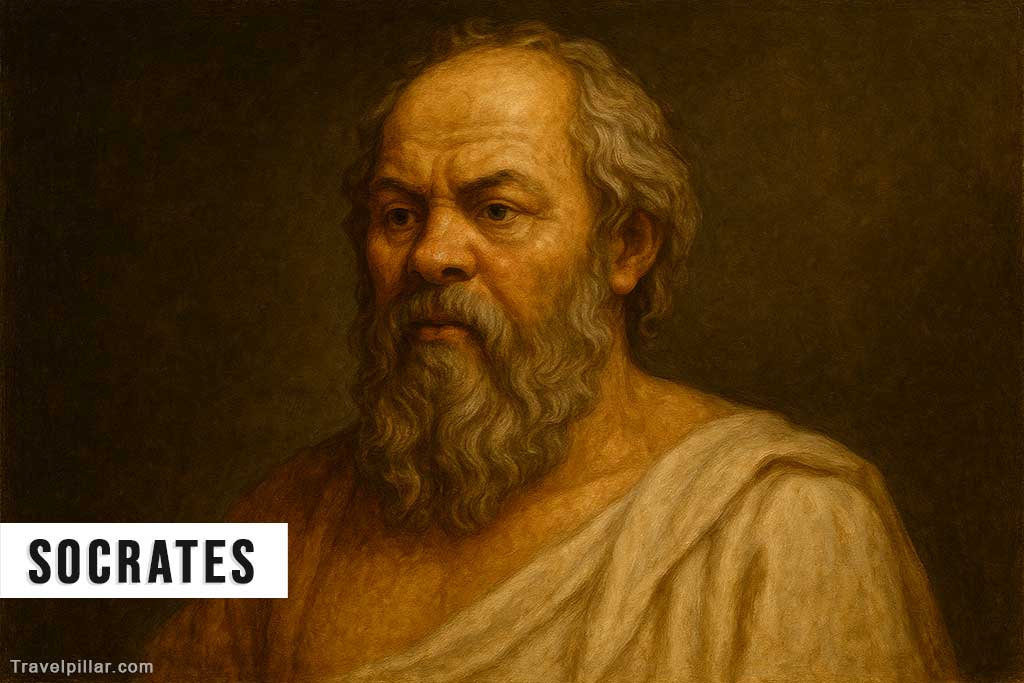
Socrates (469–399 BC) is widely regarded as the founder of Western philosophy. Rather than writing books, he taught by asking carefully structured questions that encouraged people to examine their own beliefs, a technique now known as the Socratic Method. He believed that wisdom begins by recognising one’s own ignorance and that the pursuit of virtue was essential to a meaningful life. Accused of corrupting the youth of Athens and introducing new gods, Socrates was sentenced to death by drinking hemlock. His ideas survive through the writings of his student Plato.
Democritus

Democritus (c.460–370 BC) was an ancient Greek philosopher best known for developing one of the earliest theories of atomic physics. He proposed that everything in the universe is made up of tiny, indivisible particles called atoms moving through empty space. Although his ideas could not be scientifically proven at the time, they anticipated aspects of modern atomic theory by more than two thousand years. Democritus also believed that happiness could be achieved through moderation, knowledge and inner tranquillity rather than material wealth.
Plato

Plato (427–347 BC) was a student of Socrates and one of the greatest philosophers of the ancient world. Following the execution of his teacher, he founded the Academy in Athens, widely regarded as the first institution of higher learning in the Western world. His writings, presented as dialogues, explored ethics, politics, knowledge and the nature of reality. In The Republic, Plato described his vision of the ideal state, while his Theory of Forms argued that the physical world is only an imperfect reflection of a higher, unchanging reality. His ideas have shaped philosophy for more than two thousand years.
Aristotle

Aristotle (384–322 BC) studied under Plato before becoming tutor to Alexander the Great. His extraordinary range of interests included philosophy, biology, physics, politics, ethics, logic and literature, making him one of history’s greatest polymaths. Unlike Plato, Aristotle emphasised careful observation of the natural world and systematic reasoning. His works laid the foundations of formal logic and influenced scientific thought for centuries. His concept of eudaimonia, often translated as “human flourishing”, remains one of the most influential ideas in moral philosophy.
Zeno of Citium

Zeno of Citium (c.334–262 BC) founded Stoicism, one of the most enduring schools of philosophy. Teaching in Athens, he argued that happiness comes not from wealth or pleasure but from living a virtuous life in harmony with nature. Stoicism encourages self-discipline, resilience and the acceptance of events beyond our control while focusing our efforts on our own thoughts and actions. The philosophy later became highly influential throughout the Roman Empire and continues to enjoy renewed popularity through modern discussions of mindfulness, resilience and personal development.
Epicurus

Epicurus (341–270 BC) founded the school of philosophy known as Epicureanism. Although often misunderstood as promoting luxury and indulgence, Epicurus taught that true happiness comes from simple pleasures, close friendships and freedom from unnecessary fear and anxiety. He believed that understanding the natural world helped free people from superstition and the fear of death. His philosophy encouraged moderation, rational thought and inner peace, making Epicureanism one of the most influential ethical systems of the ancient world.
Classical and Early Christian Philosophy
Plotinus
Plotinus (c.204–270 AD) was a Greek philosopher and the founder of Neoplatonism, one of the most influential philosophical movements of late antiquity. Building on the ideas of Plato, he taught that all reality originates from a single, perfect source known as “the One.” Human fulfilment, he believed, came through intellectual and spiritual contemplation, allowing the soul to return to its divine origin. His writings, collected in the Enneads, profoundly influenced Christian, Jewish and Islamic philosophy and helped bridge the ancient and medieval worlds.
Saint Augustine of Hippo

Saint Augustine (354–430 AD) was one of the greatest Christian philosophers and theologians. Born in North Africa, he spent much of his early life searching for meaning before converting to Christianity, an experience he famously described in his autobiographical work Confessions. His writings explored topics such as free will, the nature of evil, time and the relationship between faith and reason. His masterpiece, The City of God, became one of the defining works of Christian philosophy, and his ideas continue to influence theology and philosophy today.
Boethius
Boethius (c.477–524 AD) was a Roman philosopher, statesman and scholar who helped preserve the philosophical traditions of ancient Greece during the final years of the Western Roman Empire. While imprisoned awaiting execution, he wrote The Consolation of Philosophy, a dialogue examining fortune, happiness, free will and the search for wisdom in times of adversity. The book became one of the most widely read works of the Middle Ages, ensuring that classical philosophy remained influential long after the fall of Rome.
Medieval Philosophy
Saint Thomas Aquinas

Saint Thomas Aquinas (1225–1274) was an Italian Dominican friar whose work transformed medieval philosophy and theology. He sought to reconcile Christian doctrine with the philosophy of Aristotle, arguing that faith and reason complement rather than contradict one another. His monumental work, Summa Theologica, remains one of the most important texts in Catholic theology. Aquinas’s ideas laid the foundations of Thomism and continue to influence philosophy, ethics and religious thought around the world.
Dante

Although best known as one of Italy’s greatest poets, Dante Alighieri (1265–1321) was also an important moral philosopher and political thinker. His masterpiece, The Divine Comedy, explores profound philosophical questions about justice, free will, virtue and humanity’s relationship with God. Drawing together classical philosophy and Christian theology, Dante created one of the most influential literary and philosophical works ever written, inspiring readers for more than seven centuries.
Nikolaus von Kues
Nikolaus von Kues (1401–1464), also known as Nicholas of Cusa, was a German philosopher, theologian and mathematician whose ideas helped bridge the medieval and Renaissance worlds. His most famous work, On Learned Ignorance, argued that human knowledge is always limited and that ultimate truth can never be fully understood through reason alone. His original thinking on mathematics, cosmology and theology anticipated many ideas that later became central to Renaissance philosophy and early scientific thought.
The Enlightenment
Thomas Hobbes

Thomas Hobbes (1588–1679) was an English philosopher best known for his influential work Leviathan. Writing during the English Civil War, he argued that without government human life would descend into chaos and conflict. Hobbes believed people willingly surrender certain freedoms to a powerful sovereign in exchange for peace, security and social order. His theory of the social contract became one of the cornerstones of modern political philosophy.
René Descartes

René Descartes (1596–1650) is often regarded as the father of modern philosophy. Seeking certainty in knowledge, he developed a method of systematic doubt, questioning everything that could possibly be doubted. This led to his famous conclusion, Cogito, ergo sum (“I think, therefore I am“), which became the foundation of his philosophy. Descartes’ work influenced philosophy, mathematics and science, helping to shape the modern scientific method.
Blaise Pascal

Blaise Pascal (1623–1662) was a remarkable French mathematician, physicist and philosopher whose interests ranged from probability theory to religious belief. In his unfinished work Pensées, he examined the relationship between faith and reason, while his famous “Pascal’s Wager” argued that believing in God could be viewed as the most rational choice when faced with uncertainty. His contributions continue to influence philosophy, mathematics and theology.
Baruch Spinoza

Baruch Spinoza (1632–1677) was a Dutch philosopher whose ideas challenged many traditional religious beliefs. In his masterpiece Ethics, he argued that God and nature are inseparable aspects of the same reality, presenting a radically different understanding of the universe. His emphasis on reason, tolerance and freedom of thought made him one of the most influential philosophers of the Enlightenment and an important figure in the development of modern secular philosophy.
John Locke

John Locke (1632–1704) was an English philosopher whose ideas shaped modern democracy and liberal political thought. He argued that all people possess natural rights, including life, liberty and property, and that governments exist only with the consent of the governed. In An Essay Concerning Human Understanding, Locke proposed that the human mind begins as a “blank slate”, with knowledge acquired through experience. His philosophy profoundly influenced the American Declaration of Independence and many modern democratic constitutions.
Gottfried Wilhelm Leibniz

Gottfried Wilhelm Leibniz (1646–1716) was a German philosopher, mathematician and scientist whose work spanned numerous disciplines. He independently developed calculus alongside Isaac Newton and proposed that reality consists of simple spiritual entities called monads. Leibniz believed that God had created “the best of all possible worlds”, an idea that later became famous through both admiration and satire. His contributions to mathematics, logic and philosophy remain highly influential today.
George Berkeley

George Berkeley (1685–1753) was an Irish philosopher and Anglican bishop best known for developing the theory of subjective idealism. He argued that physical objects exist only because they are perceived, expressing this idea in the phrase esse est percipi (“to be is to be perceived”). Berkeley rejected the existence of material substance independent of the mind, believing that reality is ultimately sustained by God. His ideas challenged traditional assumptions about perception and continue to influence discussions in philosophy of mind and metaphysics.
Voltaire

Voltaire (1694–1778), born François-Marie Arouet, was one of the leading figures of the French Enlightenment. A writer, historian and philosopher, he championed freedom of speech, religious tolerance and the separation of church and state. Through works such as Candide and his many essays and letters, Voltaire criticised intolerance, superstition and abuses of political power. His wit and willingness to challenge authority made him one of the most influential voices of the Enlightenment and an enduring symbol of intellectual freedom.
David Hume

David Hume (1711–1776) was a Scottish philosopher, historian and economist whose work transformed modern philosophy. A leading figure of the Scottish Enlightenment, he argued that human knowledge is based primarily on experience rather than reason alone. His scepticism led him to question ideas about causation, religion and the certainty of knowledge. Hume’s works, including A Treatise of Human Nature and An Enquiry Concerning Human Understanding, continue to influence philosophy, psychology and the social sciences.
Jean-Jacques Rousseau

Jean-Jacques Rousseau (1712–1778) was a Genevan philosopher, writer and political thinker whose ideas helped shape the modern world. In The Social Contract, he argued that legitimate government should be based on the will of the people rather than inherited privilege or absolute monarchy. His educational work, Émile, promoted a more natural approach to childhood learning. Rousseau’s writings inspired political reformers and played an important role in the intellectual climate that led to the French Revolution.
Immanuel Kant

Immanuel Kant (1724–1804) is widely regarded as one of the greatest philosophers in history. Seeking to reconcile rationalism and empiricism, he transformed philosophy through works such as Critique of Pure Reason. In ethics, Kant developed the concept of the categorical imperative, arguing that moral actions should be guided by universal principles rather than personal interests or consequences. His ideas reshaped philosophy and continue to influence ethics, political theory and the philosophy of knowledge.
Johann Wolfgang von Goethe

Johann Wolfgang von Goethe (1749–1832) is best remembered as Germany’s greatest writer, but he was also an important philosopher, scientist and statesman. His literary masterpiece Faust explores profound questions about ambition, morality and the search for meaning, while his scientific studies examined subjects including botany and colour theory. Goethe believed that science, art and philosophy should work together to deepen humanity’s understanding of both nature and the human experience.
Mary Wollstonecraft

Mary Wollstonecraft (1759–1797) was an English philosopher and one of the earliest advocates of women’s rights. In A Vindication of the Rights of Woman, she argued that women deserved the same educational opportunities as men and that inequality resulted from social conditions rather than natural ability. Her writings laid the foundations of modern feminist philosophy and continue to influence debates on education, equality and human rights.
Modern Philosophy
Georg Wilhelm Friedrich Hegel

Georg Wilhelm Friedrich Hegel (1770–1831) was a German philosopher whose work transformed modern philosophy and political thought. In his influential book Phenomenology of Spirit, Hegel explored the development of human consciousness and argued that history progresses through the resolution of opposing ideas, a process often described as dialectical development. He believed that humanity gradually advances towards greater freedom and self-awareness through this historical process. Hegel’s ideas profoundly influenced later thinkers, including Karl Marx, and continue to shape discussions of philosophy, politics and history.
Arthur Schopenhauer
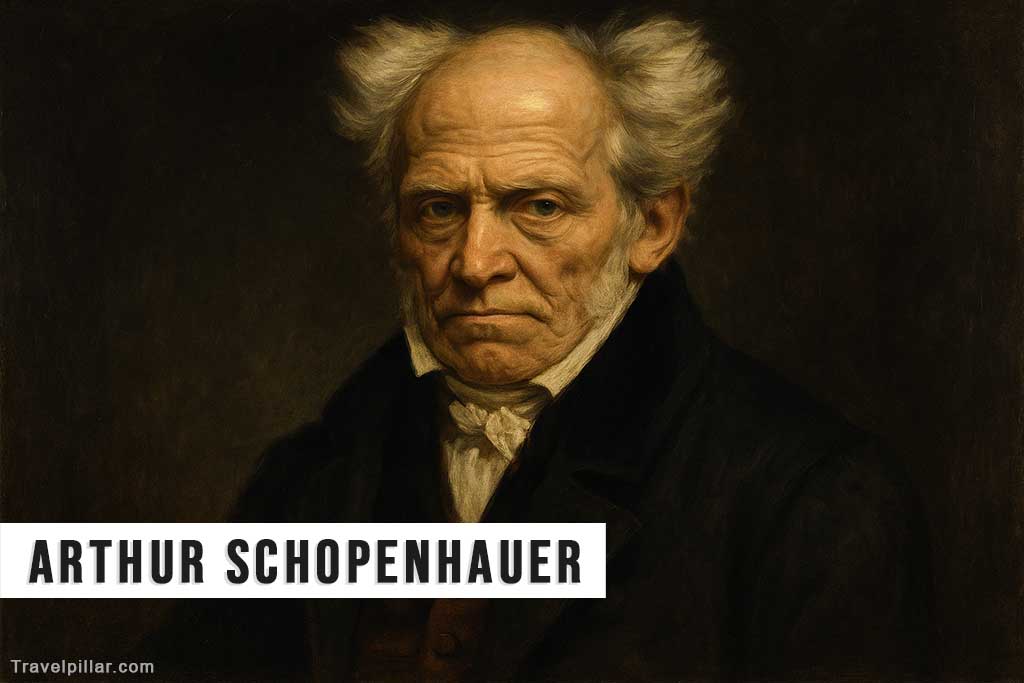
Arthur Schopenhauer (1788–1860) developed one of the most distinctive philosophical systems of the 19th century. In The World as Will and Representation, he argued that human life is driven by an irrational force he called the “will”, leading to continual desire and suffering. He believed that compassion, artistic appreciation and self-discipline offered temporary escape from this cycle. Although pessimistic in outlook, his philosophy influenced later thinkers including Friedrich Nietzsche, Sigmund Freud and Richard Wagner.
John Stuart Mill

John Stuart Mill (1806–1873) was one of Britain’s greatest political philosophers and economists. His book On Liberty became a classic defence of individual freedom, arguing that governments should interfere with personal liberty only to prevent harm to others. Mill also developed utilitarian ethics, believing that actions should be judged according to whether they promote the greatest happiness for the greatest number. His writings continue to influence political philosophy, economics and debates about human rights.
Søren Kierkegaard

Søren Kierkegaard (1813–1855) was a Danish philosopher widely regarded as the founder of existentialism. He explored themes such as individual freedom, faith, anxiety and personal responsibility, arguing that every person must make meaningful choices without complete certainty. His books, including Fear and Trembling and Either/Or, examined the challenges of living an authentic life. Kierkegaard’s ideas later inspired existentialist philosophers such as Jean-Paul Sartre and Albert Camus.
Karl Marx

Karl Marx (1818–1883) was a German philosopher, economist and political theorist whose ideas reshaped world history. Together with Friedrich Engels, he wrote The Communist Manifesto and later published Das Kapital, examining capitalism, class struggle and economic inequality. His theories became the foundation of Marxism and inspired communist movements around the world. Whether admired or criticised, Marx remains one of the most influential political philosophers of the modern era.
Ernst Mach

Ernst Mach (1838–1916) was an Austrian physicist and philosopher whose work helped shape both modern science and philosophy. He believed that scientific theories should be based on direct observation and experience rather than abstract metaphysical ideas. His studies of motion gave rise to the Mach number, used to measure the speed of objects relative to the speed of sound. Mach’s philosophical emphasis on empirical evidence influenced Albert Einstein and the development of logical positivism in the early 20th century.
Friedrich Nietzsche

Friedrich Nietzsche (1844–1900) was a German philosopher renowned for his bold critiques of traditional morality, organised religion and conventional ways of thinking. In his most famous work, Thus Spoke Zarathustra, he introduced influential ideas including the “Übermensch” (Overman), the “will to power” and the “death of God”, challenging readers to question accepted values and create meaning through their own lives. Nietzsche’s writings have profoundly influenced existentialism, psychology, literature and modern philosophy, making him one of the most influential thinkers of the modern era.
Edmund Husserl
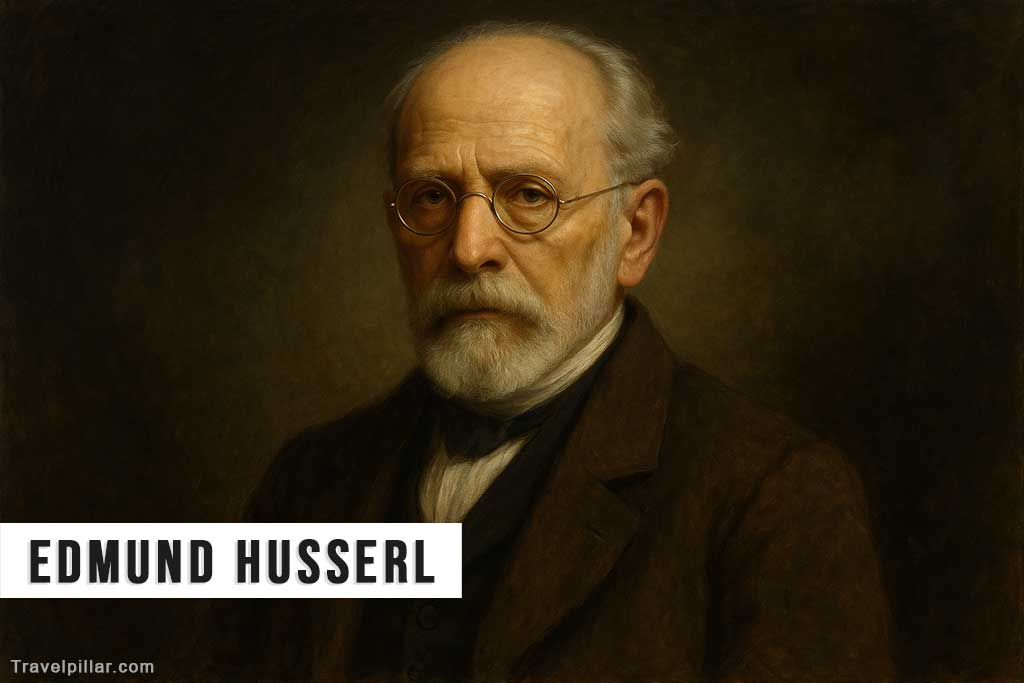
Edmund Husserl (1859–1938) was a German philosopher and the founder of phenomenology, a movement that studies conscious experience from the individual’s perspective. Rather than beginning with scientific theories or assumptions, Husserl argued that philosophy should carefully examine how people experience the world directly. His work transformed 20th-century philosophy and influenced later thinkers including Martin Heidegger, Jean-Paul Sartre and Maurice Merleau-Ponty.
Bertrand Russell

Bertrand Russell (1872–1970) was a British philosopher, mathematician and social critic whose work helped establish analytic philosophy. His contributions to logic and the philosophy of language transformed modern philosophical thinking, while his collaboration with Alfred North Whitehead on Principia Mathematica became one of the most ambitious works in mathematical logic. Beyond academia, Russell was an outspoken campaigner for peace, nuclear disarmament and social justice. In 1950, he was awarded the Nobel Prize in Literature for his writings promoting humanitarian ideals and freedom of thought.
Carl Jung
Carl Jung (1875–1961) was a Swiss psychiatrist and philosopher whose ideas extended far beyond psychology into philosophy, religion and cultural studies. He developed the concepts of the collective unconscious, archetypes and individuation, arguing that myths, dreams and symbols reveal universal patterns shared across humanity. Jung believed that understanding these deeper aspects of the mind was essential for personal growth and self-knowledge. His work continues to influence psychology, literature, art and the study of religion.
Pierre Teilhard de Chardin
Pierre Teilhard de Chardin (1881-1955) was a French philosopher, Jesuit priest, palaeontologist and theologian who attempted to reconcile Christianity with evolution. He proposed that the universe develops towards increasing complexity and consciousness, with humanity forming a collective sphere of thought called the noosphere. Teilhard believed this evolutionary process would ultimately converge towards the Omega Point, a state of maximum unity and consciousness that he identified with God and the Cosmic Christ.
Martin Heidegger

Martin Heidegger (1889–1976) was a German philosopher whose work profoundly influenced continental philosophy. His most important book, Being and Time, examined the nature of existence, asking what it means “to be.” Heidegger argued that human existence cannot be understood in isolation but must be viewed within the context of everyday life and experience. His later writings explored technology, language and the relationship between humanity and the modern world. Despite controversy surrounding his association with National Socialism, his philosophical influence remains considerable.
Jean-Paul Sartre

Jean-Paul Sartre (1905–1980) was a French philosopher, novelist and playwright who became the leading figure in existentialism. He argued that human beings are fundamentally free and therefore entirely responsible for the choices they make. His philosophy emphasised personal responsibility, authenticity and the search for meaning in a world without predetermined purpose. His major works, including Being and Nothingness and Nausea, made existentialism one of the most influential philosophical movements of the 20th century.
Simone de Beauvoir

Simone de Beauvoir (1908–1986) was a French philosopher, writer and one of the founders of modern feminist philosophy. In her landmark book The Second Sex, she examined how women had historically been treated as subordinate to men and argued that gender roles are largely shaped by society rather than biology. Her famous statement, “One is not born, but rather becomes, a woman,” remains one of the defining ideas of feminist thought. Beauvoir’s work continues to influence philosophy, gender studies and human rights.
Maurice Merleau-Ponty
Maurice Merleau-Ponty (1908–1961) was a French philosopher and one of the leading figures in phenomenology. He argued that people experience the world through their living, physical bodies rather than as detached observers. His influential book Phenomenology of Perception challenged traditional distinctions between mind and body, demonstrating how perception, movement and experience are closely connected. His work has influenced philosophy, psychology, cognitive science and the arts.
Albert Camus
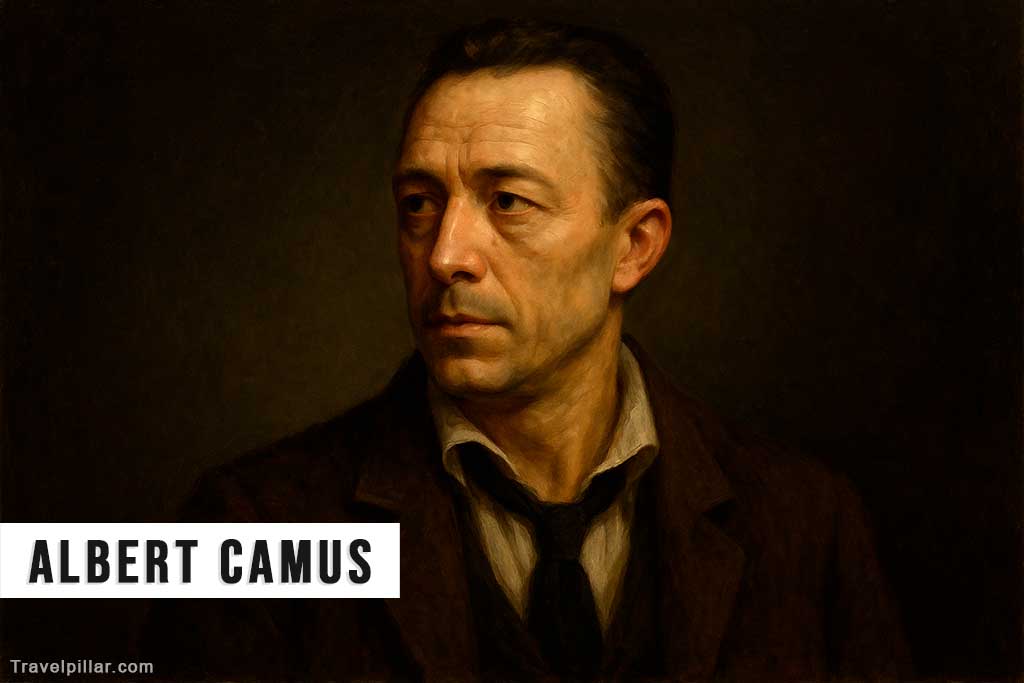
Albert Camus (1913–1960) was a French philosopher, novelist and journalist associated with the philosophy of absurdism. He argued that human beings naturally seek meaning in a universe that offers no clear answers, creating what he described as the “absurd.” Rather than responding with despair, Camus believed people should embrace life with courage, freedom and compassion. His best-known works, including The Stranger, The Plague and The Myth of Sisyphus, continue to inspire readers around the world. In 1957, he was awarded the Nobel Prize in Literature.
John Rawls

John Rawls (1921–2002) was an American political philosopher whose work transformed modern discussions of justice and equality. In A Theory of Justice, he introduced the concept of the “veil of ignorance”, suggesting that a fair society should be designed without knowing what position each person would occupy within it. Rawls argued that such an approach would produce more just and equitable laws. His theories continue to influence political philosophy, economics and public policy.
Peter Singer

Peter Singer (born 1946) is an Australian moral philosopher best known for his work in applied ethics. He has written extensively on animal welfare, global poverty and moral responsibility, arguing that ethical decisions should aim to reduce suffering wherever possible. His book Animal Liberation helped establish the modern animal rights movement, while his support for effective altruism has encouraged people to use evidence and reason when deciding how to help others. Singer remains one of the most influential contemporary philosophers.
The Legacy of Philosophy
The ideas of the world’s greatest philosophers continue to shape modern civilisation. Their work has influenced democracy, science, law, economics, religion, ethics and education, while many of the questions they first explored remain as relevant today as they were centuries ago. Whether examining justice with Plato, questioning knowledge with Descartes, exploring freedom with Sartre or considering morality with Kant, philosophy encourages us to think critically about ourselves and the world around us.
Although philosophers often disagreed with one another, they shared a common belief that careful reasoning and thoughtful discussion can deepen our understanding of life. Their writings continue to inspire students, scholars and curious readers across the globe, demonstrating that philosophy is not simply the study of the past but an ongoing conversation about what it means to be human.