
Greek mythology is a rich and complex collection of stories, legends, and religious beliefs that shaped the ancient Greek worldview. These myths were deeply intertwined with Greek culture, offering explanations for the natural world, human behavior, and the relationships between mortals and the gods. They explored themes of heroism, morality, and the consequences of human actions, with a vast pantheon of gods, goddesses, heroes, and mythical creatures playing central roles.
The Olympian Gods
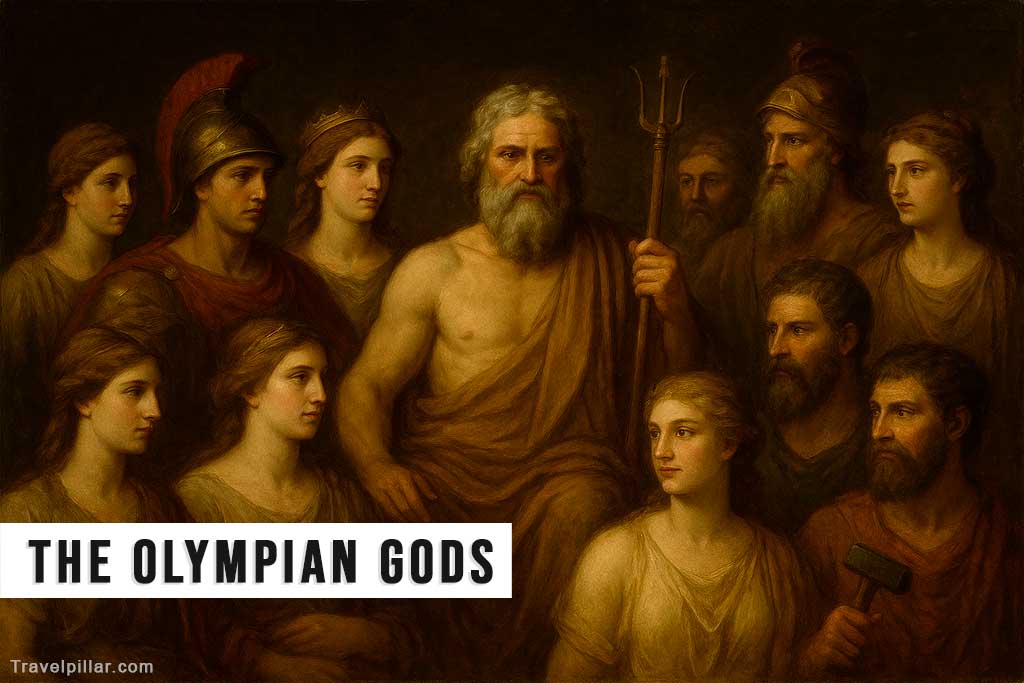
At the heart of Greek mythology are the Olympian gods, a group of twelve deities who ruled over the heavens, the earth, and the sea from their home on Mount Olympus. Zeus, the king of the gods, ruled the sky and was associated with justice, law, and thunder. Hera, his wife, was the goddess of marriage and family, while Poseidon, Zeus’s brother, ruled the sea and was associated with storms, earthquakes, and horses. Other key Olympian gods included Athena, the goddess of wisdom and war strategy; Apollo, the god of the sun, music, and prophecy; Artemis, the goddess of the hunt and the moon; Ares, the god of war; and Aphrodite, the goddess of love and beauty.
The Primordial Gods
The Titans

Beyond the Olympians, Greek mythology features many other deities and figures, including the Titans, who were the predecessors of the Olympians, and the primordial gods, who personified fundamental forces such as the Earth (Gaia), the Sky (Uranus), and the Sea (Pontus). The Titans, led by Cronus, were overthrown by Zeus and the Olympians in a great war known as the Titanomachy, marking the transition to a new order of gods.
The Heroes
Greek mythology also includes an extensive cast of heroes, whose adventures and quests have been central to Greek storytelling. Heroes such as Heracles (Hercules), who completed the Twelve Labors; Perseus, the slayer of Medusa; and Theseus, the slayer of the Minotaur, are celebrated for their strength, bravery, and cleverness. Their stories often involved overcoming significant challenges and interacting with the gods, reflecting the ancient Greek belief that heroes played a special role in bridging the mortal and divine worlds.
One of the most famous mythological events is the Trojan War, chronicled in Homer’s Iliad. The war was sparked by the abduction of Helen, the queen of Sparta, by Paris, a prince of Troy. The war involved some of the greatest figures in Greek mythology, including Achilles, Hector, Odysseus, and Agamemnon, and ended with the fall of Troy, brought about by the Greek stratagem of the Trojan Horse. The aftermath of the war is detailed in Homer’s Odyssey, which follows the long and perilous journey of Odysseus as he attempts to return home to Ithaca.
Mythical Creatures and Monsters
Greek mythology is also known for its wide array of mythical creatures and monsters, which often served as challenges for gods and heroes. The Gorgon Medusa, with her hair of snakes and ability to turn men to stone; the Minotaur, a half-man, half-bull creature that lived in a labyrinth; and the Hydra, a serpent with multiple heads that regrew when cut off, are among the most well-known. These creatures often symbolized chaos and disorder, which heroes sought to overcome in their quests.
The influence of Greek mythology extends beyond the ancient world, having a lasting impact on art, literature, and culture throughout history. Today, visitors to Greece can explore many archaeological sites and landmarks associated with these myths. The Acropolis in Athens, dedicated to Athena, and the ancient city of Mycenae, linked to the legendary king Agamemnon, offer a direct connection to the stories and figures of Greek mythology. The ruins of ancient Troy in modern-day Turkey allow travelers to explore the setting of the famous war, while the island of Ithaca invites visitors to connect with the adventures of Odysseus.
Greek mythology remains a vital part of understanding ancient Greek culture and continues to inspire modern interpretations in literature, art, and popular culture. The enduring power of these stories lies in their ability to reflect timeless themes of human nature, the forces of fate, and the complex relationships between gods and mortals.