
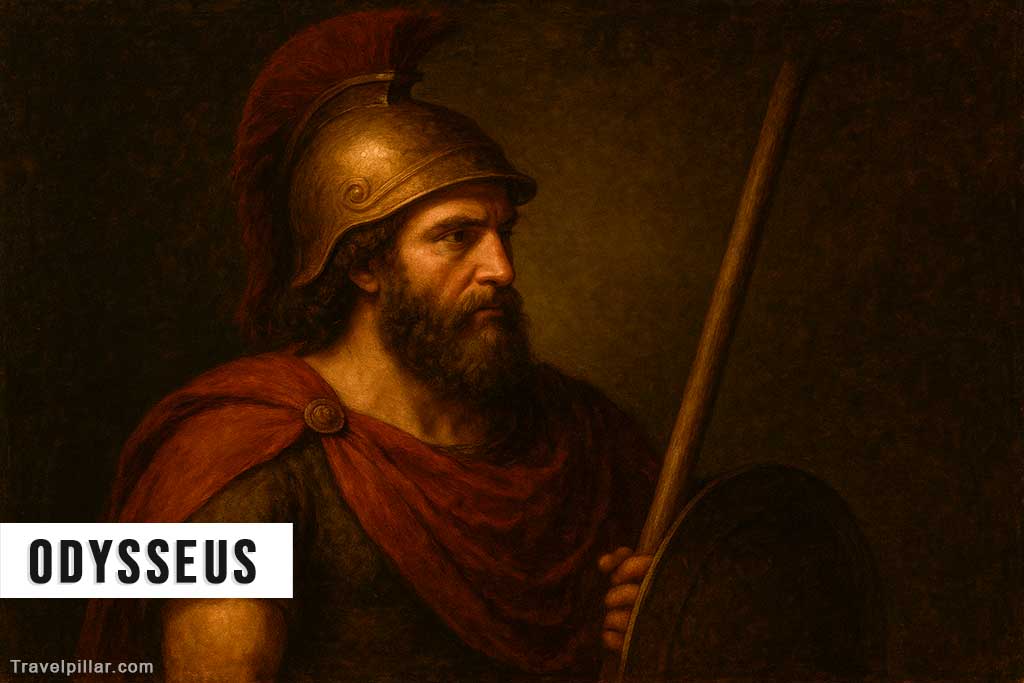
Odysseus, one of the most well-known figures in Greek mythology, is the protagonist of Homer’s epic poem The Odyssey and a key figure in The Iliad. He is the king of Ithaca, a small island in the Ionian Sea, and is renowned for his cleverness, resourcefulness, and leadership abilities. Odysseus played a crucial role in the Greek victory during the Trojan War, most famously devising the plan of the Trojan Horse, which allowed the Greeks to infiltrate and defeat Troy.
After the fall of Troy, Odysseus’s journey home became the subject of The Odyssey, one of the most significant works in ancient Greek literature. His voyage, which should have taken a matter of weeks, lasted ten years due to the many challenges and obstacles he faced. These challenges included encounters with mythical creatures and gods, such as the Cyclops Polyphemus, the sorceress Circe, and the Sirens, whose enchanting songs lured sailors to their doom. He also faced the wrath of Poseidon, the god of the sea, who delayed his return to Ithaca as punishment for blinding Polyphemus, Poseidon’s son.
Throughout his journey, Odysseus is depicted as a man of cunning and intellect, often relying on his wits rather than brute strength to overcome challenges. His ability to strategize and adapt to new situations made him a hero of enduring popularity in Greek mythology.
Odysseus’s story culminates in his return to Ithaca, where he must confront a group of suitors vying for his wife Penelope’s hand. Disguised as a beggar, he reveals his identity and, with the help of his son Telemachus, defeats the suitors and reclaims his throne.
Visitors to modern-day Ithaca can explore the island’s rugged landscapes and ancient ruins that connect to Odysseus’s legend. Though the real-life existence of Odysseus remains a subject of speculation, the mythology surrounding him continues to inspire and captivate travelers interested in the ancient world and its heroic figures.