

The Trojan War, one of the most famous events in Greek mythology, was a legendary conflict between the Greeks (Achaeans) and the city of Troy, located in modern-day Turkey. The war is most famously chronicled in Homer’s Iliad, which focuses on the final weeks of the ten-year siege, although many other ancient texts recount different aspects of the conflict. The war was caused by a complex mixture of divine interventions, personal disputes, and political ambitions.
The origins of the Trojan War begin with the myth of the Judgment of Paris. Paris, a prince of Troy and son of King Priam, was chosen by Zeus to judge a beauty contest between three goddesses: Hera, Athena, and Aphrodite. Each goddess offered Paris a gift in exchange for being chosen as the fairest. He ultimately awarded the golden apple to Aphrodite, who promised him the love of Helen, the most beautiful woman in the world. Helen, however, was already married to Menelaus, the king of Sparta. Paris either abducted or eloped with Helen, taking her back to Troy, which sparked the anger of Menelaus and the Greeks.
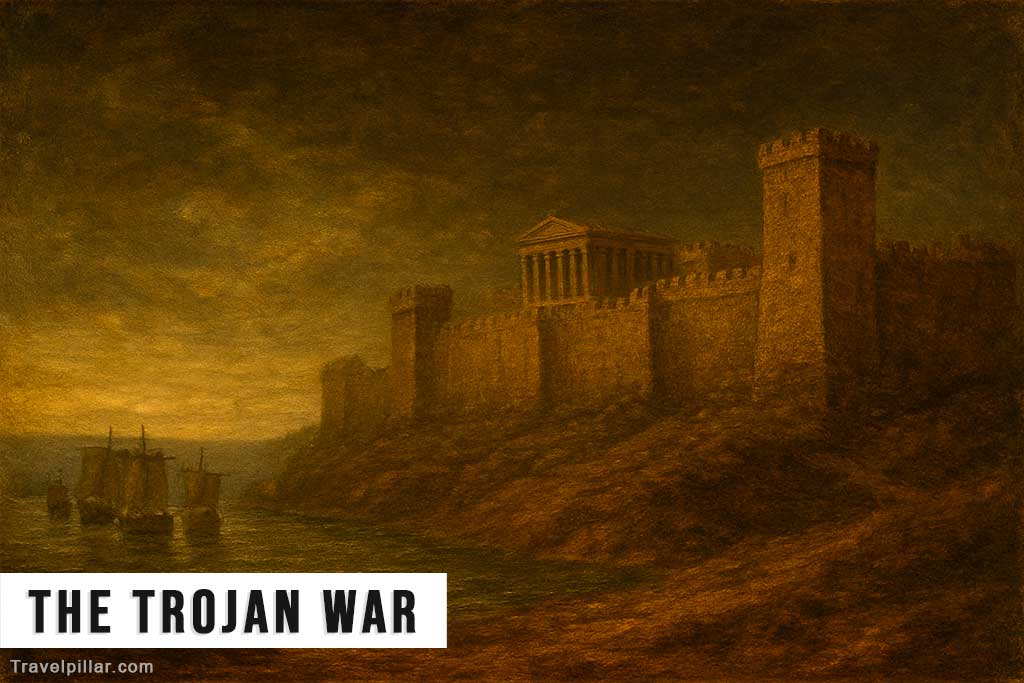
In response, Menelaus and his brother Agamemnon, the king of Mycenae, gathered a coalition of Greek kings and heroes to wage war against Troy. This coalition included some of the most famous figures in Greek mythology, such as Achilles, Odysseus, and Ajax. The Greeks sailed to Troy, and the siege began, lasting for ten years.
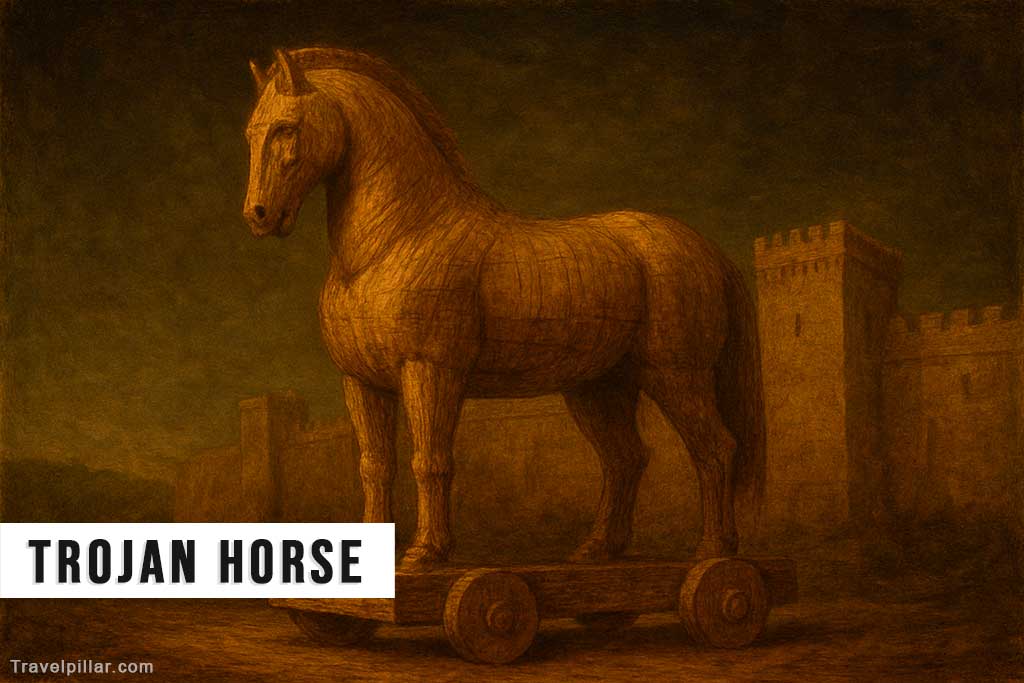
The Iliad primarily focuses on the later stages of the war, particularly the conflict between Achilles, the greatest of the Greek warriors, and Hector, the prince of Troy. Hector’s death at the hands of Achilles is one of the key moments in the epic. The war finally ended with the famous Greek stratagem of the Trojan Horse, a large wooden horse that concealed Greek soldiers inside. The Trojans, believing the horse to be a gift of surrender, brought it into the city, allowing the hidden soldiers to open the gates for the Greek army, leading to the fall of Troy.
The aftermath of the Trojan War had far-reaching consequences for both the Greeks and Trojans. Troy was destroyed, and its people either killed or enslaved. Many Greek heroes, including Agamemnon and Odysseus, faced long and perilous journeys home, as described in various myths, particularly in Homer’s Odyssey.
Today, visitors to the archaeological site of ancient Troy in modern-day Turkey can explore the remnants of the ancient city and its layers of history, which link back to the mythological Trojan War. The site offers insight into both the legend and the historical basis for one of the most enduring stories from ancient Greece.