
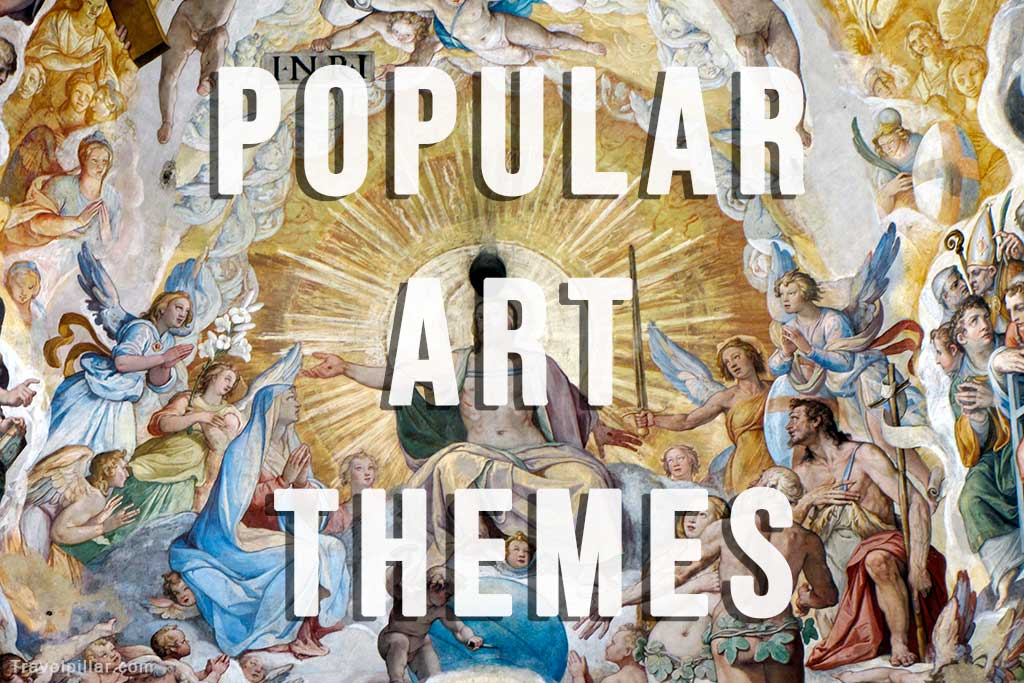
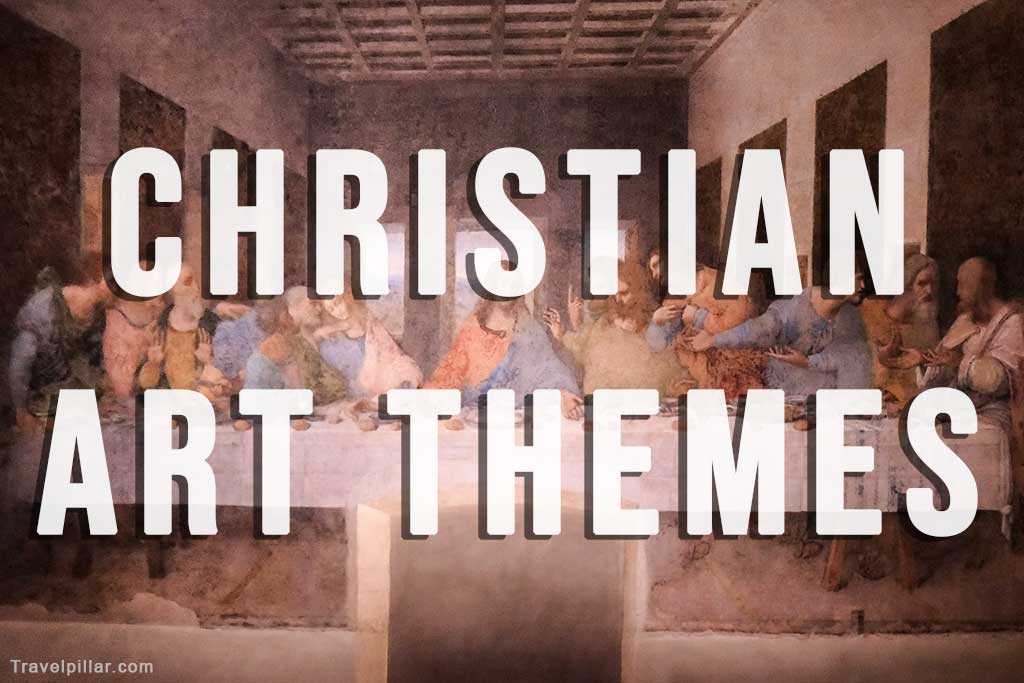
Popular art themes reflect cultural, religious, and philosophical ideas across different periods. Religious themes are particularly dominant in Western art history. Christian subjects such as the Crucifixion, Madonna and Child, the Annunciation, and the Last Supper are widespread in European collections, especially in medieval, Renaissance, and Baroque paintings. These works served devotional purposes and conveyed theological teachings to largely illiterate populations. In other cultures, religious art includes Buddhist sculpture, Hindu temple carvings, and Islamic calligraphy, all expressing spiritual narratives or divine principles through visual form.
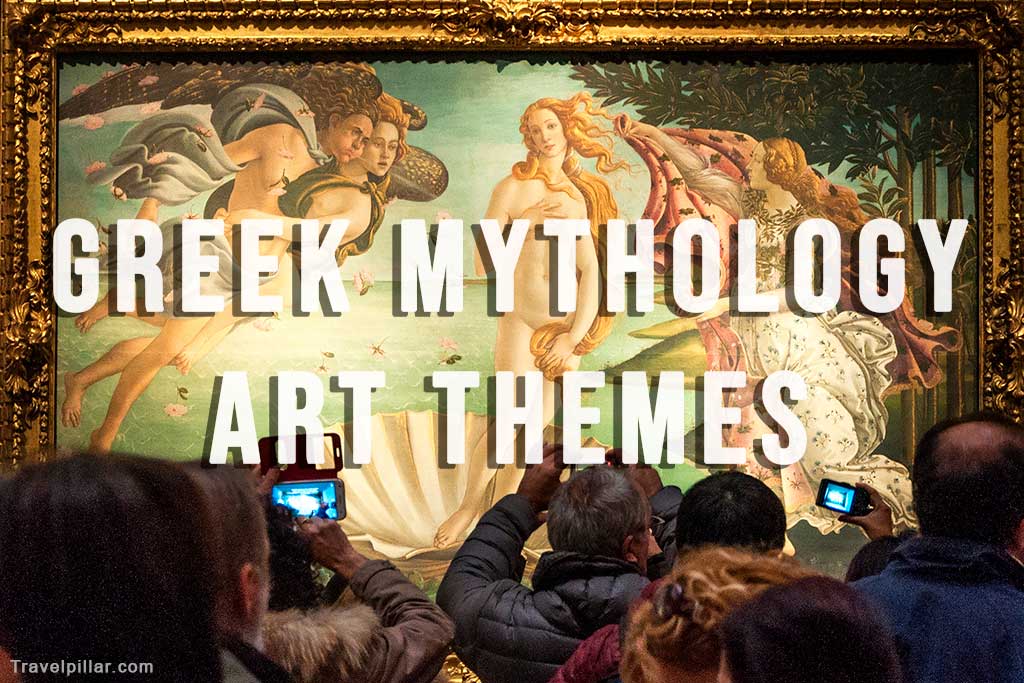
Mythology is another significant theme, particularly Greek and Roman myths depicted from antiquity through to the Renaissance, Neoclassical, and Romantic periods. Stories such as the Judgement of Paris, Venus and Mars, Perseus and Andromeda, and Leda and the Swan appear frequently. These myths were used to explore ideas of love, beauty, power, fate, and human psychology, often with symbolic or moral undertones.
Portraiture is also a major theme, ranging from royal and aristocratic commissions to merchants and self-portraits. Historical themes depicting battles, coronations, or revolutions became prominent from the eighteenth century, serving nationalistic or commemorative purposes.
Landscape emerged as a standalone genre in the seventeenth century, with artists such as Claude Lorrain and Turner celebrating natural scenery, while genre scenes illustrated everyday life, markets, domestic interiors, and leisure activities.
Still lifes explore objects such as flowers, fruit, or instruments, often symbolising abundance or the transience of life. Modern and contemporary art continues to address traditional themes, reinterpreting them with abstraction or conceptual commentary on identity, politics, and society.
Understanding these broad themes provides deeper context for artworks encountered in galleries and museums worldwide, particularly the enduring influence of religion and mythology on artistic expression.