
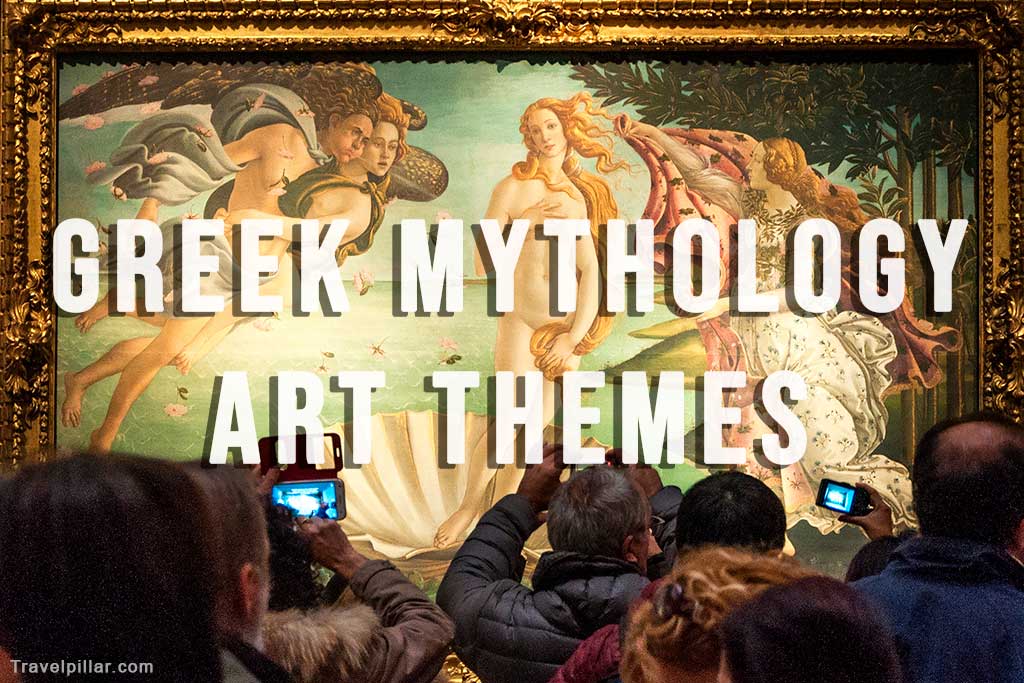
Greek mythology art themes have long provided a rich source of subject matter for artists, particularly in classical antiquity and later during the Renaissance and Neoclassical periods. The Olympian gods – such as Zeus, Athena, and Apollo – are commonly featured, often portrayed in scenes that emphasise their distinct powers, roles, and attributes. These figures served as personifications of natural forces, human ideals, and social order.
Heroic myths are another frequent theme. The Twelve Labours of Heracles, the exploits of Perseus and Medusa, and Theseus and the Minotaur are often depicted to illustrate courage, strength, and the trials of human existence. These stories allowed artists to explore dramatic action, physical form, and psychological tension within structured narrative frameworks.
Other popular subjects include the Judgment of Paris, the abduction of Europa, and tales of metamorphosis such as Daphne and Apollo or Leda and the Swan. These works often convey themes of fate, divine intervention, desire, and the often-fragile boundary between gods and mortals.
Here are 25 of the most common Greek mythology themes that have inspired paintings in the world’s greatest art galleries. These stories, rich in drama, symbolism, and human emotion, have served as recurring subjects for centuries in European art:
The Birth of Venus
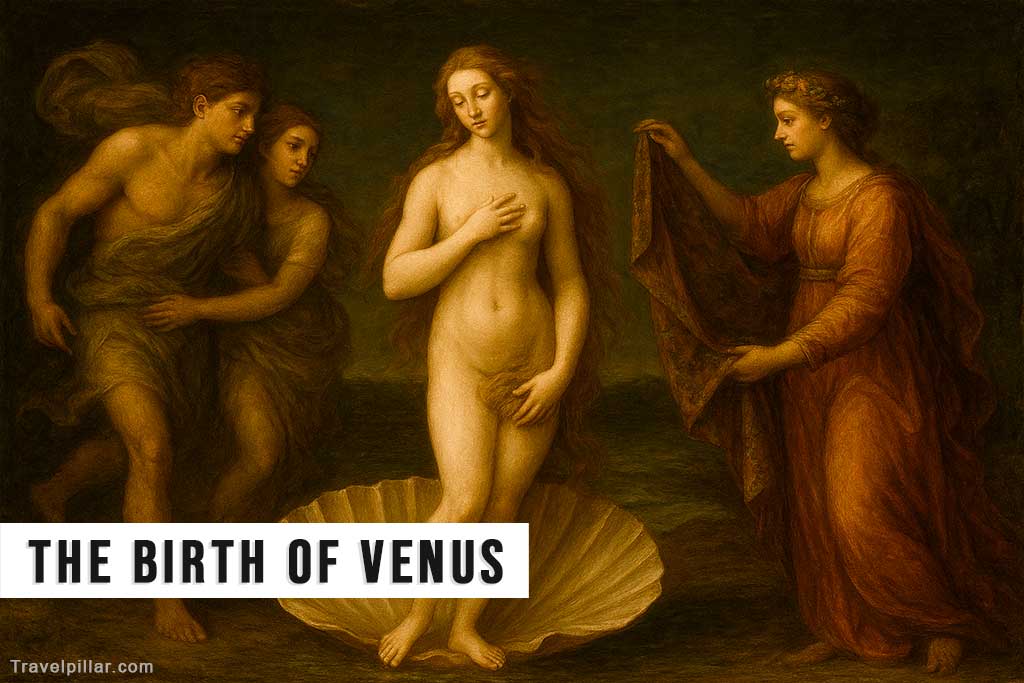
The Birth of Venus depicts the goddess Venus emerging fully grown from the sea, symbolizing divine beauty and fertility. Typically shown standing on a shell, she is attended by wind gods and nymphs. The most famous version is by Sandro Botticelli, housed in the Uffizi Gallery in Florence. The scene reflects classical ideals of proportion and harmony, blending mythology with Renaissance aesthetics to portray the arrival of beauty into the world.
Leda and the Swan

Leda and the Swan depicts the moment Zeus, in the form of a swan, approaches or assaults Leda, queen of Sparta. The encounter results in the birth of Helen of Troy and other notable figures. The subject has been interpreted with varying degrees of sensuality and symbolism. Versions by Leonardo da Vinci, Michelangelo, and Correggio focus on the complex interplay between divine intervention, fate, and the origins of significant mythological events.
The Rape of Europa
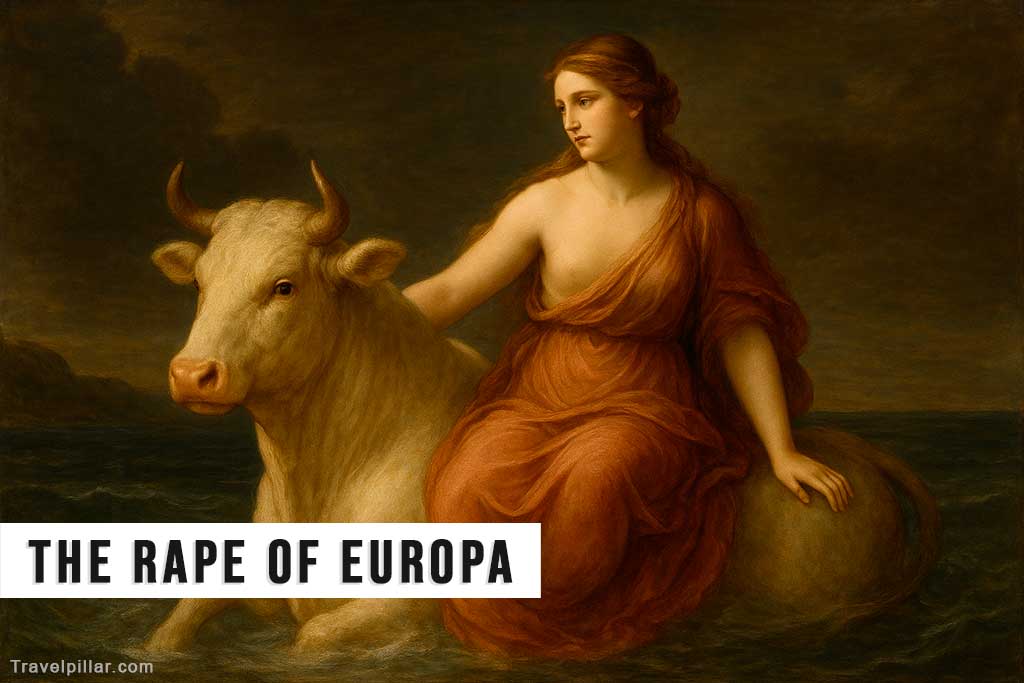
The Rape of Europa shows Zeus transforming into a white bull to abduct the Phoenician princess Europa. As she climbs onto the bull’s back, he carries her across the sea to Crete. The scene captures a moment of transition, often set against a coastal landscape. Artists such as Titian and Rubens emphasize the myth’s dramatic tension while incorporating classical references to the founding of dynasties and the spread of civilization across the Mediterranean.
Perseus and Andromeda

Perseus and Andromeda depicts the hero Perseus rescuing Andromeda, who is chained to a rock as a sacrifice to a sea monster. After slaying the creature, Perseus claims Andromeda as his wife. The scene is often rendered with dramatic composition and emphasis on movement. Artists such as Rubens and Leighton highlight the contrast between vulnerability and heroism, reinforcing themes of divine favor, human bravery, and the resolution of peril through mythic intervention.
The Judgement of Paris
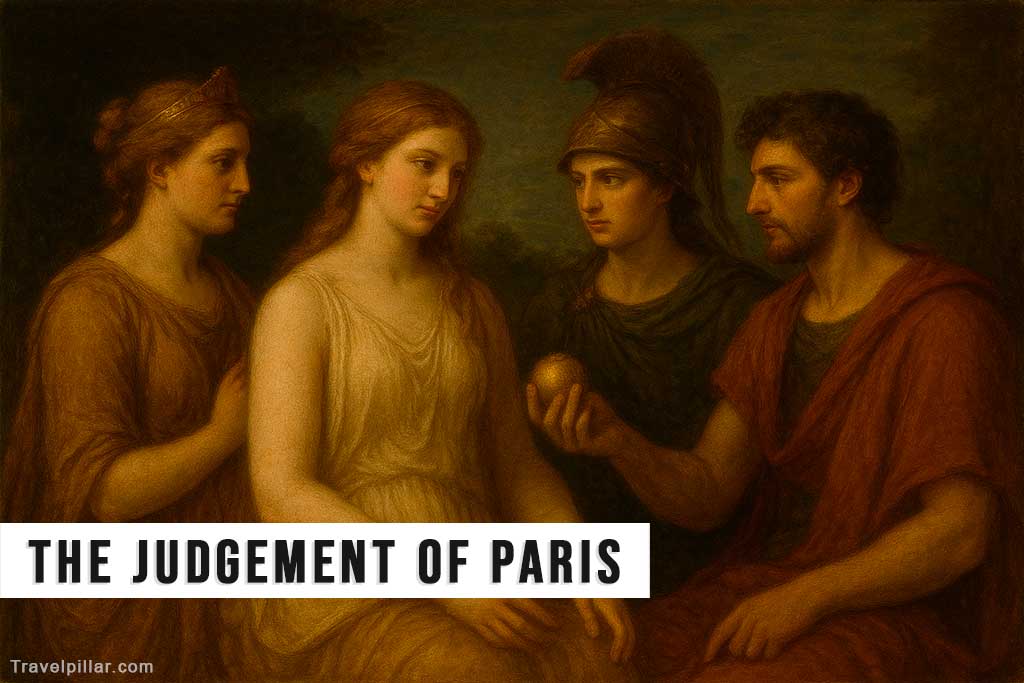
The Judgement of Paris depicts the Trojan prince Paris choosing the fairest goddess among Hera, Athena, and Aphrodite. Each offers a bribe: power, wisdom, or love. Paris selects Aphrodite, leading to the events of the Trojan War. The scene is often presented with idealized female figures and classical settings. Artists such as Rubens and Cranach the Elder explore themes of choice, consequence, and the origins of conflict in mythological narrative.
Apollo and Daphne
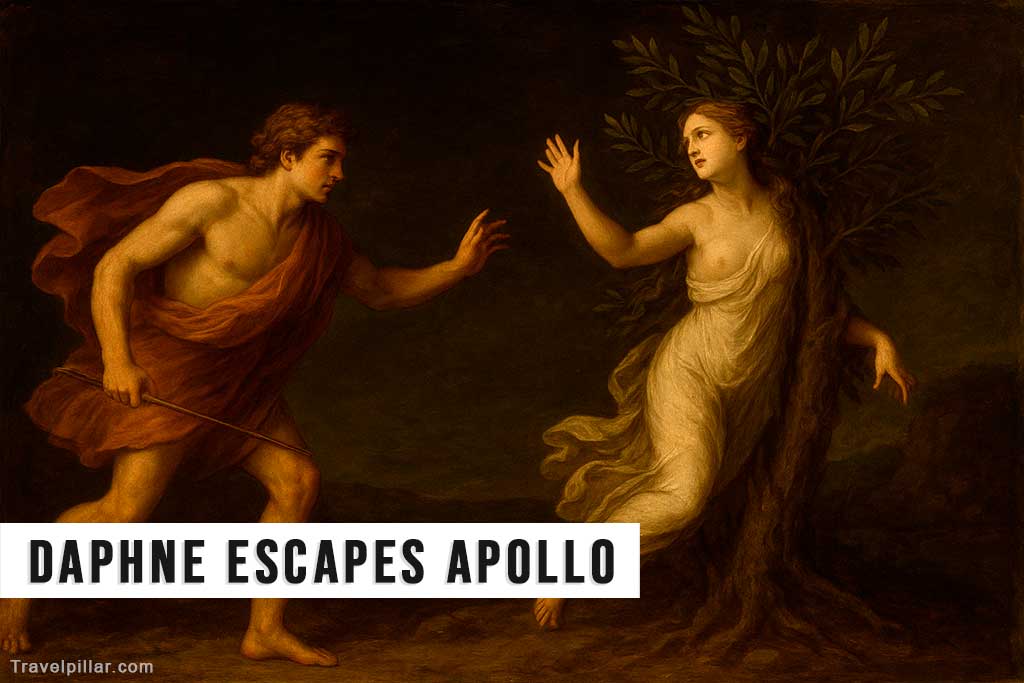
Apollo and Daphne illustrates the moment Daphne escapes Apollo’s pursuit by transforming into a laurel tree. The myth reflects themes of unrequited love and divine intervention. Artists often depict the transition with detailed attention to movement and anatomy, capturing Daphne mid-transformation. Notable interpretations include works by Poussin and Bernini, the latter in sculptural form. The scene emphasizes tension between desire and resistance within the context of mythological storytelling and classical aesthetics.
Orpheus and Eurydice
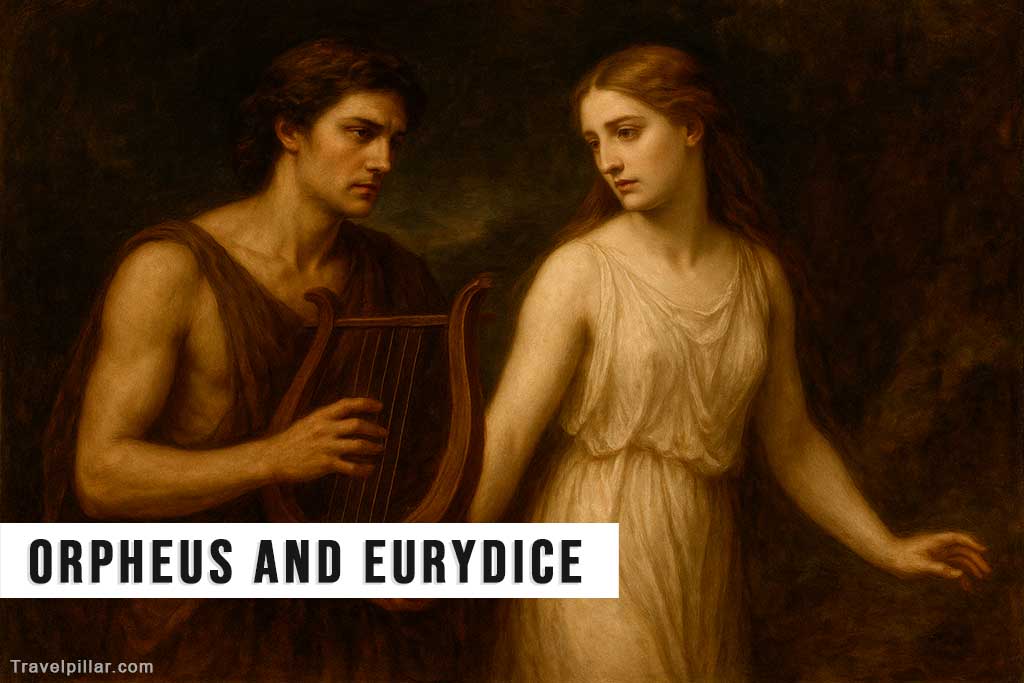
Orpheus and Eurydice depicts the musician Orpheus attempting to retrieve his wife Eurydice from the underworld. Granted permission to lead her back, he loses her forever by looking back before reaching the surface. The theme explores loss, trust, and the limits of human action. Artists such as Corot and Poynter emphasize the emotional tension of the moment, often situating the figures in dark, transitional landscapes to reflect the myth’s somber conclusion.
The Abduction of Persephone
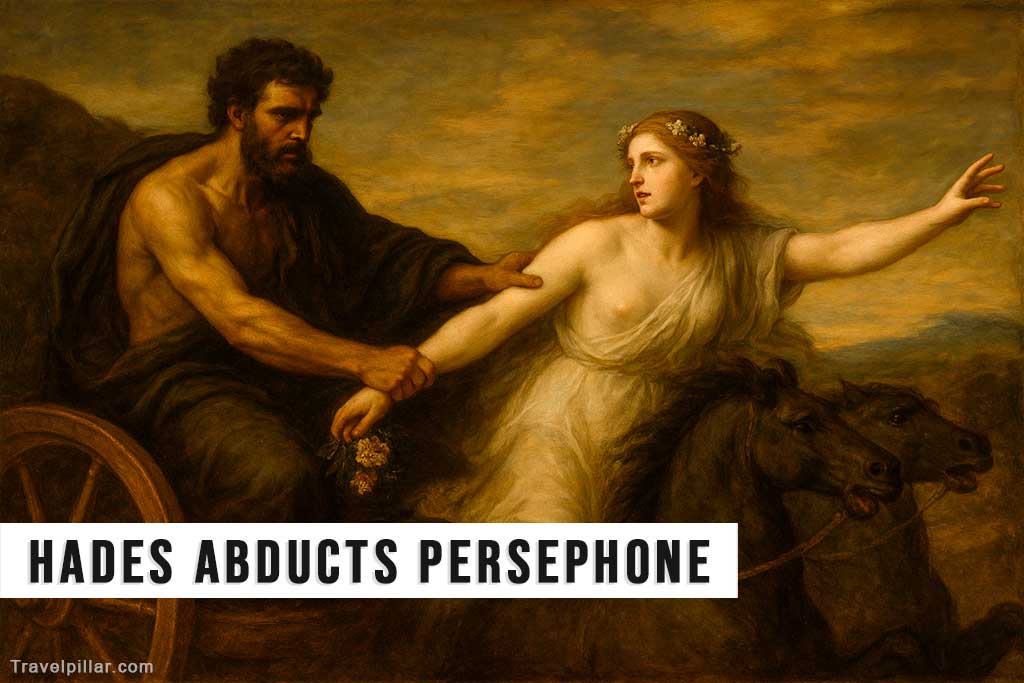
The Abduction of Persephone shows Hades seizing Persephone and taking her to the underworld to become his queen. The myth explains the seasonal cycle, with her annual return marking the start of spring. Artists often depict the forceful moment of abduction with dynamic composition and emotional intensity. Versions by painters like Rembrandt and sculptors like Bernini highlight the contrast between light and shadow to underscore themes of transition, power, and transformation.
The Twelve Labours of Hercules

The Labours of Hercules refers to twelve tasks imposed on Hercules as penance, including slaying the Nemean Lion, capturing the Golden Hind, and retrieving Cerberus from the underworld. Each labour represents physical strength, endurance, and cunning. Artists often focus on individual labours, emphasizing heroic struggle and dramatic action. Depictions appear in classical sculpture, Renaissance painting, and Baroque cycles, with recurring motifs of confrontation, symbolic animals, and mythological landscapes.
The Death of Icarus
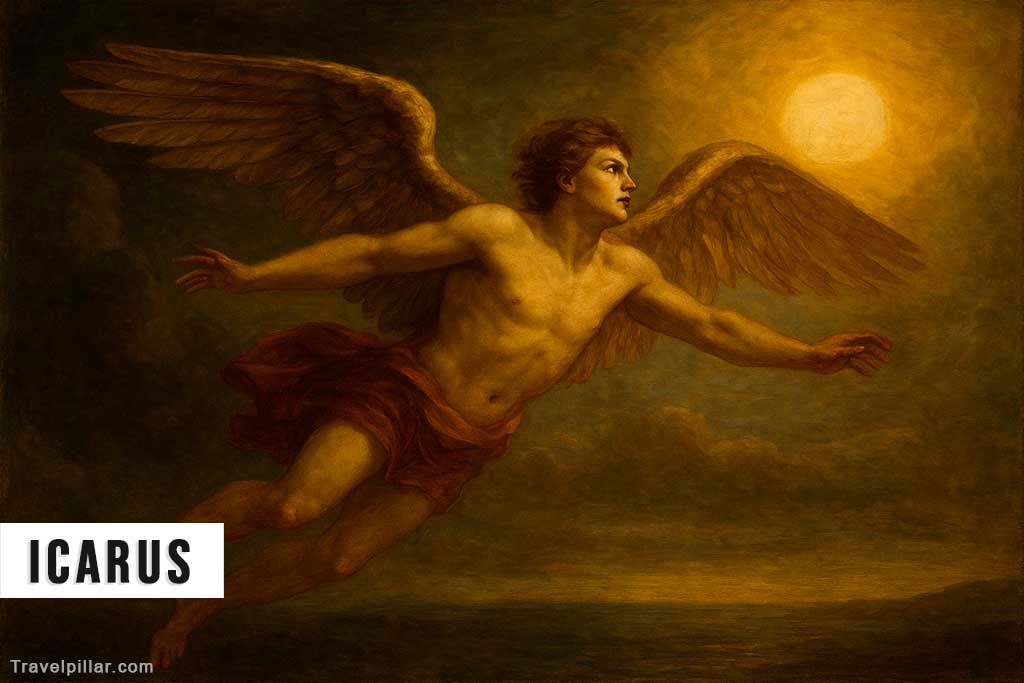
The Death of Icarus depicts the moment Icarus falls into the sea after flying too close to the sun with wings made of feathers and wax. The wax melts, causing his descent and death. The myth serves as a cautionary tale about hubris and the limits of human ambition. Artists such as Bruegel integrate the fall subtly into broader landscapes, emphasizing indifference to individual tragedy and the continuation of everyday life.
Theseus and the Minotaur
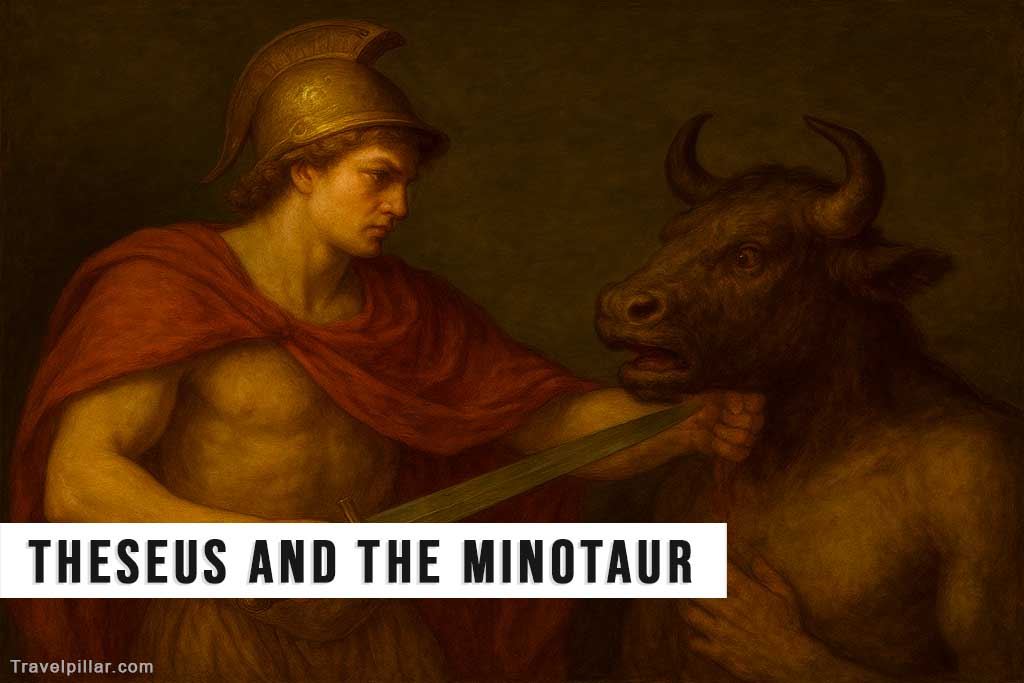
Theseus and the Minotaur depicts the Athenian hero Theseus confronting and killing the Minotaur within the Labyrinth of Crete. The story symbolizes triumph over chaos and the establishment of order. Artists often present the moment of combat or the victorious aftermath. Classical sculpture and Renaissance painting emphasize physical strength, strategic intelligence, and civic duty. The scene reflects broader themes of heroism, sacrifice, and the foundation of Athenian cultural identity.
The Titanomachy

The Titanomachy refers to the mythological war between the Olympian gods, led by Zeus, and the older generation of Titans. Lasting ten years, the conflict ends with the defeat and imprisonment of the Titans. The theme symbolizes the transition from primordial chaos to divine order. Depictions often feature dynamic battle scenes and monumental scale. The Pergamon Altar in Berlin includes a prominent sculptural frieze illustrating this myth with intense movement and anatomical detail.
Prometheus Bound

Prometheus Bound depicts the punishment of Prometheus, who is chained to a rock by Zeus for giving fire to humanity. An eagle is sent daily to consume his liver, which regenerates each night. The scene reflects themes of suffering, defiance, and the cost of progress. Artists such as Rubens and Gustave Moreau emphasize Prometheus’s physical torment and isolation, often using dramatic lighting and rugged landscapes to convey the severity of his fate.
The Fall of Phaethon
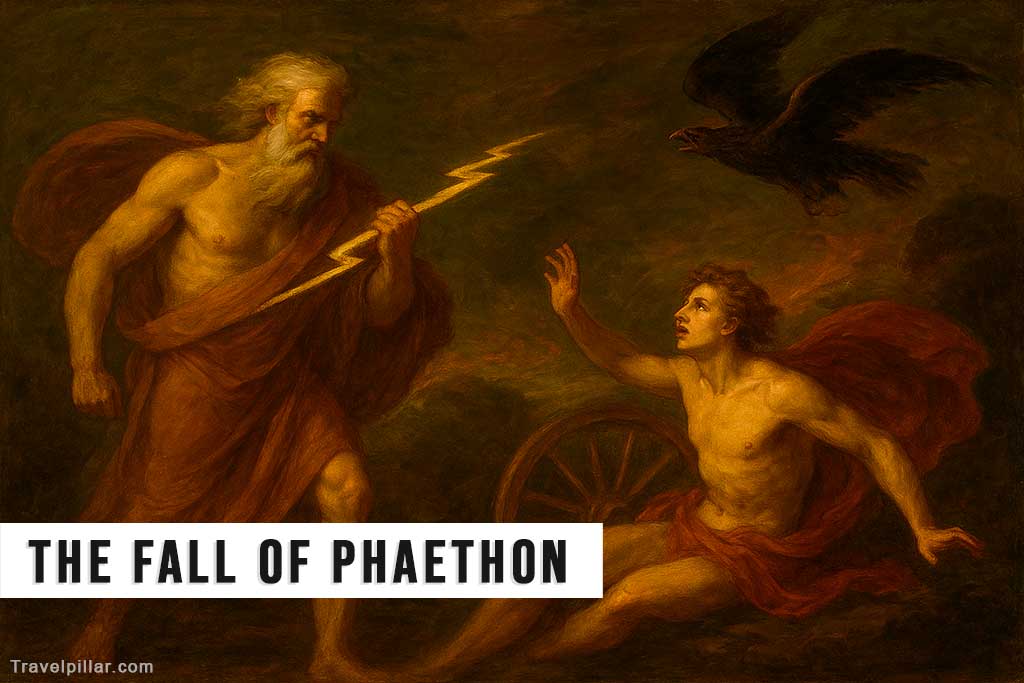
The Fall of Phaethon shows the moment Zeus strikes down Phaethon, who loses control of the sun chariot after attempting to drive it across the sky. His recklessness threatens cosmic order, prompting divine intervention. The myth illustrates the dangers of overreaching ambition. Artists such as Rubens depict the dramatic fall with dynamic composition and celestial imagery, emphasizing chaos, punishment, and the disruption of natural balance within a mythological and moral framework.
Bacchus and Ariadne
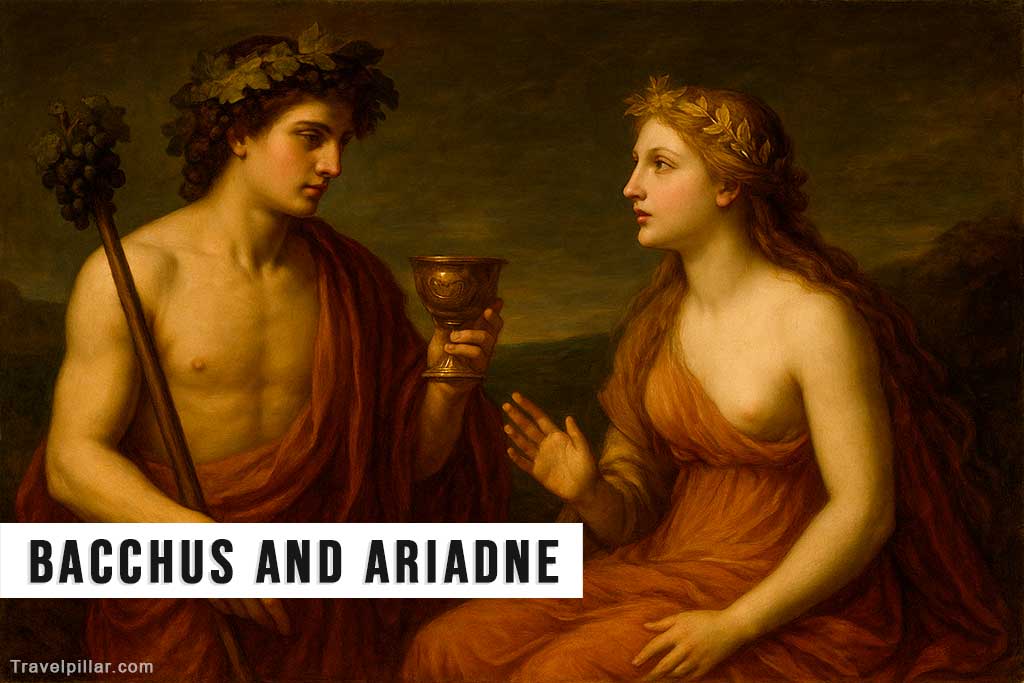
Bacchus and Ariadne depicts the moment Dionysus (Bacchus) discovers Ariadne abandoned on the island of Naxos by Theseus. Dionysus offers her marriage and immortality. The scene combines themes of abandonment, divine union, and transformation. Artists such as Titian emphasize the contrast between Ariadne’s solitude and the arrival of Bacchus’s ecstatic procession. The composition often includes symbolic elements such as leopards, ivy, and celestial imagery referencing Ariadne’s later placement among the stars.
The Triumph of Bacchus
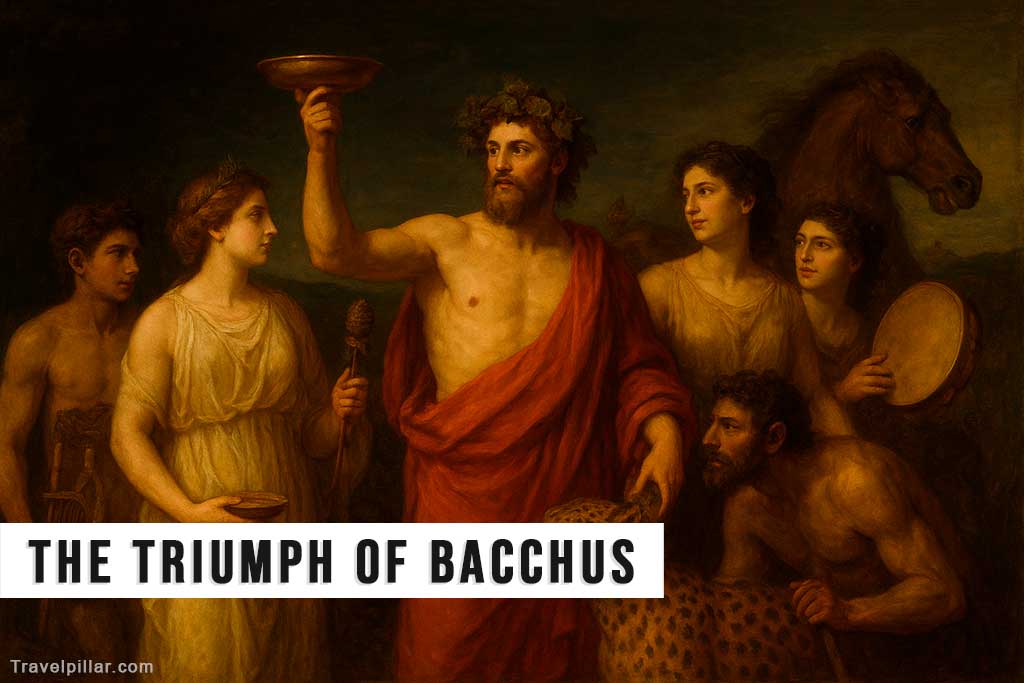
The Triumph of Bacchus depicts the god Dionysus (Bacchus) in a celebratory procession, often accompanied by satyrs, maenads, and exotic animals. The scene symbolizes the spread of wine, ecstasy, and divine influence. Artists such as Velázquez present the subject with a blend of classical mythology and everyday realism. The composition frequently contrasts revelry with order, highlighting the dual nature of Bacchus as both a bringer of joy and a force of disruption.
Achilles and Patroclus
Achilles and Patroclus focuses on the close relationship between the two warriors during the Trojan War. The death of Patroclus prompts Achilles’ return to battle and the killing of Hector. The theme explores loyalty, grief, and heroism. Artistic depictions range from ancient vase paintings to neoclassical works, often highlighting emotional intensity over action. Interpretations vary, sometimes suggesting deep friendship, mentorship, or romantic attachment, depending on historical context and cultural perspective.
Pentheus and the Maenads
Pentheus and the Maenads depicts the king of Thebes being torn apart by frenzied female followers of Dionysus, including his mother Agave, after he attempts to suppress the god’s cult. The myth illustrates the consequences of denying divine power and resisting ecstatic ritual. Artists portray the violent climax with dramatic intensity, often emphasizing psychological distortion and chaotic movement. The scene reflects themes of authority challenged by irrational forces and the collapse of civic order.
The Sacrifice of Iphigenia
The Sacrifice of Iphigenia depicts Agamemnon preparing to sacrifice his daughter to appease Artemis and secure favorable winds for the Greek fleet to sail to Troy. In some versions, the goddess intervenes and spares Iphigenia. The scene addresses themes of duty, fate, and moral conflict. Artists such as Tiepolo emphasize the emotional tension and divine presence, often placing the figures in dramatic poses to highlight the intersection of human decision and divine will.
Ulysses and the Sirens
Ulysses and the Sirens depicts the episode from Homer’s Odyssey in which Ulysses resists the deadly song of the Sirens by having himself bound to the mast of his ship while his crew blocks their ears with wax. The myth explores themes of temptation, self-control, and human curiosity. Artists such as Waterhouse focus on the contrast between Ulysses’ restraint and the allure of the Sirens, often emphasizing dramatic tension and maritime setting.
The Apotheosis of Hercules
The Apotheosis of Hercules depicts the hero’s ascent to Mount Olympus after his mortal death, where he is granted immortality and welcomed among the gods. The scene symbolizes the reward for endurance and virtuous struggle. Artistic interpretations often feature Hercules rising toward the heavens, surrounded by divine figures. Baroque and Neoclassical works emphasize idealized anatomy and upward movement, reinforcing themes of transformation, divine favor, and the boundary between human effort and divine status.
The Birth of Athena
The Birth of Athena depicts the goddess emerging fully armed from the head of Zeus, following a severe headache. The myth symbolizes wisdom, strategic warfare, and divine intellect. Artistic representations often include Hephaestus splitting Zeus’s head with an axe while other gods look on. The scene appears in classical sculpture, such as the Parthenon’s east pediment, and later paintings, emphasizing Athena’s unique origin and her immediate association with order, rationality, and power.
The Punishment of Sisyphus
The Punishment of Sisyphus depicts the eternal torment of Sisyphus, condemned by the gods to roll a boulder uphill, only for it to roll back down each time it nears the summit. The myth reflects themes of futility, defiance, and the consequences of deceit. Artistic interpretations often emphasize repetitive struggle and isolation. Works range from classical reliefs to modern allegorical paintings, highlighting existential aspects and the tension between human effort and inevitable failure.
The Punishment of Tantalus
The Punishment of Tantalus shows the condemned figure standing in a pool beneath a fruit tree, unable to drink or eat as water and branches recede whenever he reaches for them. The myth illustrates eternal deprivation as punishment for offending the gods. Artistic depictions often focus on the physical and psychological torment, with symbolic elements of unreachable nourishment. The scene emphasizes themes of temptation, transgression, and the consequences of divine disfavor in the afterlife.
The Calydonian Boar Hunt
The Calydonian Boar Hunt depicts a group of heroes assembled to kill a monstrous boar sent by Artemis to ravage Calydon. Central figures include Meleager and Atalanta, the latter often shown delivering the first wound. The scene emphasizes collective action, rivalry, and divine retribution. Artistic representations range from ancient pottery to Renaissance frescoes, often focusing on the dramatic confrontation, physical movement, and the social dynamics among the participants in the mythic event.