
The Uffizi Gallery, situated in the heart of Florence, is an unparalleled cultural institution that houses one of the world’s most extensive collections of Renaissance art. Inaugurated in 1581 under the patronage of the Medici family, the gallery boasts an impressive assemblage of artistic masterpieces spanning from the 13th to the 18th centuries. The Uffizi Gallery is an essential destination for art aficionados and casual visitors alike, as it offers a comprehensive view of Italian art history.

Located within the Palazzo degli Uffizi, a historical building designed by the renowned architect Giorgio Vasari, the gallery showcases its collection across two expansive floors. The artworks are systematically displayed in chronological order, allowing visitors to appreciate the progression of artistic styles through the centuries. Moreover, the Uffizi houses several specialized rooms dedicated to various artistic movements and periods, such as the Renaissance, Mannerism, and Baroque.

Visitors to the Uffizi Gallery can expect to encounter an astonishing array of masterpieces by eminent artists such as Sandro Botticelli, Leonardo da Vinci, Michelangelo, and Caravaggio. Among the many highlights of the collection are Botticelli’s ‘The Birth of Venus’ and ‘Primavera,’ Michelangelo’s ‘Doni Tondo,’ and Caravaggio’s ‘Medusa.’
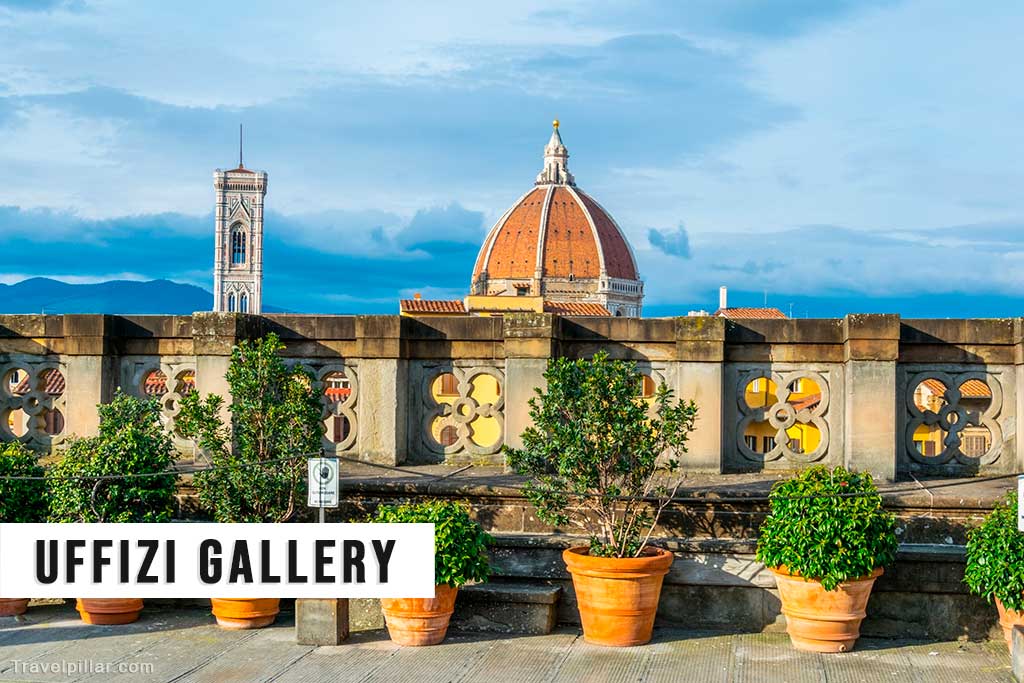
To optimize their visit to the Uffizi Gallery, guests are advised to reserve tickets in advance to avoid long queues. The gallery is open Tuesdays through Sundays from 8:15 am to 6:50 pm, with the last admission granted at 6:05 pm. It is closed on Mondays, January 1st, May 1st, and December 25th. Ticket prices for adults are €20, while reduced tickets are available for certain groups, including EU citizens aged 18-25 and teachers.
Official website:
https://www.uffizi.it/en/the-uffizi
Google map 4.7/5
Uffizi Gallery Highlights
The Birth of Venus – Sandro Botticelli
The Birth of Venus by Sandro Botticelli, created in the late 15th century, is a quintessential example of Italian Renaissance art. It depicts the goddess Venus emerging from the sea on a scallop shell, symbolizing beauty and love. The painting’s composition draws on classical mythology and exhibits Botticelli’s mastery of line and form. Its ethereal quality reflects Neoplatonic ideals, merging divine beauty with humanistic themes, making it an enduring cultural icon.
https://www.uffizi.it/en/artworks/
Spring – Sandro Botticelli
Spring, or Primavera, painted by Sandro Botticelli around 1482, is a mythological allegory of renewal and fertility. Set in an orange grove, it features Venus, Cupid, the Three Graces, Mercury, and other figures symbolizing natural and humanistic themes. Botticelli’s linear style and refined details highlight Renaissance ideals of harmony and intellectual depth. This enigmatic work, commissioned by the Medici family, remains a significant example of secular, allegorical painting during the Italian Renaissance.
https://www.uffizi.it/en/artworks/
Madonna of the Goldfinch – Raphael
Madonna of the Goldfinch by Raphael, painted around 1506, depicts the Virgin Mary with the Christ Child and John the Baptist. The serene composition symbolizes divine grace and human tenderness, with the goldfinch representing Christ’s future Passion. Raphael’s mastery of perspective, harmonious proportions, and delicate use of color exemplify High Renaissance ideals. This work, created during Raphael’s Florentine period, highlights his ability to blend naturalism with spiritual themes in religious art.
https://www.uffizi.it/en/artworks/
Venus of Urbino by Titian
Venus of Urbino, painted by Titian in 1538, is a celebrated example of Venetian Renaissance art. It portrays a reclining nude woman, symbolizing sensuality and marital fidelity. The work’s rich textures and vibrant colors demonstrate Titian’s mastery of oil painting. The composition balances intimacy and elegance, with details like the sleeping dog and cassone chest providing contextual symbolism. This painting influenced subsequent depictions of the reclining nude in Western art.
https://www.uffizi.it/en/artworks/
The Annunciation – Leonardo da Vinci
Annunciation, attributed to Leonardo da Vinci and Andrea del Verrocchio, showcases early Renaissance mastery of perspective and light. Painted around 1472-1475, it depicts the angel Gabriel announcing to Mary that she will conceive Christ. Leonardo’s innovative use of atmospheric perspective is evident in the detailed background, while Verrocchio’s influence appears in the precise execution of drapery. The work exemplifies a transition from medieval traditions to the naturalism characteristic of the Renaissance.
https://www.uffizi.it/en/artworks/
Doni Tondo (The Holy Family) – Michelangelo
Doni Tondo, created by Michelangelo around 1507, is a circular panel painting depicting the Holy Family. The work exemplifies Michelangelo’s sculptural approach to painting, with dynamic figures and strong anatomical precision. Its vibrant colors and dramatic poses reflect Renaissance ideals of movement and harmony. The background features five nudes and a landscape, adding symbolic depth. This rare painting by Michelangelo is a significant example of his skill in both painting and sculpture.
https://www.uffizi.it/en/artworks/
The Ognissanti Madonna – Giotto
The Ognissanti Madonna by Giotto (aka Virgin and Child enthroned, surrounded by angels and saints), painted around 1310, marks a significant departure from Byzantine conventions. This large altarpiece depicts the Virgin and Child enthroned, surrounded by angels and saints. Giotto’s use of naturalism, with three-dimensional figures and a sense of spatial depth, reflects early Renaissance innovations. The work’s monumental composition and emotional gravity signify a shift toward realism and humanism, establishing Giotto as a pioneer in the development of Western art.
https://www.uffizi.it/en/artworks/
Perseus Frees Andromeda – Piero di Cosimo
Perseus Frees Andromeda by Piero di Cosimo, painted around 1510, illustrates the mythological tale of Perseus rescuing Andromeda from a sea monster. The composition is richly detailed, blending fantastical elements with naturalistic landscapes. The figures are rendered with dynamic movement and expressive gestures, reflecting Renaissance interest in classical mythology and human emotion. Piero’s imaginative approach and meticulous technique make this work a notable example of mythological narrative in Renaissance art.
https://www.uffizi.it/en/artworks/
The Sacrifice of Isaac – Caravaggio
The Sacrifice of Isaac by Caravaggio, painted in the early 17th century, portrays the dramatic biblical moment when Abraham is commanded to sacrifice his son Isaac. The work exemplifies Caravaggio’s use of chiaroscuro, with stark contrasts of light and shadow intensifying the scene’s emotional tension. The figures are rendered with striking realism, emphasizing their humanity. This painting reflects Caravaggio’s mastery of naturalism and his ability to convey profound psychological depth.
https://www.uffizi.it/en/artworks/
Annunciation with St. Maxima and St. Ansanus – Simone Martini
Annunciation with St. Maxima and St. Ansanus, created by Simone Martini and Lippo Memmi in 1333, is a masterpiece of Gothic art. The altarpiece depicts the angel Gabriel announcing to Mary her divine role, with accompanying saints flanking the scene. The intricate gold backgrounds and delicate linear style exemplify Sienese craftsmanship. This work, characterized by its elegance and decorative detail, reflects the spiritual and aesthetic values of early 14th-century Italian art. [note that the female saint beside the Annunciation is variously identified as St Maxima or St Margaret.]
https://www.uffizi.it/en/artworks/
Judith Beheading Holofernes – Artemisia Gentileschi
Judith Beheading Holofernes by Artemisia Gentileschi shows one of the most violent episodes in biblical art. Judith, a Jewish widow, saves her people by entering the tent of the Assyrian general Holofernes, getting him drunk and cutting off his head. Artemisia presents the scene with unusual force and determination. The painting is often discussed in relation to her own life, but it also stands as a powerful image of courage, revenge and justice.
https://www.uffizi.it/en/artworks/judith-beheading-holofernes
Bacchus — Caravaggio
Bacchus by Caravaggio presents the Roman god of wine not as an ideal being from a distant myth, but as a recognisably human figure. He offers wine to the viewer, creating an intimate and slightly unsettling encounter. The fruit and leaves suggest pleasure, abundance and fertility, yet some of the fruit is already decaying. This gives the painting a deeper message about excess, passing beauty and the fragile nature of earthly pleasures.
https://www.uffizi.it/en/artworks/caravaggio-bacchus
Adoration of the Magi — Leonardo da Vinci
Adoration of the Magi by Leonardo da Vinci was left unfinished, but it remains one of the most fascinating works in the Uffizi. The painting shows the moment the Three Wise Men recognise the infant Christ, bringing gifts and acknowledging his importance. Around them, Leonardo fills the scene with restless figures, animals and distant activity. The result feels unusually dramatic, turning a familiar biblical episode into a complex meditation on revelation, wonder and human reaction.
https://www.uffizi.it/en/artworks/leonardo-adoration-of-the-magi
Madonna and Child with Two Angels — Filippo Lippi
Madonna and Child with Two Angels by Filippo Lippi is one of the most recognisable Renaissance images in Florence. The Virgin appears thoughtful rather than distant, while the Christ child is presented with a warmth that makes the scene feel intimate and human. The smiling angel looking out towards the viewer adds a playful touch. Behind the beauty of the painting lies a deeper idea: motherhood, tenderness and holiness are brought together in a form that feels close to everyday life.
https://www.uffizi.it/en/artworks/lippi-madonna-and-child-with-two-angels
Related Post:
Best Museums in the World

Museums preserve the artistic, scientific and cultural achievements of civilisation. The institutions listed below contain some of the world’s most important collections, ranging from ancient archaeology and Renaissance painting to modern art, natural history and science.
This ranking is inevitably subjective, but the museums below stand out for the scale of their collections, the quality of their exhibitions, their historical importance and the overall visitor experience. Click on the museum name or image to explore each museum in more detail.