
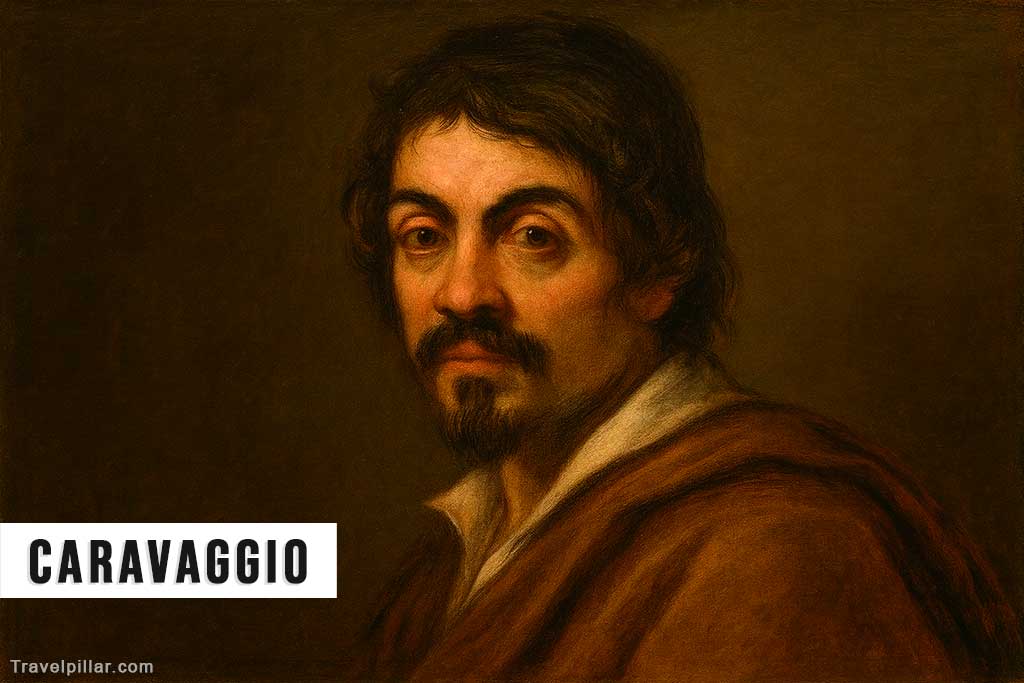
Michelangelo Merisi da Caravaggio, known as Caravaggio (1571-1610), was an Italian painter renowned for his significant influence on the Baroque style, which flourished in Europe during the 17th and 18th centuries. Born in Milan, Caravaggio’s early life was marked by tragedy, losing his father and grandfather to the plague at a young age. However, this hardship did not deter his artistic prowess, as he trained in Milan under Simone Peterzano.
Caravaggio’s revolutionary artistic style is known for its tenebrism — an extreme form of chiaroscuro, where dramatic illumination is used to heighten the contrast of light and shadow in his compositions. His paintings, characterized by their realistic and visceral depiction of human physical and emotional state, often depicted religious and mythological themes, bringing the sacred into the realm of the profane and everyday life.
Among his most notable works are “The Calling of Saint Matthew,” “Supper at Emmaus,” and “Judith Beheading Holofernes.” These paintings demonstrate his distinctive approach, portraying figures in mid-action, filled with tension, and vividly illuminated against dark backgrounds.
Caravaggio’s life was as tumultuous as his art was revolutionary. He fled Rome following a manslaughter charge, leading a life on the run until his death under mysterious circumstances. Despite his short career and contentious personal life, his impact on Western art is immense. His innovative techniques and narrative intensity influenced a legion of artists, such as Rembrandt and Vermeer, marking him as one of the pivotal figures in the evolution of European painting. His legacy continues to be celebrated for its artistic courage and profound influence on the course of art history.