

Florence, Italy is a city renowned for its rich cultural heritage, artistic achievements, and architectural masterpieces. Located in the heart of Tuscany, it is considered one of the most beautiful cities in the world and attracts millions of visitors each year. It is also known as the birthplace of the Renaissance, a time when artists, writers, and thinkers rediscovered the classical ideals of Greece and Rome, which led to an explosion of creativity and knowledge. Discover the best things to see and do in our Florence City Guide below.
Official tourism website:
https://www.italia.it/en/tuscany/florence
https://www.visitflorence.com
Google map of Florence
The Best Things to Do in Florence
#1 The Uffizi Gallery

The Uffizi Gallery (Galleria degli Uffizi) is located adjacent to the Piazza Della Signoria in the centre of the historic centre of Florence. It is of the most important museums in Italy and the most visited holding an incredible collection of works, particularly from the 14th-century and the Renaissance period.
Official website:
https://www.uffizi.it/en/the-uffizi
Google map 4.7/5
#2 Piazza del Duomo

Piazza del Duomo (Piazza = Plaza or public square, Duomo = Cathedral but can also mean dome). The Piazza del Duomo is home to the Florence Cathedral complex which includes the main Cathedral structure (Baptistery and Brunelleschi’s Dome) as well as a Giotto’s Bell Tower both of which are listed below.
In front of the Cathedral you can find the Baptistery of St. John (Battistero di San Giovanni) and behind the cathedral you’ll find the Museum of Opera of Saint Maria of Fiore (Museo dell’Opera del Duomo di Firenze). Surrounding the Piazza you’ll also find plenty of cafes and restaurants.
Piazza del Duomo is a public square and FREE to visit although admission charges apply to enter the Cathedral, Brunelleschi’s Dome, Giotto’s Bell Tower and museum (see below)
Google map 4.8/5
#3 Florence Cathedral (Cattedrale di Santa Maria del Fiore)
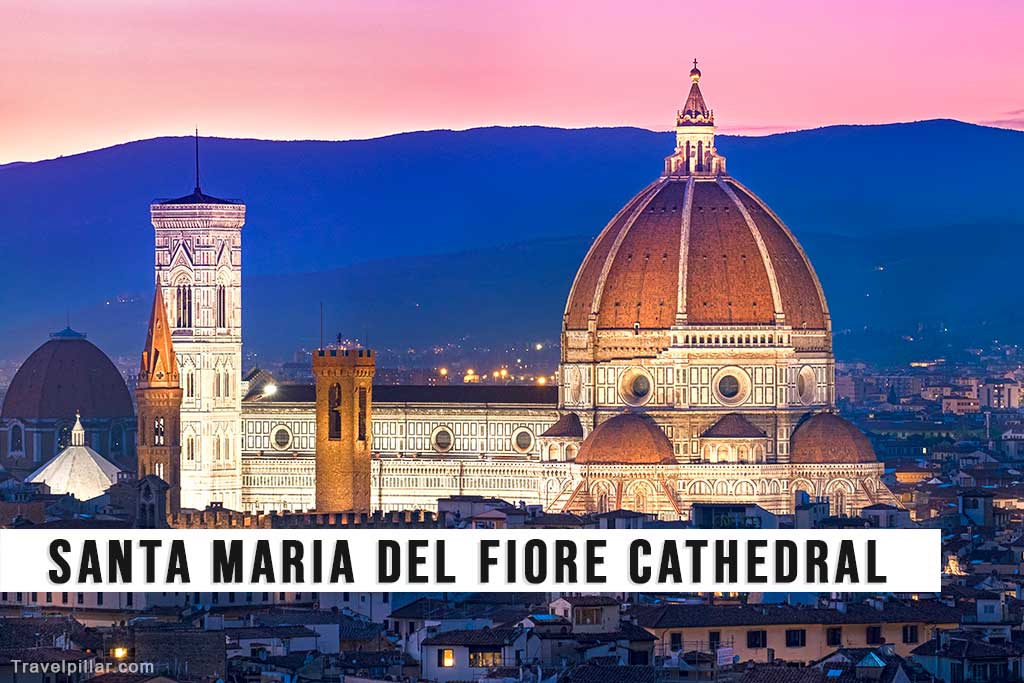
Florence Cathedral – Duomo di Firenze (Duomo = Cathedral or dome and Firenze = Florence). Its more formal name is Cattedrale di Santa Maria del Fiore or the Cathedral of Saint Mary of the Flower (Fiore = Flower).
Florence Cathedral is an iconic symbol of the city, famed for its exquisite Gothic architecture and striking terracotta-tiled dome. Designed by Arnolfo di Cambio and completed in the 15th century by Filippo Brunelleschi, the cathedral’s dome remains the largest brick dome ever constructed. The cathedral’s impressive façade is adorned with intricate marble patterns, while its vast interior features numerous works of art, solidifying its importance in the Florentine skyline.
Official website:
https://duomo.firenze.it/en/
Google map 4.8/5
#4 Giotto’s Campanile (Giotto’s Bell Tower)

Giotto’s Bell Tower (Campanile di Giotto) is a free standing bell tower (campanile = bell tower) that forms part of the Florence Cathedral complex.
The design, by celebrated master painter and architect Giotto di Bondone, was in harmony with the polychromy of the cathedral. Construction of the tower commenced in 1334 but when Giotto died in 1337, aged 70, he had only finished the lower floor. Construction continued but came to a halt again in 1348, year of the disastrous Black Death. The bell tower was finally completed in 1359 with a flat panoramic roof rather than Giotto’s original spire.
The 84.7m high tower can be reached by climbing 414 steps. You’ll be rewarded by a wonderful scenic panorama of Florence.
Official website:
https://duomo.firenze.it/en/home
Google map 4.8/5
#5 Ponte Vecchio Bridge
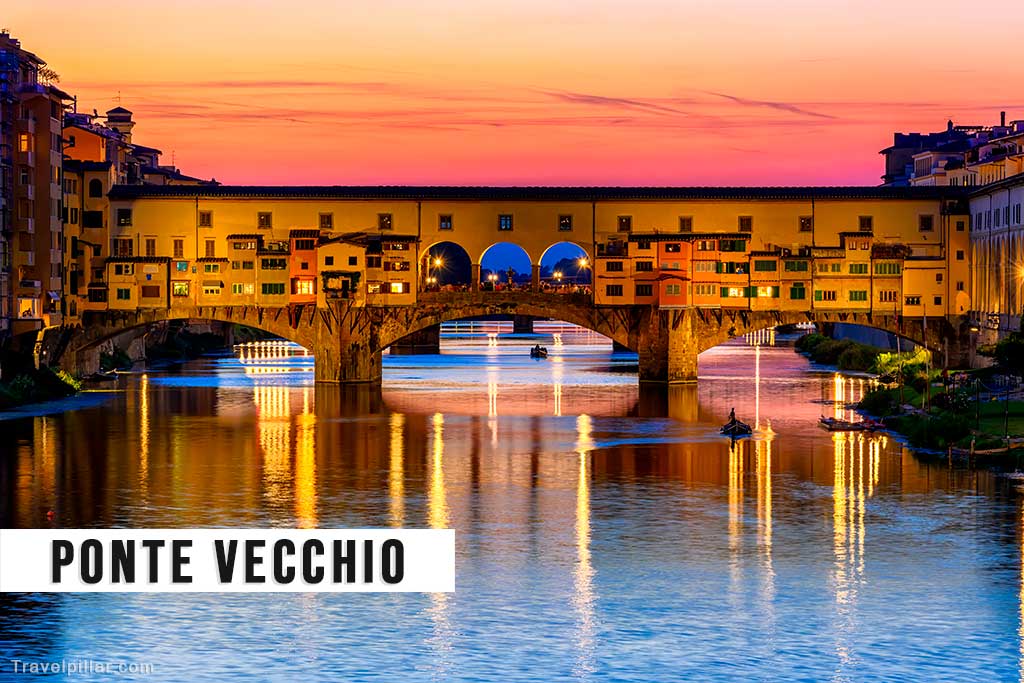
Ponte Vecchio is a medieval arched bridge that crosses the River Arno. (Ponte = Bridge, Vecchio = Old). Distinguished by its series of shops, primarily goldsmiths and jewelers, the bridge has been a commercial hub since the 13th century. The Vasari Corridor, a secret passage built by Giorgio Vasari, runs above the shops, connecting the Palazzo Vecchio to the Pitti Palace.
More info:
https://en.wikipedia.org/wiki/Ponte_Vecchio
This popular attraction is FREE to visit
Google map 4.7/5
#6 Palazzo Vecchio

Palazzo Vecchio is a historic fortress-palace located in the south-east corner of the lovely Piazza Delle Signoria (see below). Palazzo = Palace, Vecchio = Old.
Built in the 13th century as the seat of the city’s government, it now serves as a museum and town hall. The palace’s imposing structure, complete with a 94-meter tall bell tower, showcases the Romanesque architectural style. Inside, visitors can admire frescoes, sculptures, and works by renowned artists, including Michelangelo and Vasari, offering a glimpse into Florence’s rich political and artistic history.
Official website: https://ticketsmuseums.comune.fi.it/
Google map 4.7/5
#7 Piazza della Signoria

Piazza Della Signoria is a busy square that lies at the very heart of Florence. The Palazzo Vecchio can be found in the south east corner and the Uffizi Gallery lies just to the south. You’ll also find the Fontana del Nettuno (Neptune’s Fountain), a replica of the David sculpture and a bronze statue of Cosimo I on horseback. On the south side of the Piazza you’ll find the Loggia dei Lanzi – an arched open-air gallery housing many important statues and sculptures. In the evening the square comes alive with busy restaurants and street entertainment.
Public square FREE entry
Google map 4.8/5
#8 Piazzale Michelangelo
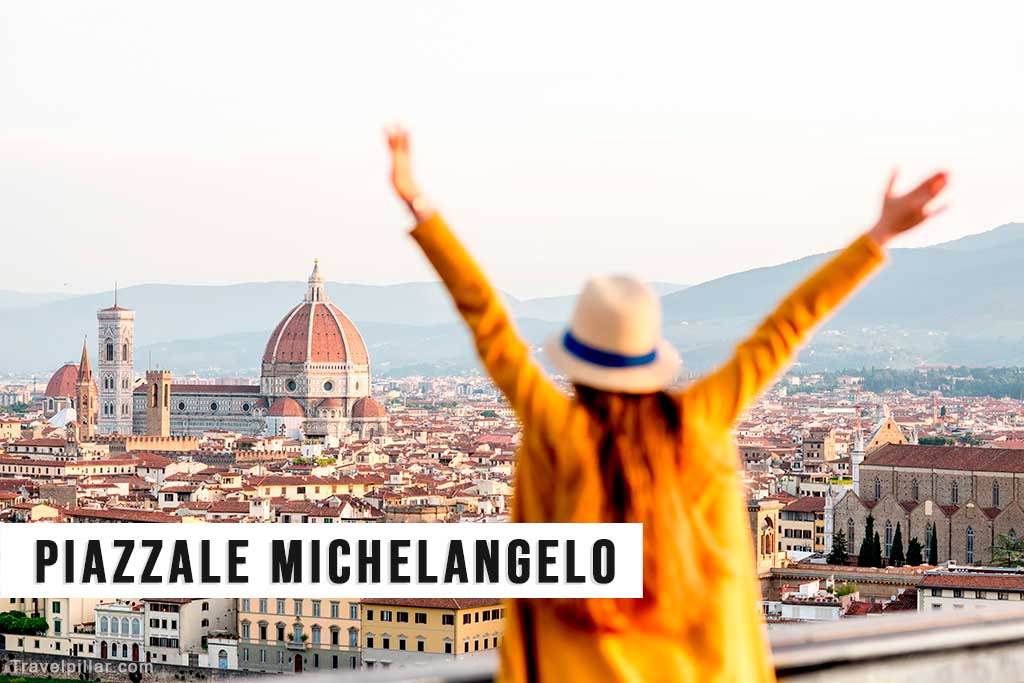
Piazzale Michelangelo is a 19th-century terrace located on a hill south of the Arno River, offering panoramic views of Florence. Designed by architect Giuseppe Poggi in 1869, it features a bronze replica of Michelangelo’s David at its center. The square was part of a larger urban renewal project and is accessible by road or footpaths. It remains a popular viewpoint for observing the city’s skyline, especially at sunset.
Google map 4.8/5
#9 Basilica of Santa Croce
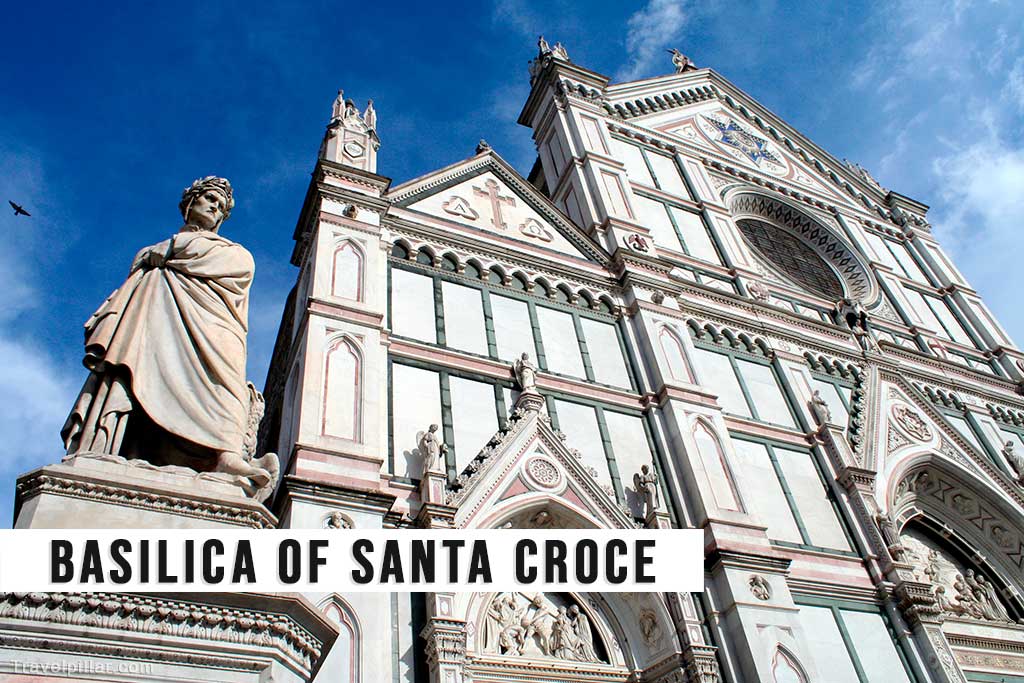
The Basilica of Santa Croce of Florence (Basilica di Santa Croce di Firenze) is a magnificent Franciscan church in Florence, revered for its exquisite Gothic architecture and remarkable historical significance. Consecrated in 1443, the basilica houses the tombs of illustrious Italians, such as Michelangelo, Galileo, and Machiavelli, earning it the moniker “Temple of the Italian Glories.” The church’s interior features frescoes by Giotto and his pupils, as well as a stunning wooden crucifix by Cimabue, making it a must-visit site for art and history enthusiasts.
Official website:
https://www.santacroceopera.it/en/
Google map 4.7/5
#10 Bargello National Museum
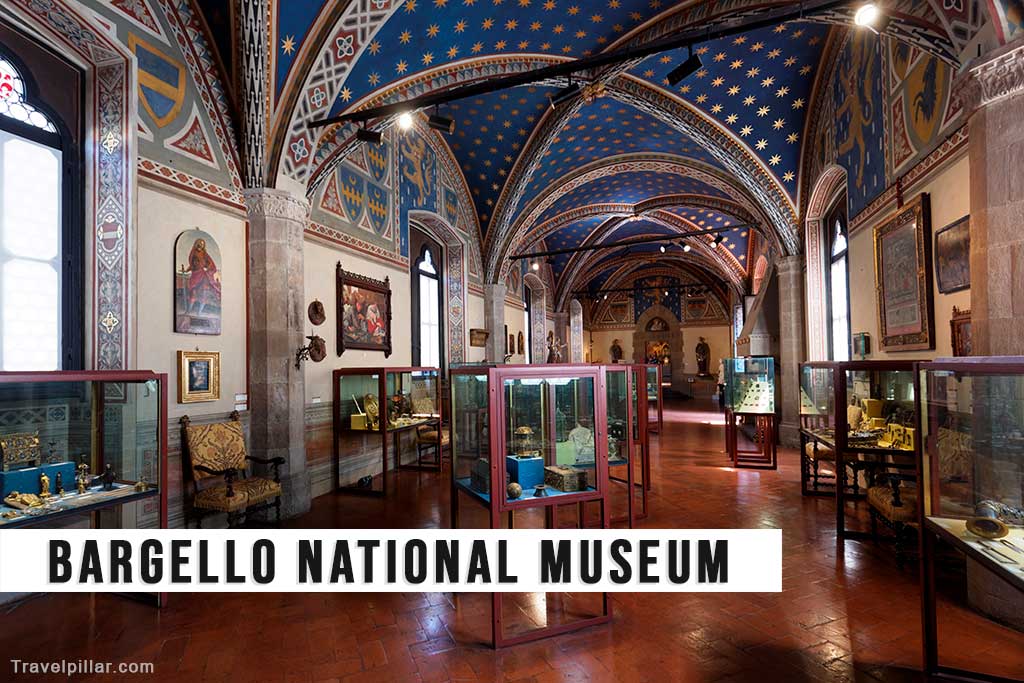
Bargello National Museum (Museo Nazionale del Bargello), situated in the medieval Palazzo del Bargello, is a prominent art museum in Florence. Founded in 1865, it boasts an extensive collection of Italian Renaissance sculptures, including masterpieces by Donatello, Michelangelo, and Verrocchio. The museum also houses an impressive assortment of ceramics, tapestries, and other decorative arts. The building, which once served as a prison and police headquarters, showcases the Gothic architectural style, adding to the museum’s historical charm and allure.
Official website:
https://bargellomusei.it/en/
Google map 4.7/5
#11 David Sculpture – Galleria dell’Accademia

The David Scupture is a world-renowned sculpture created in marble between 1501 and 1504 by the Italian artist Michelangelo. The sculpture stands 5.17 meters tall and depicts the biblical hero David, symbolizing the Florentine Republic’s strength and resilience against larger adversaries. Carved from a single block of Carrara marble, the statue showcases Michelangelo’s exceptional skill and has become an enduring symbol of the Italian Renaissance.
The statue was originally located in the Piazza Della Signoria but moved to the Galleria dell’Accademia in 1873 where it still resides. A replica now stands in the Piazza Della Signoria (see above)
Official website:
https://www.galleriaaccademiafirenze.it/en/
Google map 4.6/5
#12 Pitti Palace (Palazzo Pitti)
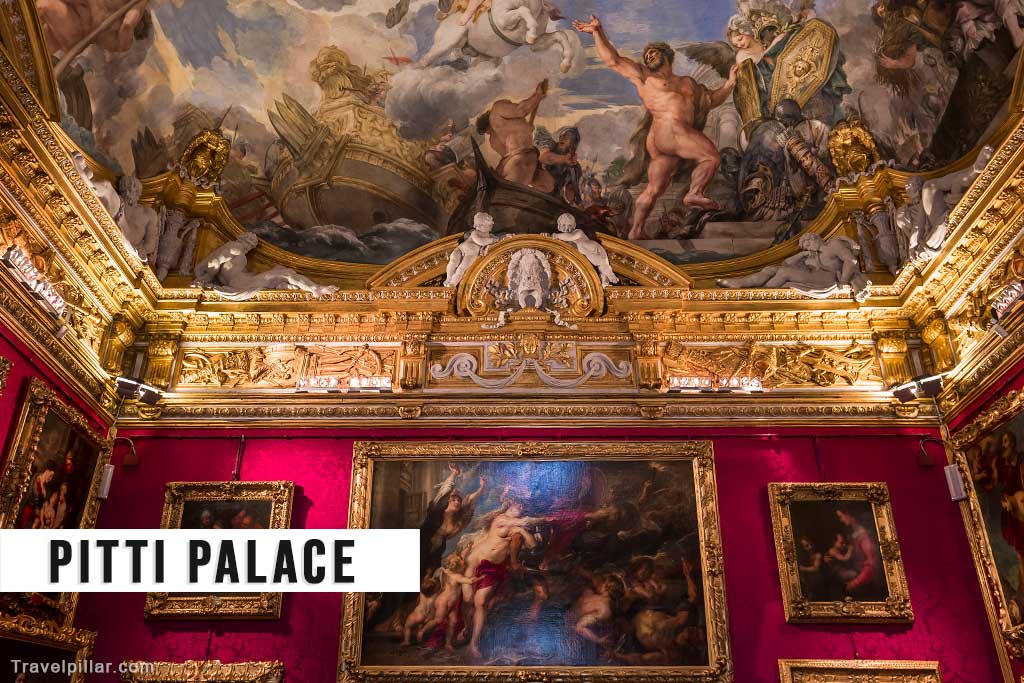
Pitti Palace (Palazzo Pitti) is an impressive Renaissance-era palace located on the south bank of the Arno River in Florence. Originally built for the banker Luca Pitti in the 15th century, the palace later became the primary residence of the powerful Medici family. Today, it houses several important museums, including the Palatine Gallery, which features an extensive collection of Renaissance paintings. With its grand architecture and rich cultural heritage, Pitti Palace remains a popular destination for art and history enthusiasts.
Official website:
https://www.uffizi.it/en/pitti-palace
Google map 4.6/5
#13 Medici Chapels & Basilica of San Lorenzo
The Basilica of San Lorenzo is a major church in Florence, rebuilt in the 15th century by Filippo Brunelleschi. It served as the parish church of the Medici family. Attached to the basilica are the Medici Chapels, including the New Sacristy designed by Michelangelo and the Chapel of the Princes. These chapels function as the burial site of the Medici dynasty and contain significant examples of Renaissance sculpture and architecture.
Official website: https://bargellomusei.it/en/
Google map 4.7/5 Cappelle Medicee
#14 Basilica of Santa Maria Novella
The Basilica of Santa Maria Novella is a Dominican church located near Florence’s main railway station. Completed in the 14th century, it features a distinctive marble façade designed by Leon Battista Alberti. The interior contains notable frescoes by artists such as Masaccio, Ghirlandaio, and Filippino Lippi. The church also includes a cloister and a museum. It is considered an important example of Gothic and early Renaissance architecture in Florence.
Google map 4.7/5
#12 Day Tour to Tuscany
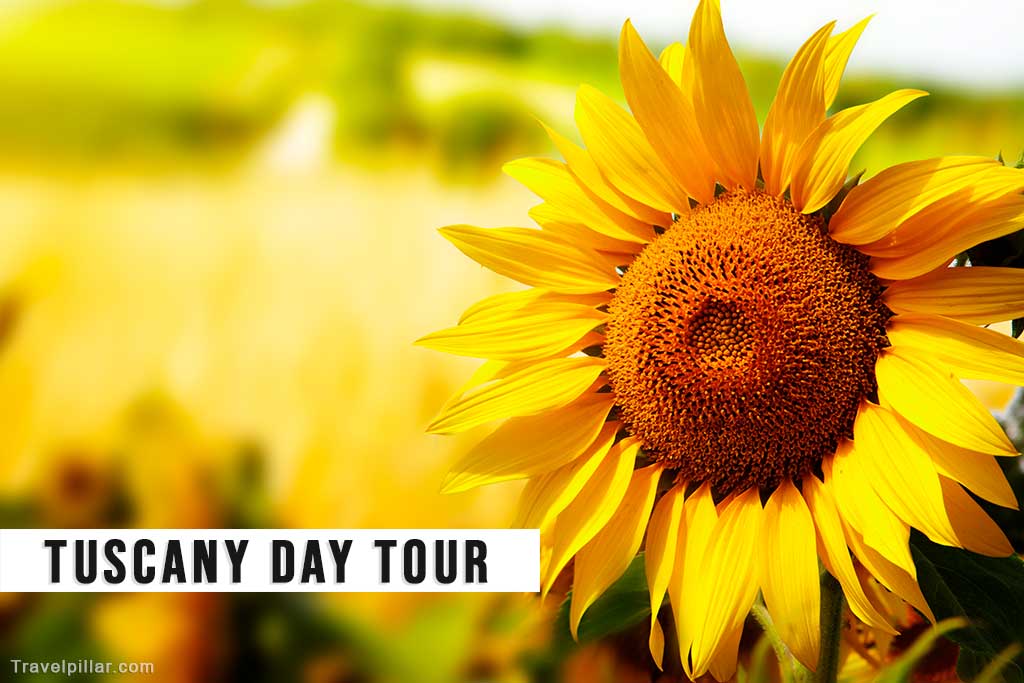
Day Tour to Tuscany offers visitors a chance to explore the picturesque region surrounding Florence. This popular excursion typically includes visits to historic hilltop towns, such as San Gimignano and Siena, known for their stunning architecture and medieval charm. Additionally, day tours often feature stops at local wineries, where guests can sample the region’s world-famous wines, such as Chianti and Brunello di Montalcino. The combination of breathtaking landscapes, rich history, and delectable cuisine makes a day tour to Tuscany an unforgettable experience for travelers in Italy.