
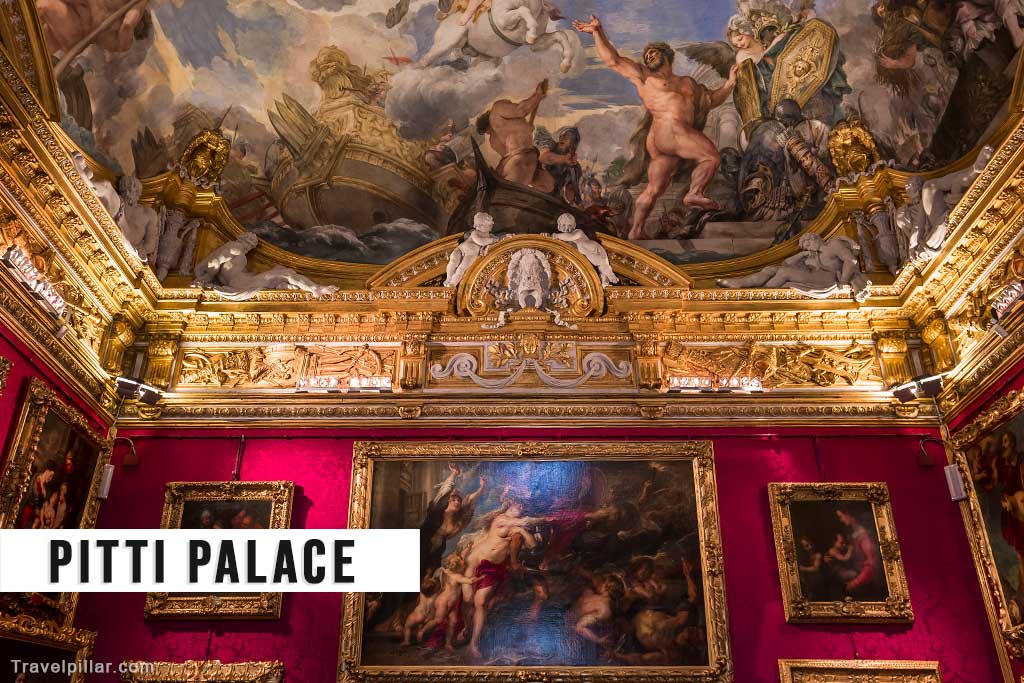
Pitti Palace, an expansive and opulent structure located on the southern bank of the Arno River in Florence, stands as a testament to the city’s rich history and artistic heritage. Originally constructed in 1458 for the Florentine banker Luca Pitti, the palace later served as the primary residence for the ruling Medici family and subsequent grand dukes of Tuscany.

Today, the Pitti Palace houses an impressive collection of museums and galleries, making it an essential destination for visitors seeking to experience the city’s diverse cultural offerings.

Designed by the architect Filippo Brunelleschi, the Pitti Palace is a striking example of Renaissance architecture. The palace’s imposing façade, characterized by its rusticated stone and symmetrical arrangement, spans an impressive 205 meters in length. The palace complex is further complemented by the picturesque Boboli Gardens, which showcase a variety of sculptures, fountains, and lush greenery.

The interior of the palace is home to several distinct museums and galleries, each housing an extensive collection of artworks and historical artifacts. Among the most notable institutions are the Palatine Gallery, featuring masterpieces by Raphael, Titian, and Caravaggio, and the Royal Apartments, which offer a glimpse into the opulent lifestyle of the Medici family. Other attractions within the palace include the Gallery of Modern Art, the Silver Museum, and the Porcelain Museum.

The palace is open to the public daily, with hours varying depending on the season. Entry fees are required for admission to the museums and gardens, with reduced rates available for children, students, and seniors. Guided tours can be arranged in advance through authorized tour operators.

Official website:
https://www.uffizi.it/en/pitti-palace
Google map 4.6/5
Highlights from the Pitti Palace Collection
Woman with a Veil (La Velata) – Raphael
Woman with a Veil (La Velata) by Raphael is one of the most admired portraits in the Pitti Palace. The sitter’s identity is uncertain, which has helped give the painting its mystery. Her calm expression, rich clothing and luminous skin create an image of beauty that feels both intimate and idealised. The title refers to the delicate veil, but the deeper appeal lies in Raphael’s ability to make the figure seem alive, thoughtful and quietly self-possessed.
https://www.uffizi.it/en/artworks/
Madonna of the Chair – Raphael
Madonna of the Chair by Raphael is one of the most famous Renaissance images of the Virgin and Child. Its circular format gives the composition an unusual closeness, drawing attention to the protective embrace between mother and son. The young John the Baptist appears beside them, already hinting at Christ’s future sacrifice. The painting is admired for its warmth and harmony, but its real power lies in turning a sacred subject into something deeply human and immediate.
https://www.uffizi.it/en/artworks/
The Penitent Magdalene – Titian
The Penitent Magdalene by Titian presents Mary Magdalene as both a sinner seeking forgiveness and a figure of intense spiritual emotion. In Christian tradition she is associated with repentance, withdrawal from worldly life and devotion to Christ. Titian gives her a dramatic presence, combining sensual beauty with religious feeling. The contrast is important: her past life and spiritual awakening are both present, making the painting an image of inner struggle, grief and redemption.
https://www.uffizi.it/en/artworks/
St. Mary Magdalen – Artemisia Gentileschi
St. Mary Magdalen by Artemisia Gentileschi shows the saint not simply as a penitent woman but as a figure of dignity and inward strength. Mary Magdalene was traditionally linked with repentance, yet Artemisia often gives female subjects a more substantial presence than many of her contemporaries. The result is less sentimental than some versions of the theme. The painting invites attention not only to sorrow and devotion, but also to endurance, seriousness and self-command.
https://www.uffizi.it/en/artworks/
Judith with the Head of Holofernes – Cristofano Allori
Judith with the Head of Holofernes by Cristofano Allori depicts the aftermath of one of the most dramatic stories in the Bible. Judith, a Jewish widow, saves her people by deceiving and killing the Assyrian general Holofernes. Allori does not focus on the act itself, but on the tense moment after it, when Judith holds the severed head. The painting combines beauty and violence, turning Judith into a symbol of courage, resolve and calculated intelligence.
https://www.uffizi.it/en/artworks/
Madonna del Granduca – Raphael
Madonna del Granduca by Raphael is a quiet and restrained image of the Virgin and Child, very different from more crowded or elaborate altarpieces. Its simplicity is part of its strength. Mary stands out against a dark background, focusing all attention on the emotional bond between mother and son. The painting became especially admired for its calm purity and balanced composition. It shows Raphael’s gift for making sacred subjects feel direct, tender and timeless.
https://www.uffizi.it/en/artworks/