
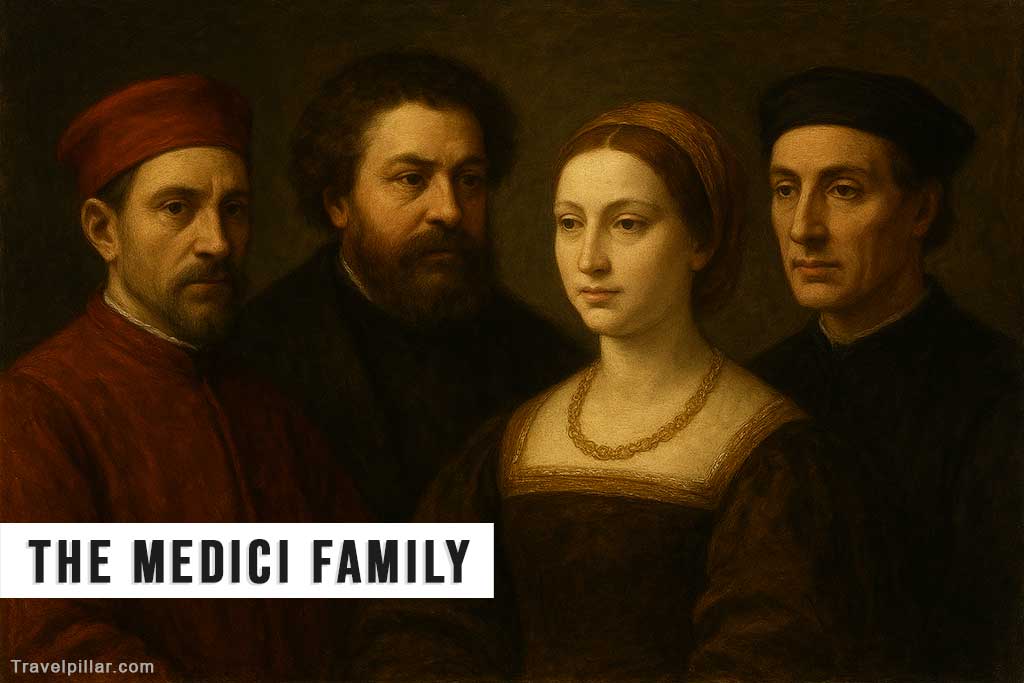
In the heart of Florence, the legacy of the Medici family is etched into the very fabric of the city. Renowned as patrons of the arts, astute politicians, and prolific financiers, the Medici family played a pivotal role in shaping the cultural and economic landscape of Renaissance Italy. As travelers meander through the cobbled streets, they encounter a tapestry of architectural marvels and artistic treasures, each bearing the indelible mark of this influential dynasty.
The Medici family, originally a banking dynasty, rose to prominence in the 15th century. Their financial acumen laid the foundation for a legacy that transcended mere wealth; it became a cultural and political force that extended far beyond the borders of Tuscany. The family’s opulent residences, such as the Palazzo Medici Riccardi and the Palazzo Pitti, stand as enduring symbols of their affluence and influence.
Palazzo Medici Riccardi, designed by Michelozzo di Bartolomeo, exemplifies the early Renaissance architectural style. Its austere façade conceals the grandeur within, including the Magi Chapel adorned with frescoes by Benozzo Gozzoli, a testament to the Medici’s patronage of the arts. This palazzo served as the Medici’s primary residence and the epicenter of Florence’s political and cultural life.
The Uffizi Gallery, originally constructed as government offices, was transformed into a gallery by Francesco I de’ Medici in the 16th century. Today, it stands as one of the world’s foremost art museums, housing masterpieces by Botticelli, Leonardo da Vinci, and Raphael, among others. Travelers can marvel at the works that were once curated for the enjoyment of the Medici elite.
The Boboli Gardens, adjacent to the Palazzo Pitti, offer a tranquil escape into the lush greenery favored by the Medici family. Designed in the 16th century, the gardens showcase an exquisite blend of Renaissance and Baroque landscaping, providing a serene retreat for contemplation.
The Medici Chapels, within the Basilica di San Lorenzo, serve as the final resting place for several Medici family members. The New Sacristy, designed by Michelangelo, stands as a testament to the family’s enduring influence on art and architecture.
In conclusion, a journey through Florence unveils the indomitable legacy of the Medici family. Their patronage of the arts, political prowess, and economic foresight left an indelible mark on the city, transforming it into a beacon of Renaissance culture. As travelers explore the Medici’s opulent residences, museums, and gardens, they step back in time to an era where Florence flourished under the auspices of this remarkable family.