
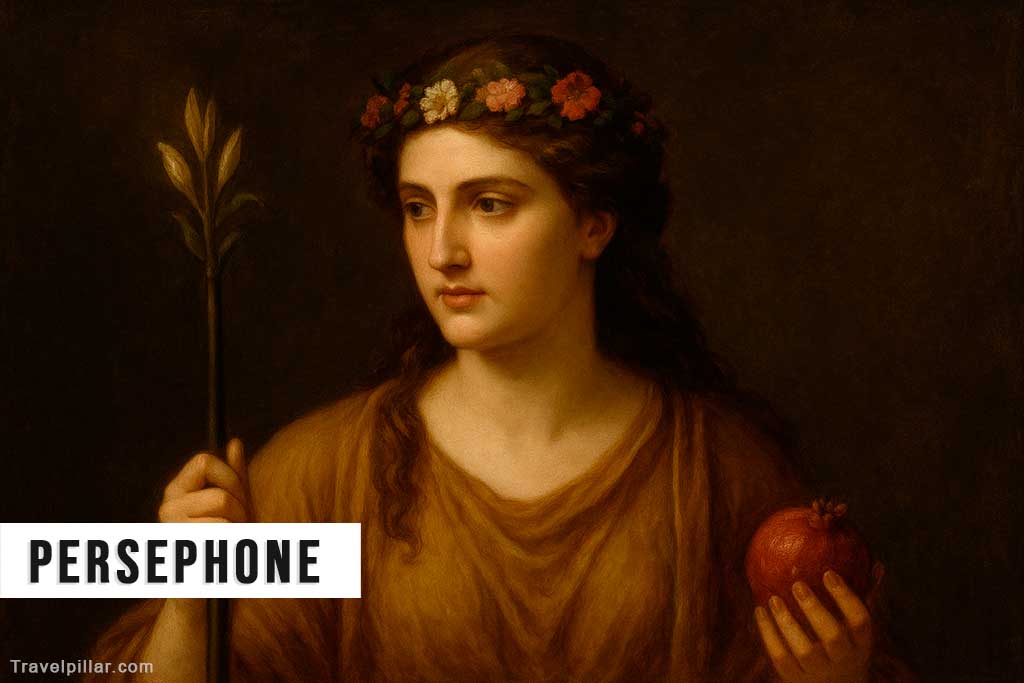
Persephone, an important figure in Greek mythology, is the goddess of spring and the queen of the underworld. She is the daughter of Demeter, the goddess of agriculture, and Zeus, the king of the gods. Persephone’s dual role as both a symbol of life and death is central to her mythology and is closely tied to the ancient Greek understanding of the natural world, particularly the changing of the seasons.
Persephone’s most significant myth revolves around her abduction by Hades, the god of the underworld. According to the story, Hades fell in love with Persephone and took her to his realm to be his queen. Her mother, Demeter, in her grief, caused the earth to become barren, leading to the first winter. Eventually, an agreement was reached in which Persephone would spend part of the year with Hades in the underworld and the rest with her mother on earth. This myth is often interpreted as an explanation for the seasons: during the months when Persephone is in the underworld, Demeter mourns, and the earth experiences autumn and winter; when Persephone returns, spring and summer follow, as the earth is revitalized.
In her role as queen of the underworld, Persephone is a key figure in rituals related to death and the afterlife. Despite her abduction, she is often depicted as a powerful and dignified figure, ruling alongside Hades. Her presence represents the cycle of life, death, and rebirth, making her an important symbol in both agricultural and funerary rites.
Persephone was worshipped in several major Greek religious festivals, most notably the Eleusinian Mysteries, which were celebrated in her honor and that of her mother, Demeter. These rites, held in Eleusis, were among the most important religious ceremonies in ancient Greece, offering initiates insights into life, death, and the afterlife.
The mythology of Persephone offers a window into the ancient Greek understanding of nature, seasonal change, and the balance between life and death.