
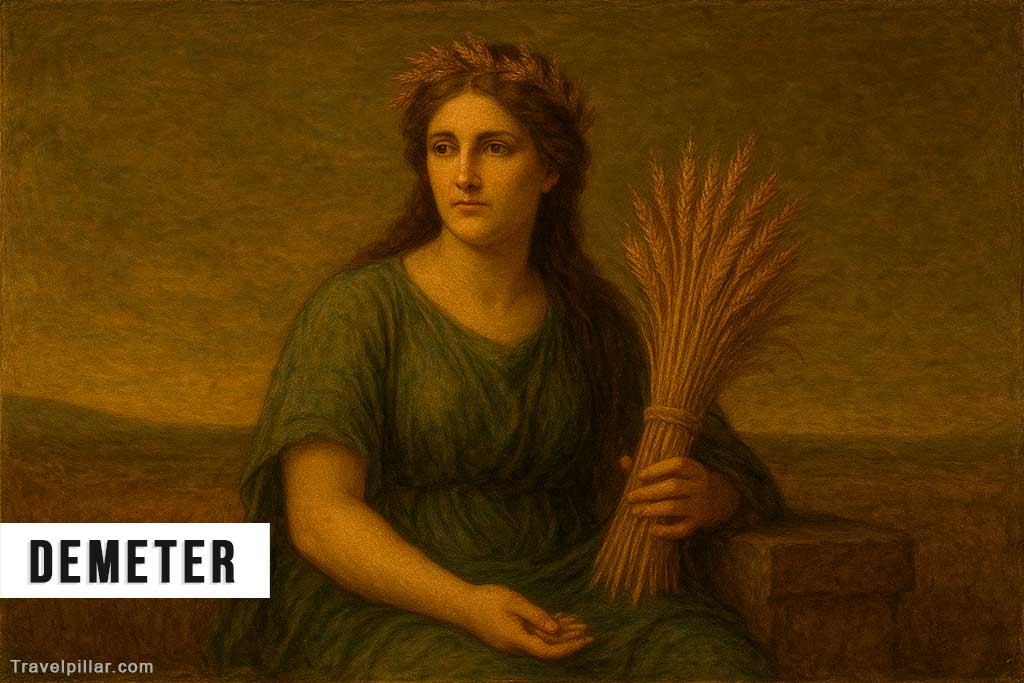
Demeter, a key figure in ancient Greek mythology, was the goddess of agriculture, fertility, and the harvest. As one of the twelve Olympian gods, she played a significant role in ensuring the productivity of the land and the sustenance of human life. Her influence extended over the growth of crops, the fertility of the earth, and the natural cycle of life and death. Demeter was especially revered by farming communities and those who depended on the land for their livelihood.
The mythology surrounding Demeter is closely tied to her daughter, Persephone. The story of Persephone’s abduction by Hades, the god of the underworld, is central to Demeter’s role in Greek myth. When Persephone was taken to the underworld, Demeter’s grief caused the earth to become barren, leading to the first winter. It was only after a deal was struck, allowing Persephone to spend part of the year with her mother and part in the underworld, that Demeter restored fertility to the earth. This myth explains the changing of the seasons, with Persephone’s return to the surface marking the spring and her descent bringing the winter.
Demeter was worshipped in various festivals, the most notable being the Eleusinian Mysteries. These rites, held in the town of Eleusis, were among the most important religious ceremonies in ancient Greece. They celebrated the myth of Demeter and Persephone and were believed to offer initiates a deeper understanding of life and the afterlife.
Temples dedicated to Demeter were often located in fertile regions, reflecting her connection to the land and agriculture. One of the most famous sanctuaries is located at Eleusis, where the Eleusinian Mysteries were performed. This site was a major pilgrimage destination for those seeking to honor the goddess and participate in her sacred rites.
Demeter’s importance in Greek mythology reflects the centrality of agriculture in ancient Greek society and highlights the reverence held for the natural cycles that sustain life. Understanding her role provides insight into how the Greeks viewed their relationship with the land and the gods who governed it.
Google map Eleusis, Greece
Google map Eleusis Archeological Site 4.7/5
Google map Archaeological Museum of Eleusis 4.7/5