
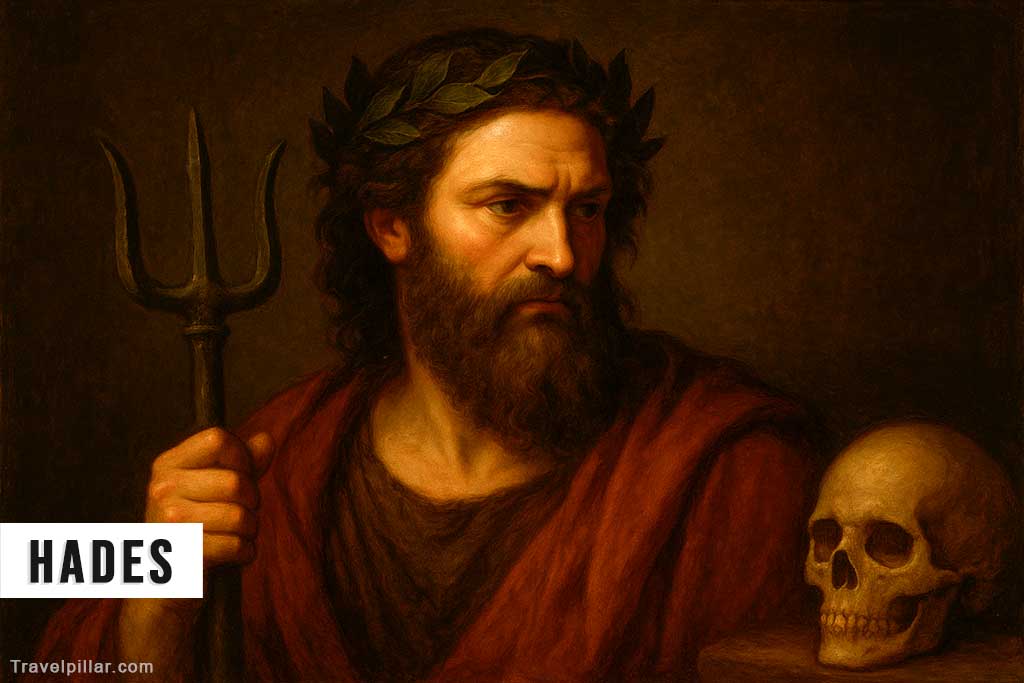
Hades, the ancient Greek god of the underworld, played a crucial role in Greek mythology as the ruler of the dead and the overseer of the afterlife. He was the son of the Titans Cronus and Rhea and the brother of Zeus, Poseidon, Hera, Demeter, and Hestia. After the defeat of the Titans, Hades, along with his brothers, divided the cosmos. Zeus took the sky, Poseidon the sea, and Hades the underworld, making him a key figure in the Greek pantheon.
Hades is often mistakenly associated with evil or malevolent behavior due to his connection with death and the afterlife. However, in Greek mythology, he was not viewed as a god of death or punishment. Instead, Hades was responsible for maintaining order in his realm, where the souls of the deceased resided. His role was to ensure that the dead were received and that the balance between life and death was maintained. The actual god of death was Thanatos, a minor deity.
The underworld, also referred to as Hades, was divided into several regions, including the Elysian Fields for the blessed dead and Tartarus, where the wicked were punished. Hades presided over this realm with strict authority, though he rarely left it. His most famous myth involves the abduction of Persephone, the daughter of Demeter, whom he made his queen. This myth explains the cycle of the seasons, as Persephone spends part of the year in the underworld (causing winter) and part of the year on earth (bringing spring).
Hades was not widely worshipped by the ancient Greeks in the same manner as other Olympian gods, and temples dedicated to him were rare. His presence was acknowledged, but he was more often feared than revered, as interactions with the underworld were associated with mortality.
Despite his somber role, Hades was seen as an essential deity who ensured the balance of life and death, a fundamental aspect of ancient Greek belief. His mythology and the underworld offer insights into the Greeks’ perception of mortality and the afterlife.