

Athena, one of the twelve Olympian gods in ancient Greek mythology, was the goddess of wisdom, warfare, and crafts. As a central figure in Greek religion and culture, she represented both the intellectual and military aspects of human life. Athena was widely revered as a protector of cities and a guide in practical endeavors, such as weaving, metalwork, and navigation. Her association with wisdom made her a favored deity among scholars, philosophers, and warriors alike.
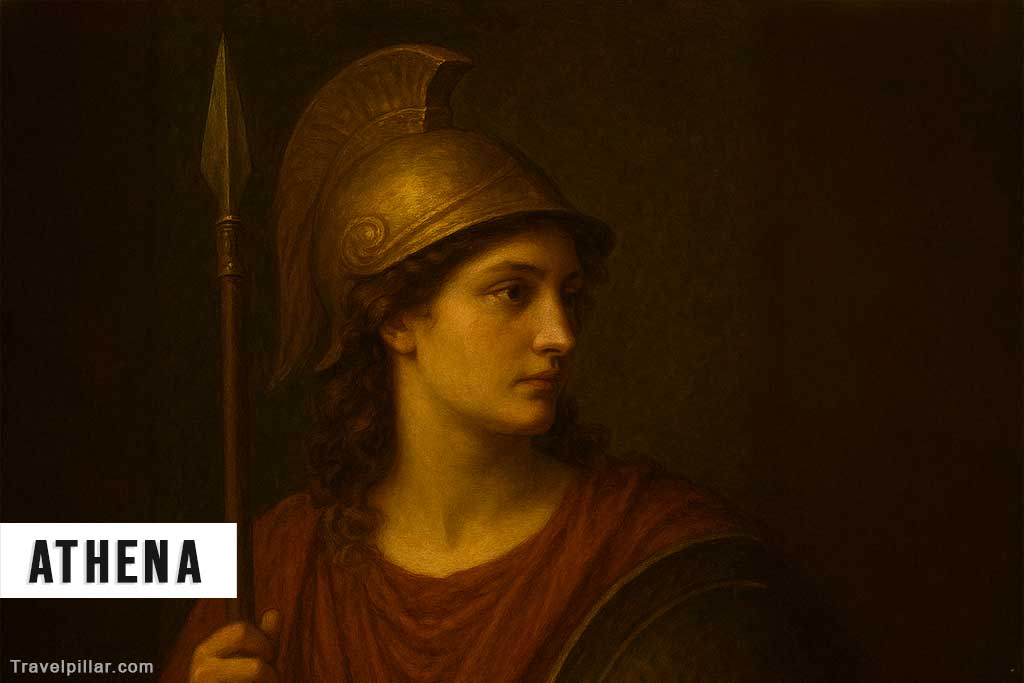
According to mythology, Athena was born fully grown and armored from the head of Zeus, following a prophecy that she would become one of the most powerful deities. This unusual birth symbolized her close connection to her father and her role as a goddess of strategic warfare, contrasting with Ares, who embodied the more chaotic and destructive aspects of war.
Athena is most closely associated with the city of Athens, which bears her name. The famous myth of her contest with Poseidon for the patronage of the city explains this connection. Poseidon offered a saltwater spring by striking the ground with his trident, while Athena provided the olive tree, symbolizing peace and prosperity. The people of Athens chose Athena’s gift, and she became the city’s protector. The Parthenon, located on the Acropolis in Athens, was built in her honor and remains one of the most significant architectural achievements of the ancient world.
In addition to her role as a warrior goddess, Athena was also associated with justice and fairness. She is often depicted in art with a shield and spear, accompanied by an owl, a symbol of wisdom. Her role in mythology extends beyond Athens, as she was often called upon by heroes such as Odysseus and Perseus for guidance and protection during their quests.
Athena’s significance in Greek mythology highlights the importance of wisdom, strategy, and justice in ancient Greek society, as well as the cultural value placed on intellectual and practical achievements.