

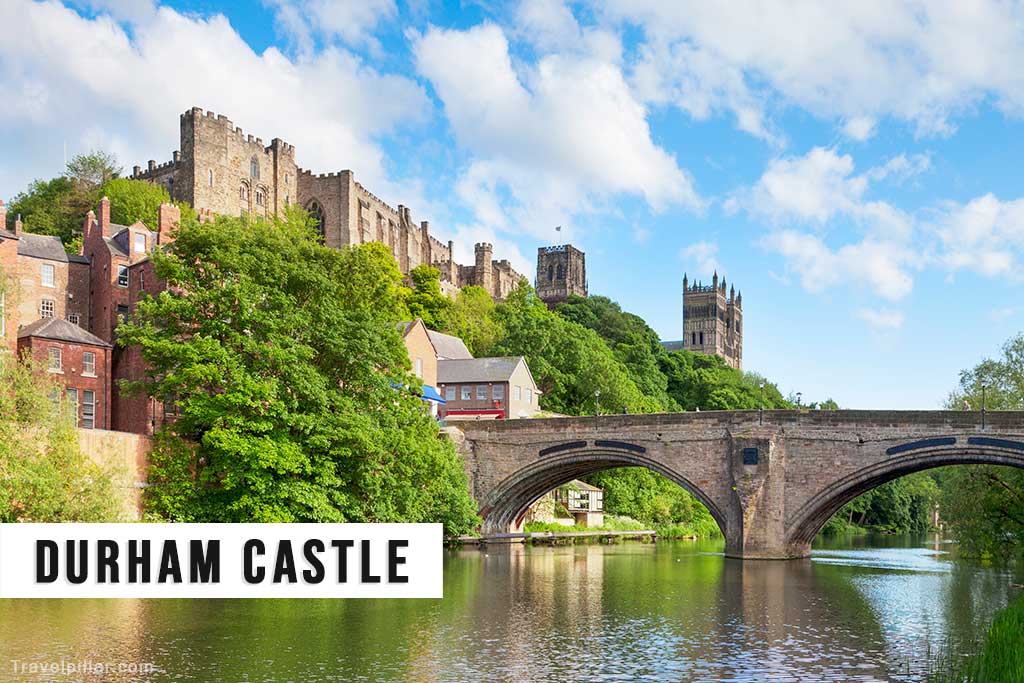
Durham Castle, located in the city of Durham in northeast England, is a Norman fortress built in the late 11th century under the orders of William the Conqueror. Constructed to establish Norman control in the north, it served both as a defensive stronghold and the residence of the Bishops of Durham, who held both secular and ecclesiastical power in the region. It stands directly opposite Durham Cathedral and together they form a UNESCO World Heritage Site.
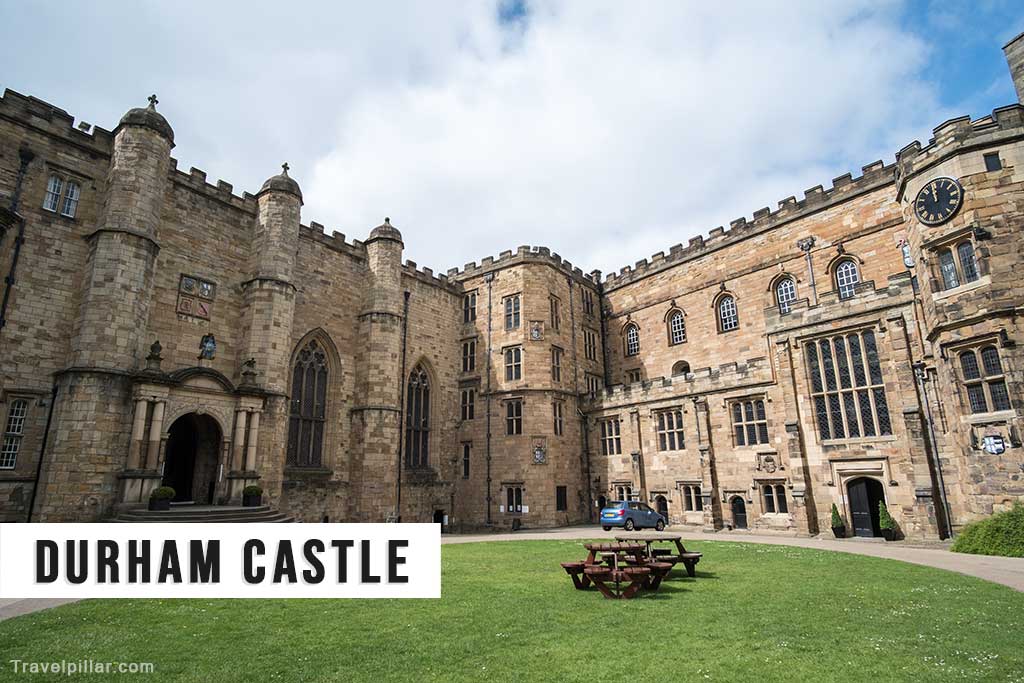
The castle’s core includes the original motte and bailey structure, with later medieval and post-medieval additions. Key features include the Norman Chapel, dating to around 1080, notable for its Romanesque arches and carved stonework. The Great Hall, originally constructed in the 14th century and later expanded in the 19th century, served as the centre of ceremonial life and remains in regular use. The keep was rebuilt in the 19th century and now houses student accommodation.
Since 1837, Durham Castle has served as part of University College, Durham University. It continues to function as a residential college, and access for visitors is by guided tour only. Tours are led by university students and cover the main historical sections of the building, including the Great Hall, the chapel, the courtyard, and the Norman staircase.
The castle retains many original architectural elements, alongside Victorian restorations and adaptations for academic use. Though still lived in, the castle maintains its historical character and significance. Interpretation is provided through guided commentary, and the adjacent Palace Green Library offers further context for the wider World Heritage Site.
The castle’s elevated location above the River Wear enhances its strategic and visual prominence. Its close relationship with the cathedral underscores its importance in the historical development of ecclesiastical governance and regional control in medieval England.
Durham Castle represents an enduring example of Norman architecture adapted for academic and residential use. Its limited but focused public access, historical integrity, and setting within a broader historic precinct make it a distinctive heritage attraction in northeast England.
Official website: https://www.durham.ac.uk/
Google map 4.6/5