
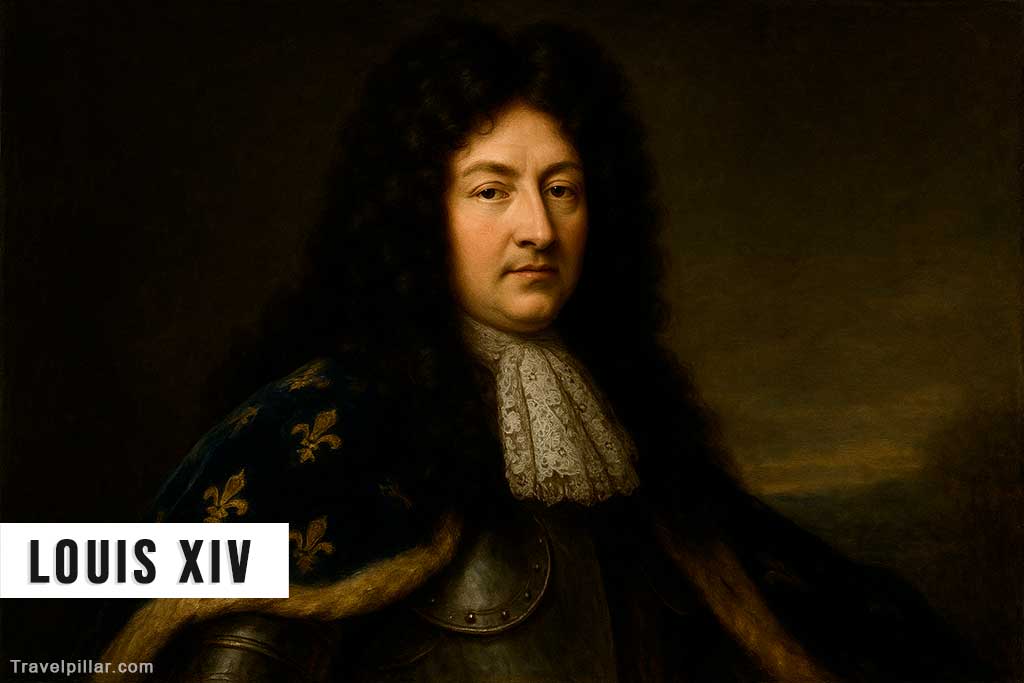
Louis XIV, also known as Louis the Great or the Sun King, was born in 1638 and reigned as King of France from 1643 until his death in 1715. He holds the distinction of being the longest-serving monarch in European history, with a reign that lasted over 72 years. His reign, marked by the assertion of absolute monarchy, the centralization of power, and a magnificent display of courtly pomp and grandeur, left an indelible mark on the trajectory of European and world history.
Louis XIV ascended to the throne at the tender age of four following the death of his father, Louis XIII. During his early reign, France was governed by his mother, Anne of Austria, and Cardinal Mazarin, as regents. Upon Mazarin’s death in 1661, Louis assumed personal control of the kingdom and resolved to govern without a chief minister.
His most significant contributions were in centralizing authority, curbing the power of the nobility, and transforming Versailles from a royal hunting lodge into a lavish palace that served as the symbol of his absolute monarchy. The palace was not just a royal residence, but also a place where political power was exercised, and courtly etiquette was rigorously enforced as a means of controlling the nobility.
Louis also supported arts and literature, and his reign is often associated with the age of French Classicism. He patronized many artists and writers, including Molière, Racine, and La Fontaine, which led to a cultural renaissance in France.
Louis led France into a series of wars with an aim to expand its territory. While some were successful, others, like the War of the Spanish Succession, were costly and led to significant economic strain on the country.
His reign, while controversial and marked with conflict, played a significant role in shaping France as a leading European power and setting cultural trends for the rest of Europe. Louis XIV died in 1715, leaving a legacy of absolute monarchy that persisted until the French Revolution.