

Bali Culture is a rich and diverse tapestry of customs, traditions, and artistic expressions that permeate every aspect of life on the Indonesian island of Bali. The predominant religion on the island is Balinese Hinduism, a unique blend of Hinduism, Buddhism, and indigenous animistic beliefs. This spiritual foundation significantly influences the island’s culture, from daily rituals to grand ceremonies.

Balinese people are renowned for their artistic skills, which are showcased through traditional dance, music, painting, and sculpture. The island is home to several distinct styles of painting, such as the classical Kamasan and the more modern Ubud styles. Balinese dance is another essential aspect of the culture, characterized by intricate movements, expressive gestures, and vibrant costumes. Traditional gamelan music, featuring ensembles of percussion instruments, accompanies many ceremonies and performances.
Architecture in Bali is heavily influenced by the local culture, with temples and shrines displaying intricate stone carvings and thatched-roof meru towers. Balinese homes are traditionally designed as a collection of separate pavilions within a walled compound, emphasizing the importance of communal living and harmony with nature.

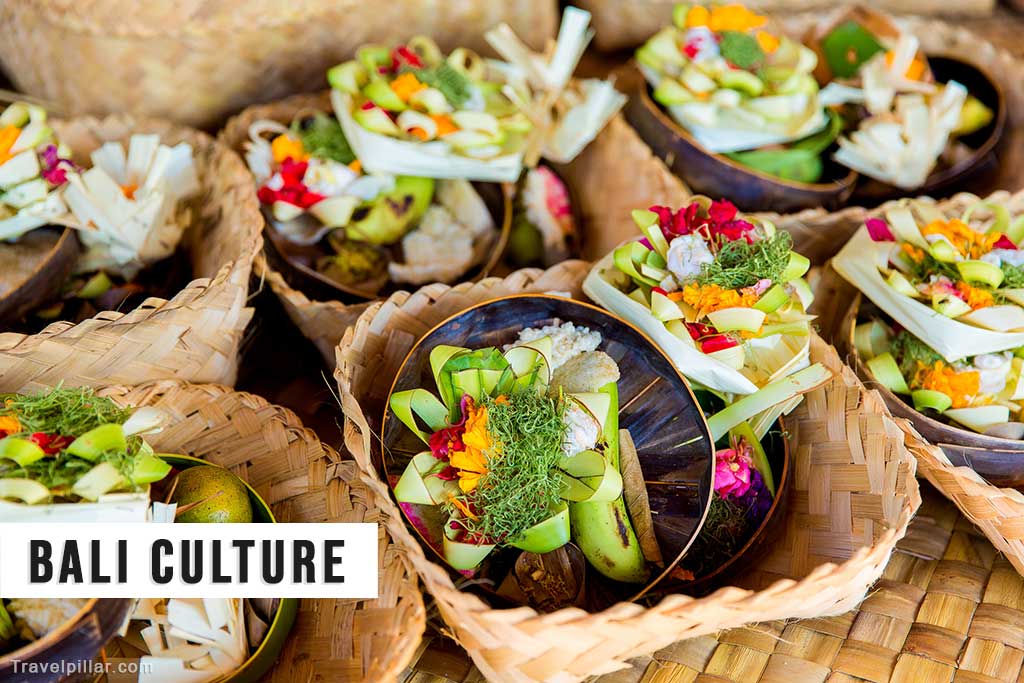
Festivals and ceremonies play a vital role in Balinese culture, with events such as Galungan, Kuningan, and Nyepi showcasing the island’s religious and cultural heritage. Visitors to Bali can immerse themselves in the local culture by attending performances, visiting temples, and participating in workshops to learn traditional arts and crafts.