

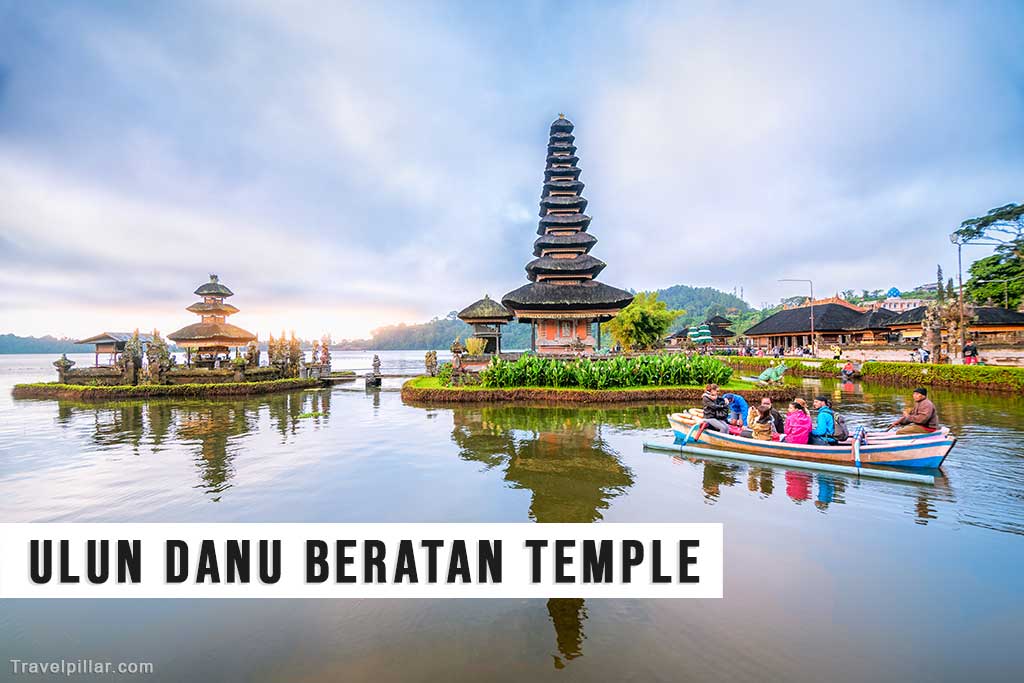
Ulun Danu Beratan Temple is a significant Hindu water temple located on the shores of Lake Beratan in the Bedugul Highlands of central Bali. Positioned at an elevation of approximately 1,200 metres above sea level, the temple is surrounded by mountains and often enveloped in mist, creating a cool climate throughout the year. It is one of the most photographed temples in Bali due to its distinctive lakeside setting.
The temple complex was established in the 17th century and is dedicated to Dewi Danu, the goddess of lakes, rivers, and water, which plays a vital role in Balinese agriculture. Ulun Danu Beratan serves as an important site for ceremonies related to irrigation and farming. The temple is one of several that support the subak irrigation system, a traditional water management system recognized by UNESCO.

The complex includes several shrines and meru towers, each dedicated to different deities. The most recognizable structure is the eleven-tiered meru dedicated to Shiva and Parvati, which appears to float on the lake when water levels are high. Other shrines are dedicated to Vishnu, Brahma, and the lake goddess herself. The architecture follows traditional Balinese design, constructed from black volcanic stone with tiered thatched roofs.

Visitors access the site through a landscaped park that includes flower gardens, statues, and paved walkways. Boats are available for hire to view the temple from the water, although landing near the shrines is not permitted. The temple remains an active place of worship and is used for local ceremonies, particularly during times of water-related rituals.
Facilities include a car park, entrance gate, and visitor amenities such as restrooms and food vendors. An entrance fee is required. The surrounding area includes a botanical garden and local market, making it a common stop on central Bali tour routes.
Ulun Danu Beratan Temple remains both a cultural and religious landmark in Bali, offering visitors insight into the island’s traditional relationship with water and agriculture. Its setting on the lake, framed by forested hills, distinguishes it from coastal and cliffside temples elsewhere on the island.
Google map 4.7/5