
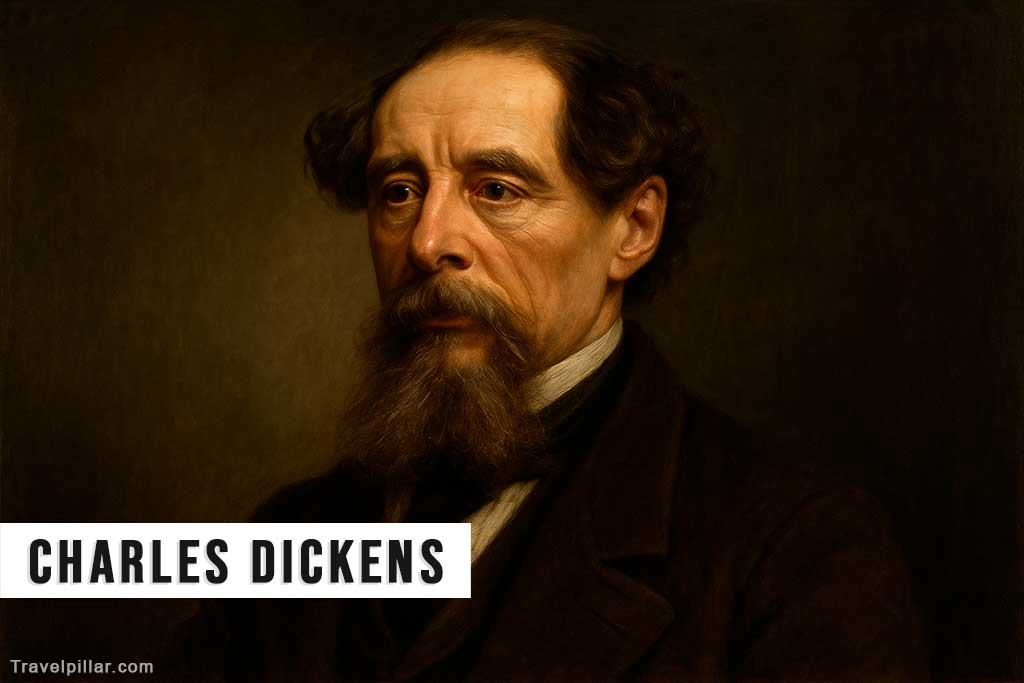
Charles Dickens, born on February 7, 1812, in Portsmouth, England, is a name synonymous with the 19th-century Victorian literature. His literary contributions and social commentary have left an indelible mark on the world of literature, making him one of the most celebrated and influential writers in history.
Dickens’ early life was marked by financial struggles and hardship, which would later serve as a profound influence on his work. Despite limited formal education, his passion for storytelling was evident from a young age. His first taste of success came with “The Pickwick Papers,” a serialized novel published in 1836, which brought him recognition and launched his prolific literary career.
One of Dickens’ most notable characteristics was his prodigious output. His novels, often serialized in periodicals, included iconic works such as “Oliver Twist,” “David Copperfield,” “Great Expectations,” and “A Tale of Two Cities.” These novels not only entertained but also addressed the socio-economic issues and injustices of the era. Dickens was a sharp critic of the harsh conditions faced by the poor, child labor, and the inadequacies of the legal system.
A hallmark of Dickens’ writing was his ability to create memorable and diverse characters. From the benevolent Ebenezer Scrooge in “A Christmas Carol” to the lovable but flawed Pip in “Great Expectations,” Dickens’ characters were richly developed and became archetypal figures in English literature.
Beyond his novels, Dickens was a social reformer. His work often led to greater awareness and changes in the social and political landscape of Victorian England. His advocacy for social justice and educational reform, exemplified through his support for the “Ragged Schools,” showcased his commitment to improving the lives of the less fortunate.
Dickens’ influence extended beyond the written word. His public readings of his works were immensely popular and added to his fame, allowing him to connect directly with his audience. These readings also demonstrated his theatrical talents, a facet of his personality that is sometimes overlooked.
Charles Dickens passed away on June 9, 1870, leaving behind a literary legacy that continues to captivate readers and scholars alike. His work has been adapted into countless films, plays, and television series, attesting to the enduring relevance of his storytelling.
Today, those interested in the life and work of Charles Dickens can explore a variety of museums, libraries, and exhibitions dedicated to his memory. The Charles Dickens Museum, located in his former home at 48 Doughty Street, London, offers an intimate glimpse into his life. Visitors can view personal artifacts, manuscripts, and gain insight into the man behind the novels.
In conclusion, Charles Dickens stands as an iconic figure in the world of literature. His contributions to the Victorian era and his dedication to social reform have solidified his place in history as a writer whose words continue to resonate with readers, providing valuable insights into the society and human condition of his time.