
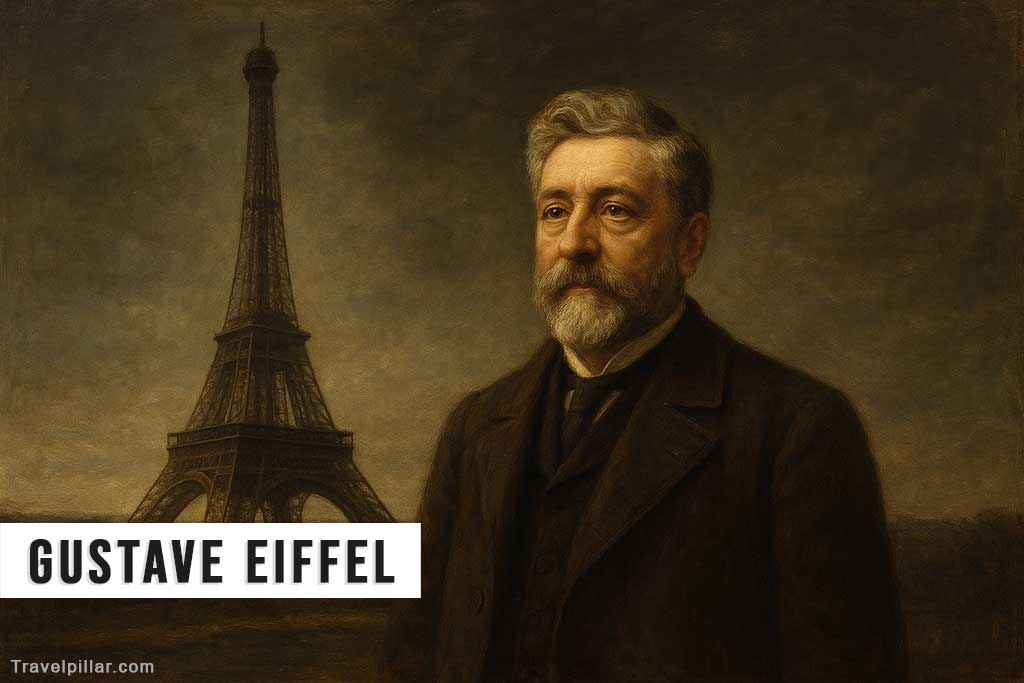
Alexandre Gustave Eiffel, born on December 15, 1832, in Dijon, France, was a highly esteemed French civil engineer and architect who left an indelible mark on the landscape of Paris with his iconic Eiffel Tower. Best remembered for this monumental contribution, he also had a rich career that spanned bridge and railway construction, architecture, and even contributions to the field of aerodynamics.
Trained at the prestigious École Centrale des Arts et Manufactures in Paris, Eiffel began his career overseeing bridge construction for a railway company. Notable early projects included his work on the exotic Maria Pia Bridge in Portugal and the Garabit viaduct in France, where his innovative use of wrought iron showcased his skill and architectural vision.
The culmination of Eiffel’s career was his design and implementation of the Eiffel Tower, erected for the 1889 Exposition Universelle (World’s Fair) held in Paris to celebrate the 100th anniversary of the French Revolution. Despite initial public criticism, the Eiffel Tower, standing at an unparalleled 300 meters, would become a symbol of French industrial prowess and an enduring Parisian landmark.
Post-1889, Eiffel’s interests expanded towards the nascent field of aerodynamics. After his retirement from engineering, he used his resources to establish an aerodynamics laboratory in Auteuil, where he conducted wind tunnel tests. His work in this field was significant and informed later aeronautical design.
Eiffel’s career was marked by a series of remarkable engineering accomplishments, each one testament to his visionary thinking and daring creativity. The Eiffel Tower, still standing proudly over Paris, is a tribute to his genius and a symbol of the city itself. Eiffel died on December 27, 1923, in his beloved Paris, leaving behind a legacy of innovative design and engineering brilliance.