

William Wordsworth’s connection to the Lake District was both personal and influential, shaping much of his poetic vision and legacy. Born in Cockermouth in 1770, Wordsworth grew up surrounded by the region’s distinctive landscapes of mountains, lakes, and rural villages, which left a lasting impression on his work. After completing his education and traveling in Europe, William Wordsworth settled in the Lake District with his sister, Dorothy, first in Grasmere and later in Rydal Mount. These settings provided the inspiration and environment for some of his most famous works, including Lyrical Ballads, The Prelude, and I Wandered Lonely as a Cloud.
The poetry of William Wordsworth often celebrates the Lake District’s natural beauty, seeing it as a source of spiritual renewal and moral strength. His Romantic ideals emphasized nature as a teacher and refuge, a belief he expressed in vivid depictions of the landscapes he knew intimately. Wordsworth’s influence also contributed to the Lake District’s reputation as a destination for those seeking beauty and tranquility. His writing encouraged a greater appreciation of the area, contributing to the conservation efforts that eventually helped establish it as a protected national park, preserving its character for future generations.
Wordsworth House (National Trust)

Wordsworth House, located in Cockermouth in the Lake District, is the birthplace of William Wordsworth, born here in 1770. This Georgian townhouse, nestled near the River Derwent, provided Wordsworth with his earliest experiences of nature and family life, influences that shaped his later poetry. The house is preserved by the National Trust and features period furnishings, family portraits, and interactive displays. Visitors can explore the rooms where Wordsworth grew up and walk through the restored 18th-century gardens, which reflect the natural beauty central to his work.
Official website: https://www.nationaltrust.org.uk/
Google map 4.5/5
Dove Cottage (museum)

Dove Cottage, located in Grasmere in the Lake District, was the home of William Wordsworth and his sister, Dorothy, from 1799 to 1808. This modest stone cottage served as a place of inspiration for Wordsworth, where he wrote many of his most celebrated works, including parts of Lyrical Ballads and The Prelude. The cottage’s simple yet tranquil surroundings reflect the themes of nature and rustic life present in his poetry. Today, Dove Cottage is preserved as a museum, showcasing Wordsworth’s personal items, manuscripts, and Dorothy’s journals, offering insight into the daily life and creative atmosphere of the poet.
Official website: https://wordsworth.org.uk
Google map Wordsworth Grasmere Museum 4.5/5
Allan Bank (National Trust)
Allan Bank, located in Grasmere in the Lake District, was home to William Wordsworth from 1808 to 1811. Unlike his previous home at Dove Cottage, Allan Bank was a spacious Georgian property, though Wordsworth initially disliked its imposing size. Over time, he grew fond of its surroundings, which offered expansive views over Grasmere and inspired his work. Today, Allan Bank is a National Trust property, allowing visitors to explore its informal rooms, historic displays, and extensive gardens and woodlands. This unique setting provides insight into Wordsworth’s life and offers a tranquil place to enjoy Grasmere’s natural beauty and literary heritage.
Official website: https://www.nationaltrust.org.uk/
Google map 4.6/5
Rydal Mount
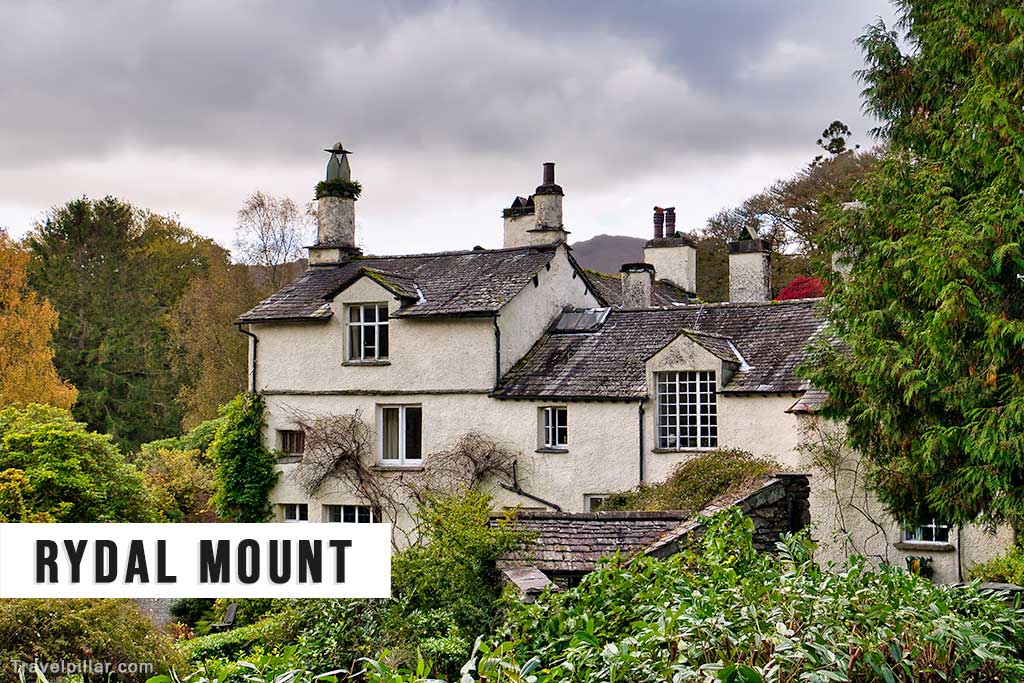
Rydal Mount, located near Ambleside in the Lake District, was William Wordsworth’s home from 1813 until his death in 1850. The larger, more secluded property provided Wordsworth with a peaceful environment conducive to his writing and reflection. Wordsworth extensively landscaped the gardens, creating terraced paths, rock pools, and flowerbeds that aligned with his Romantic ideals of natural beauty. Many of his later works were composed here, and he continued to revise The Prelude during his time at Rydal Mount. Today, Rydal Mount is open to visitors, showcasing Wordsworth’s personal belongings and the gardens he designed, preserved as he envisioned them.
Official website: https://www.rydalmount.co.uk
Google map Rydal Mount and Gardens 4.5/5
Grasmere

Grasmere Village, located in the heart of the Lake District, holds a significant connection to William Wordsworth, who famously described it as “the loveliest spot that man hath ever found.” Wordsworth lived nearby at Dove Cottage and Rydal Mount, drawing inspiration from Grasmere’s scenic landscapes, including the tranquil lake and surrounding hills. The village’s St. Oswald’s Church is Wordsworth’s final resting place, with a simple gravestone that attracts admirers worldwide. Visitors to Grasmere can explore local landmarks associated with the poet, including the Wordsworth Daffodil Garden, and enjoy walks around Grasmere Lake, which captures the beauty reflected in his poetry.
Google map Grasmere village
Google map St Oswald’s church 4.7/5
Google map Wordsworth Daffodil Garden 4.6/5
Kirkstone Pass and Ullswater

Kirkstone Pass and Ullswater are notable Lake District locations that deeply resonate with Wordsworth’s admiration for natural landscapes. Kirkstone Pass, the highest road pass in the Lake District, offers rugged, sweeping views of the mountains and valleys below. This dramatic setting aligns with the themes of nature’s grandeur found in Wordsworth’s work. Ullswater, a serene lake nearby, inspired his famous poem “I Wandered Lonely as a Cloud” after he saw daffodils along its shores. The area remains a popular destination for visitors who wish to experience the landscapes that influenced Wordsworth’s poetic celebration of nature’s beauty and tranquility.
Google map Kirkstone Pass A592 4.8/5
Google map Ullswater Lake 4.9/5