
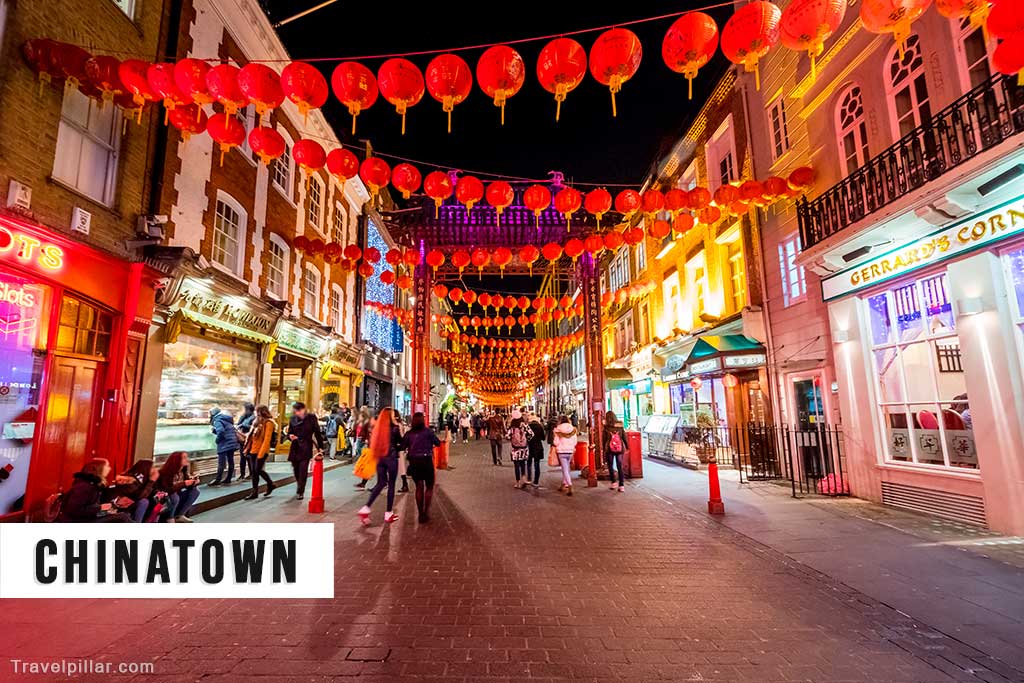
Chinatown is a central London neighbourhood situated in the West End, primarily focused around Gerrard Street, and bordered by Leicester Square, Shaftesbury Avenue, and Wardour Street. It functions as a cultural and commercial hub for the Chinese community in London and is a prominent destination for dining, shopping, and cultural events.
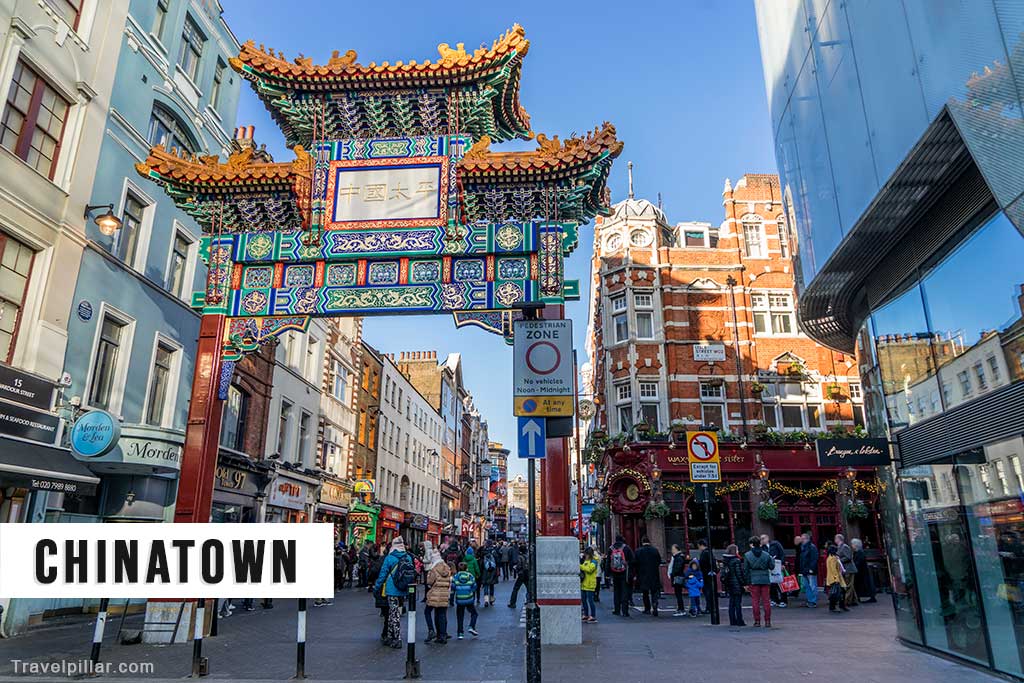
The origins of London’s Chinese community trace back to the early 20th century, with the original Chinatown located in Limehouse, East London. Following World War II and urban redevelopment, the community gradually relocated to Soho, where the modern Chinatown began to form during the 1970s. Today, the area is characterised by Chinese-style architecture, ornamental gates, red lanterns, and bilingual street signage.
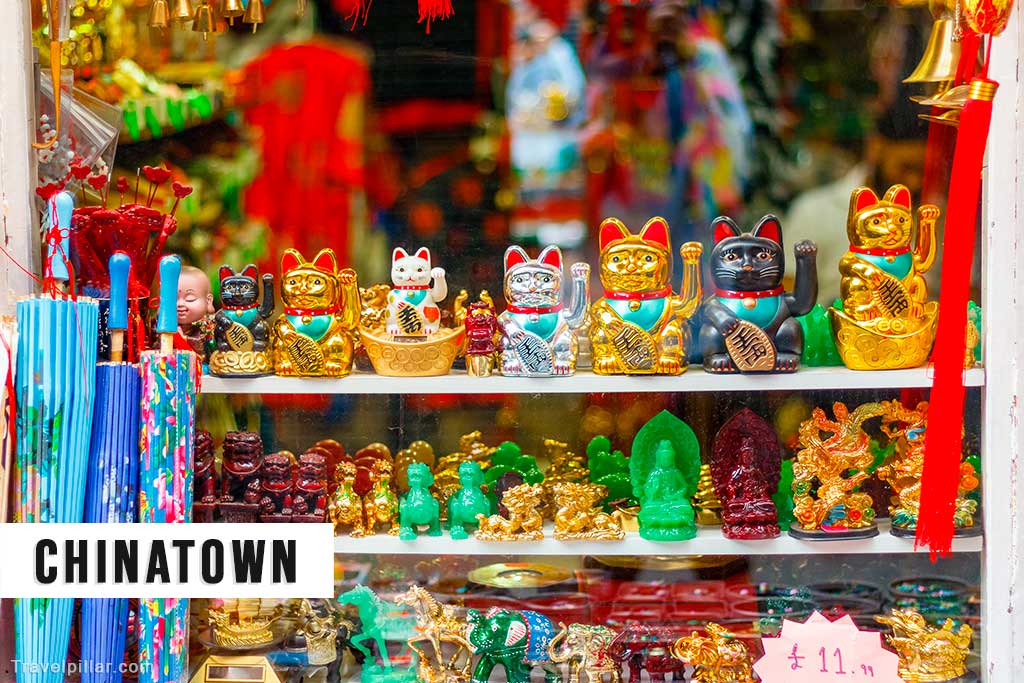
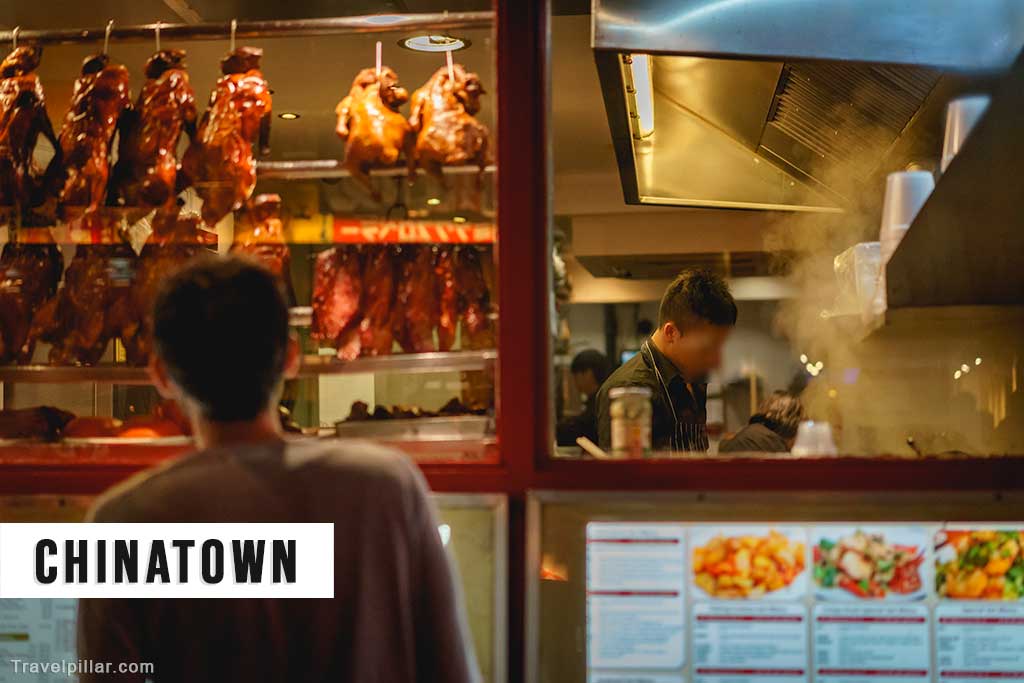
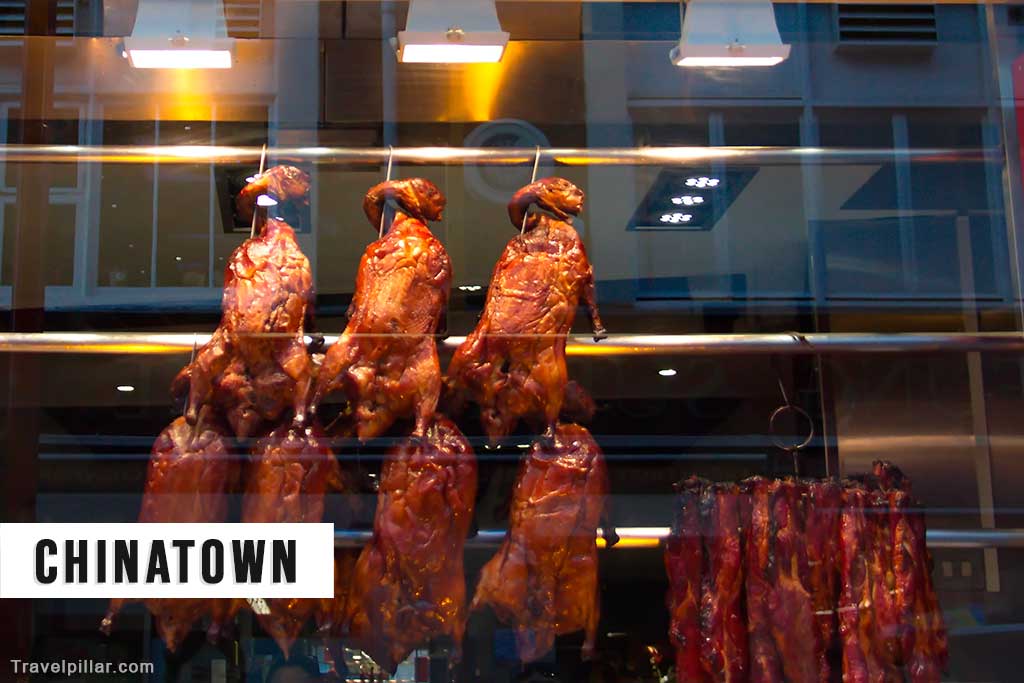
Chinatown contains a high concentration of Chinese and other East Asian restaurants, including Cantonese, Sichuan, and Taiwanese cuisines. It also includes supermarkets, herbal medicine shops, bakeries, bubble tea cafés, and souvenir outlets. Many of the businesses are independently owned and cater to both the local community and visiting tourists. The area experiences high foot traffic, particularly during evenings and weekends.
The district is well known for hosting public celebrations for Chinese festivals, most notably the Lunar New Year. These events often include traditional lion dances, parades, live performances, and temporary market stalls. The neighbourhood serves as a focal point for cultural visibility and engagement for the Chinese diaspora in London.
Chinatown has undergone a series of refurbishments and initiatives aimed at maintaining its cultural identity while improving infrastructure. This includes pedestrianisation measures, decorative street furniture, and the installation of traditional Chinese gates, or paifangs. The local business association and Westminster City Council collaborate on preserving the area’s distinct character.
Due to its central location and accessibility from Leicester Square and Piccadilly Circus stations, Chinatown is integrated into the broader landscape of the West End, drawing a diverse range of visitors. It functions both as a working commercial district and as a cultural destination, offering an experience distinct from surrounding areas while contributing to the wider identity of central London.