
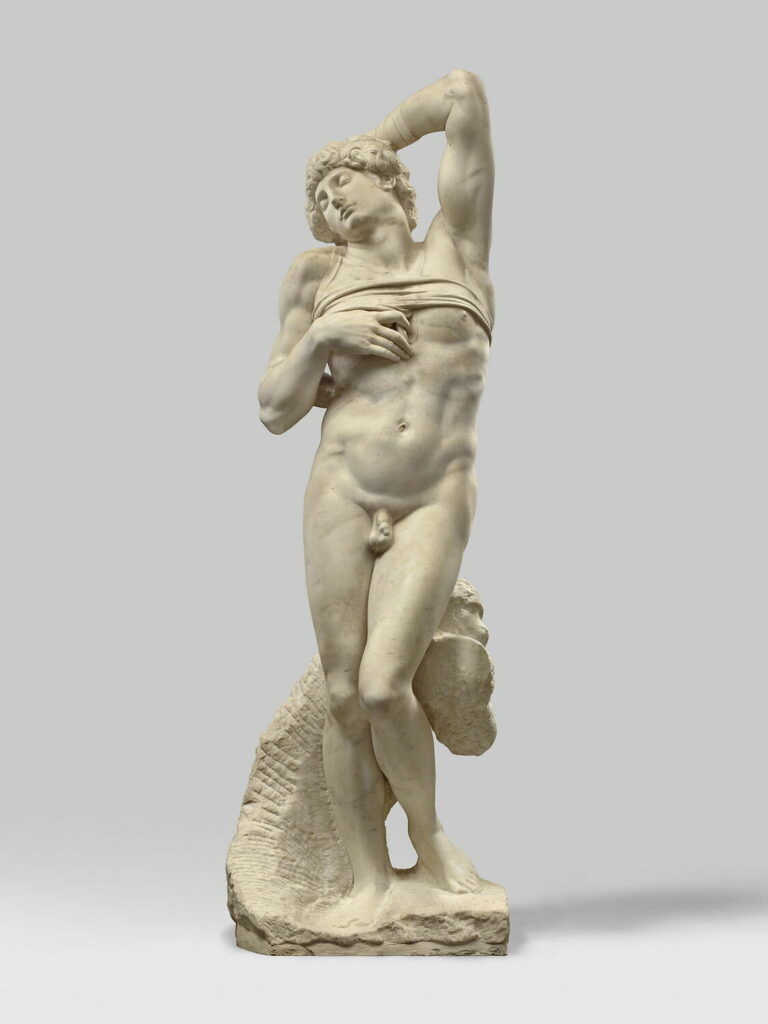
Displayed in the Louvre Museum in Paris, Dying Slave is one of Michelangelo’s most admired Renaissance sculptures. Created between 1513 and 1516, the marble figure was originally intended for the vast tomb of Pope Julius II, one of the most ambitious artistic projects of the Italian Renaissance. Although the final tomb was dramatically reduced in scale and never completed as Michelangelo first imagined, several of the sculptures produced for the project survived independently, with Dying Slave becoming one of the most famous.
The sculpture depicts a partially bound young man leaning backward with closed eyes and a twisting body posture that suggests both exhaustion and serenity. Despite the title, the figure does not appear to be suffering violently. Instead, the expression feels strangely calm, almost dreamlike, leading historians to debate whether the sculpture truly represents death or perhaps sleep, spiritual release or captivity overcome through the soul.
Michelangelo’s treatment of the human body is central to the sculpture’s power. The detailed anatomy, twisting torso and flowing movement demonstrate the artist’s extraordinary understanding of physical form. Unlike earlier medieval sculpture, where figures often appeared rigid and symbolic, Michelangelo’s work feels intensely human and alive. Even the unfinished quality in certain areas contributes to the impression that the figure is emerging from the marble itself.
The meaning of the “slave” remains uncertain. Some scholars believe the sculpture symbolized conquered provinces under papal authority, while others interpret it more philosophically as representing the human soul trapped by earthly existence. Michelangelo himself was deeply interested in ideas about spiritual struggle, beauty and human limitation, themes that appear throughout his work.
One reason the sculpture became so influential is the emotional ambiguity Michelangelo created. The figure combines beauty, vulnerability and tension without clearly explaining what is happening. This psychological complexity later inspired artists during both the Baroque and Romantic periods.
Michelangelo’s own life adds another layer to the story. The tomb commission caused decades of frustration, financial disputes and changing political demands, and the artist often described the project as a burden. Yet from this troubled commission emerged some of the greatest sculptures of the Renaissance.
Today, visitors encountering Dying Slave in the Louvre Museum often pause longer than expected before the sculpture. Beyond its technical brilliance, the work captures something deeply human: the tension between strength and fragility, resistance and surrender, life and stillness.
Weblink: https://collections.louvre.fr/en/