
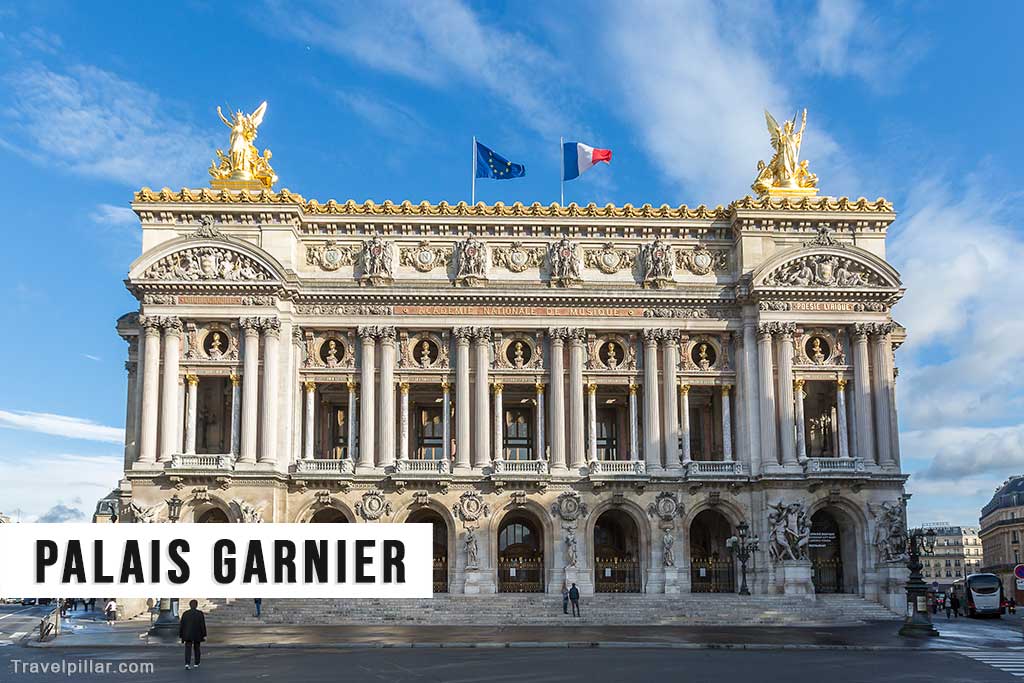
The Palais Garnier, also known as the Opéra Garnier, is one of the most famous and opulent landmarks in Paris. Located in the 9th arrondissement, it serves as a prime example of Beaux-Arts architecture and is a must-visit for those interested in cultural and architectural history.
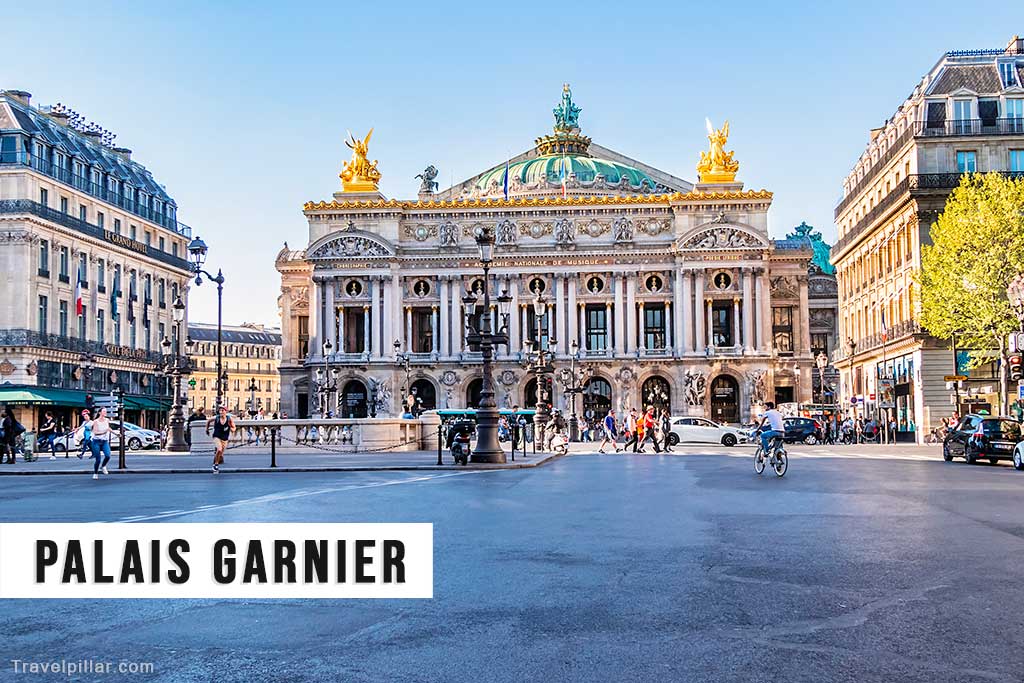
Commissioned by Emperor Napoleon III (nephew of Napoleon Bonaparte) as part of his grand reconstruction of Paris, the Palais Garnier was designed by architect Charles Garnier and completed in 1875. The building’s exterior is characterized by its ornate façade, featuring marble friezes, columns, and numerous statues, including the famous gilded sculptures of Harmony and Poetry.
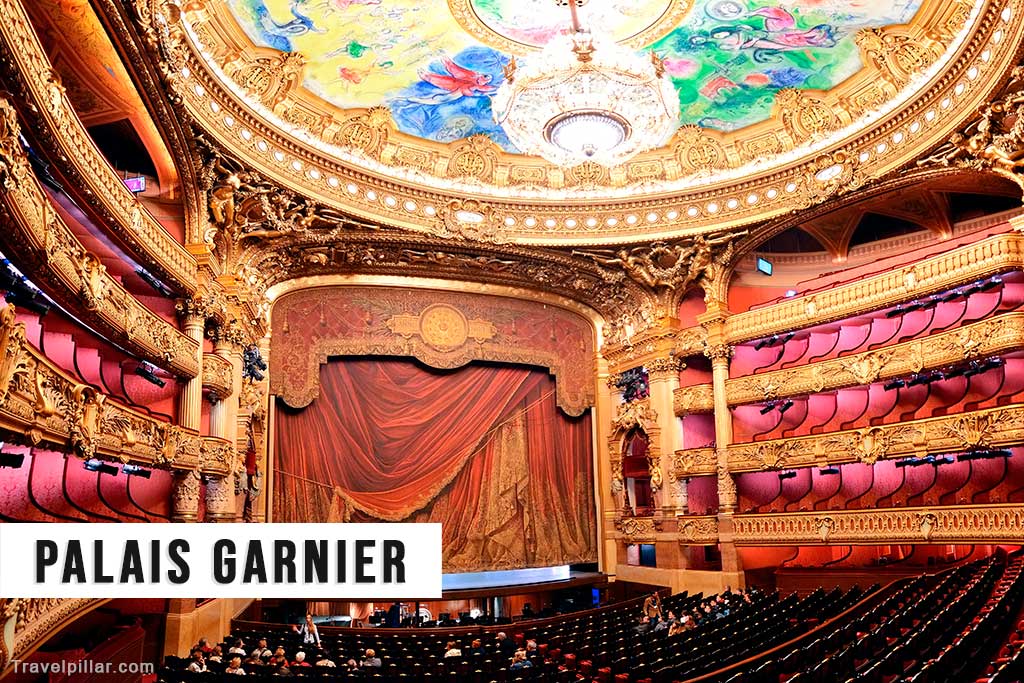
The interior of the Palais Garnier is equally, if not more, impressive. The grand staircase, made of white marble with a balustrade of red and green marble, is a highlight, leading visitors to the main auditorium. The auditorium, with its horseshoe-shaped design, seats nearly 2,000 people and is renowned for its red velvet seats and the chandelier weighing over six tons. The ceiling, painted by Marc Chagall in 1964, adds a modern artistic touch to the historic setting.
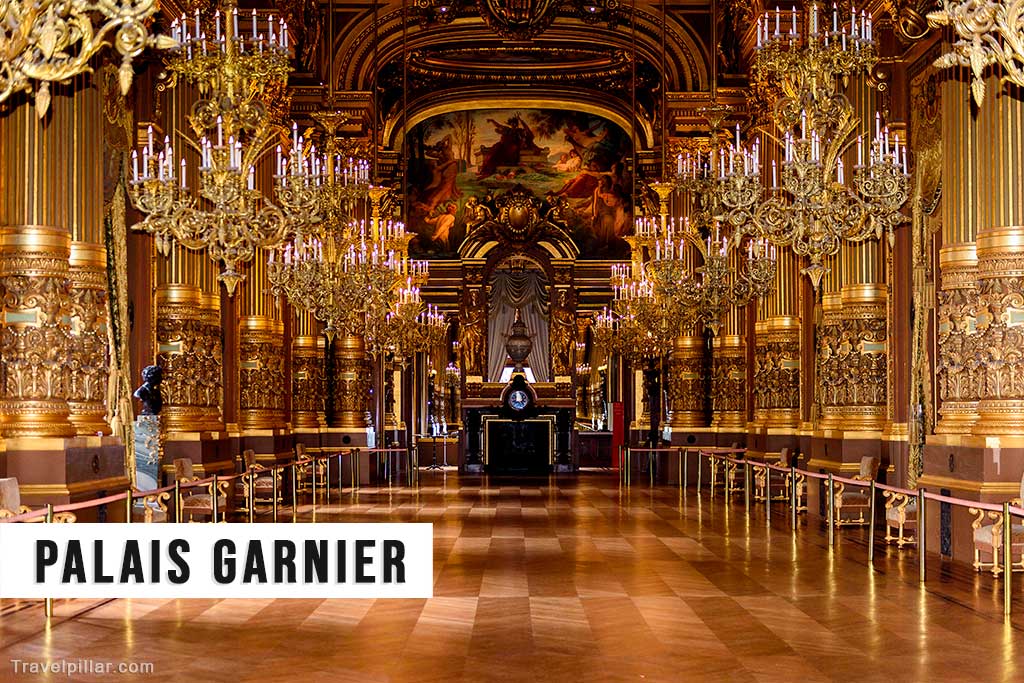
Beyond the main performance hall, the Palais Garnier houses several other areas of interest. The Grand Foyer, with its elaborate gilding, mirrors, and chandeliers, was inspired by the Hall of Mirrors in the Palace of Versailles. The library-museum of the Opera, located within the building, offers a comprehensive look at the history of opera and ballet in France.
The Palais Garnier has been the home of the Paris Opera since its inauguration, hosting numerous world premieres of ballets and operas. Although the primary venue for opera performances has moved to the Opéra Bastille, the Palais Garnier remains a central venue for ballet and other performances.
Visitors can explore the Palais Garnier through guided tours or independently, experiencing the grandeur and historical significance of this architectural masterpiece. The building’s rich history and stunning design make it an essential destination for tourists and cultural enthusiasts alike.
In addition to its role as a cultural institution, the Palais Garnier has played an important role in French history and culture. The building was the inspiration for Gaston Leroux’s famous novel “The Phantom of the Opera,” and has been featured in countless films and works of art.
Official website: https://www.operadeparis.fr
Google map 4.7/5