

The Pont du Gard is an ancient Roman aqueduct bridge located near the town of Vers-Pont-du-Gard in southern France. It was constructed in the first century AD to transport water from a spring at Uzès to the Roman colony of Nemausus (modern-day Nîmes), spanning approximately 50 kilometres. The bridge is the most prominent section of the aqueduct and stands as a significant example of Roman engineering.
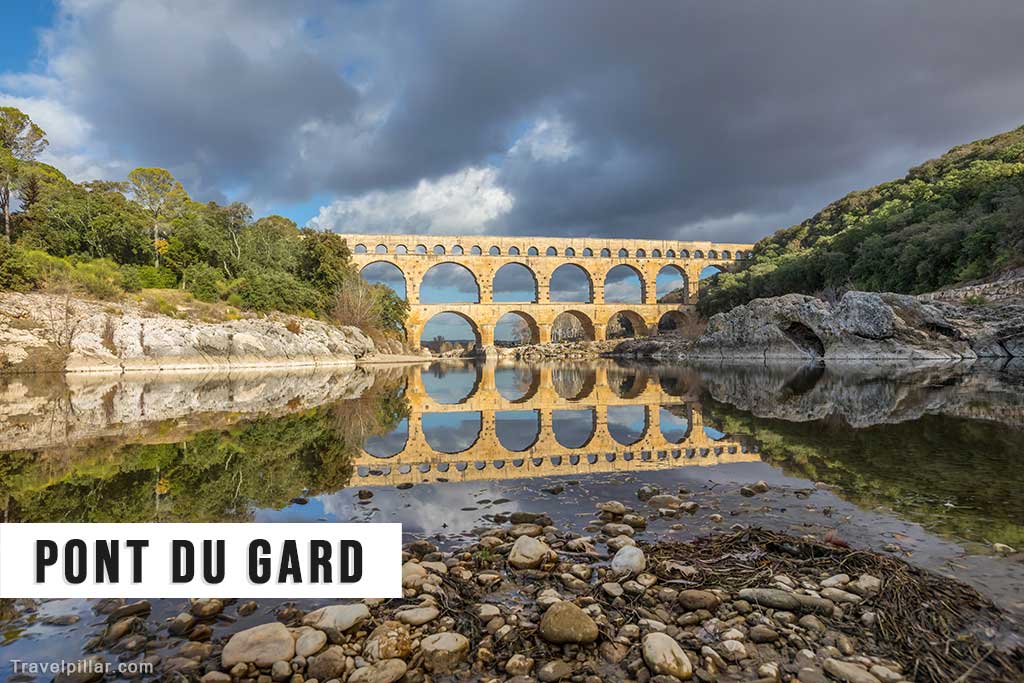
Built from locally quarried limestone, the Pont du Gard is notable for its three-tiered structure, rising to a height of 48 metres and extending 275 metres across the Gardon River. The lowest tier comprises six arches, the middle tier eleven, and the top tier thirty-five smaller arches that originally carried the water channel. The precision in stonework and the use of dry masonry techniques—without mortar—demonstrate the advanced construction skills of Roman engineers.
The aqueduct ceased to function by the sixth century, likely due to a combination of sedimentation, damage, and lack of maintenance. During the Middle Ages, the bridge was repurposed as a toll crossing. In the eighteenth and nineteenth centuries, it attracted scholarly attention and became a subject of preservation efforts.
Today, the Pont du Gard is a UNESCO World Heritage Site and a major tourist destination. A visitor centre and museum on-site provide historical context and archaeological findings related to the aqueduct and the broader Roman presence in the region. The surrounding area includes walking trails and river access, offering opportunities to view the structure from various angles.
The Pont du Gard remains one of the best-preserved examples of Roman hydraulic infrastructure and continues to be studied for its architectural and historical significance. Its enduring state of preservation has made it an iconic symbol of Roman legacy in France.
Google map 4.6/5