
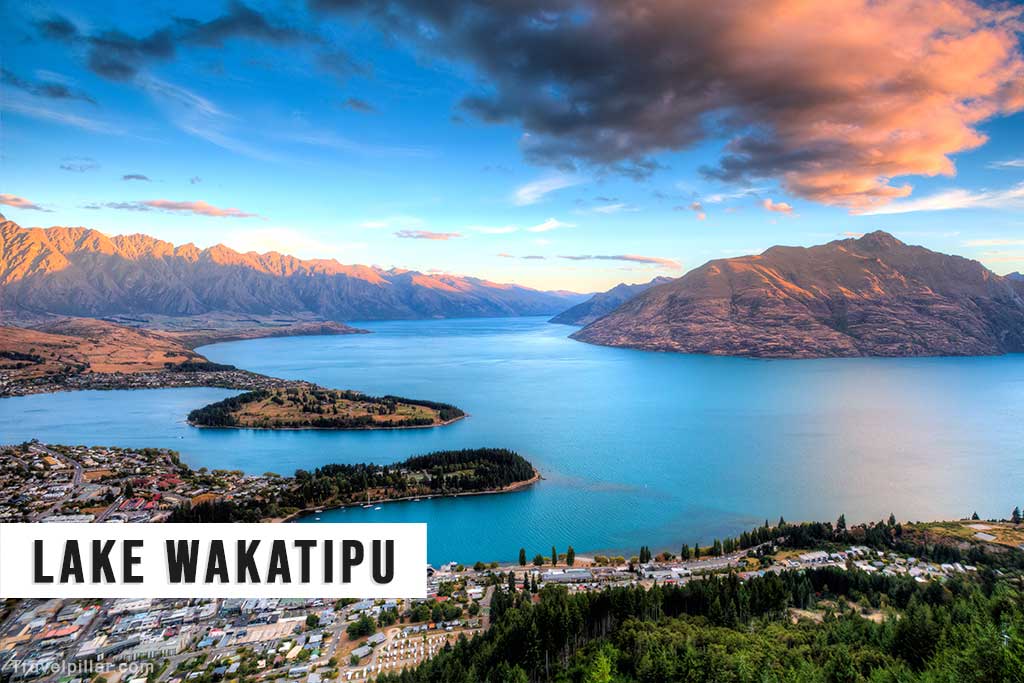
Lake Wakatipu, located in the South Island of New Zealand, is the country’s longest lake and the third largest by surface area. It stretches 80 kilometers in length, with a surface area of 291 square kilometers. The lake’s distinctive S-shape is the result of tectonic and glacial activity, giving it a unique geographical and geological profile.
The lake is surrounded by the Remarkables mountain range to the southeast and the Southern Alps to the north, offering striking alpine scenery. Its maximum depth reaches approximately 380 meters, making it one of New Zealand’s deepest lakes.
Lake Wakatipu’s water levels rise and fall about 12 centimeters every 25 minutes, a phenomenon known as a seiche or “lake tide.” This occurrence is due to the lake’s unique shape and the surrounding mountainous terrain, which create periodic oscillations in water level.
The primary town on Lake Wakatipu’s shores is Queenstown, a prominent tourist destination known for adventure sports and scenic beauty. Other settlements around the lake include Glenorchy at the northern end and Kingston at the southern tip. The region’s climate is classified as oceanic, with cold winters and mild summers, making it suitable for year-round tourism.
Lake Wakatipu is a hub for various recreational activities, including boating, fishing, and hiking. The lake’s pristine waters and surrounding landscapes offer opportunities for both relaxation and adventure. The TSS Earnslaw, a historic steamship, provides regular cruises, allowing visitors to explore the lake and its environs.
Overall, Lake Wakatipu is a significant natural feature of New Zealand, drawing visitors for its scenic beauty, recreational opportunities, and unique geological characteristics.