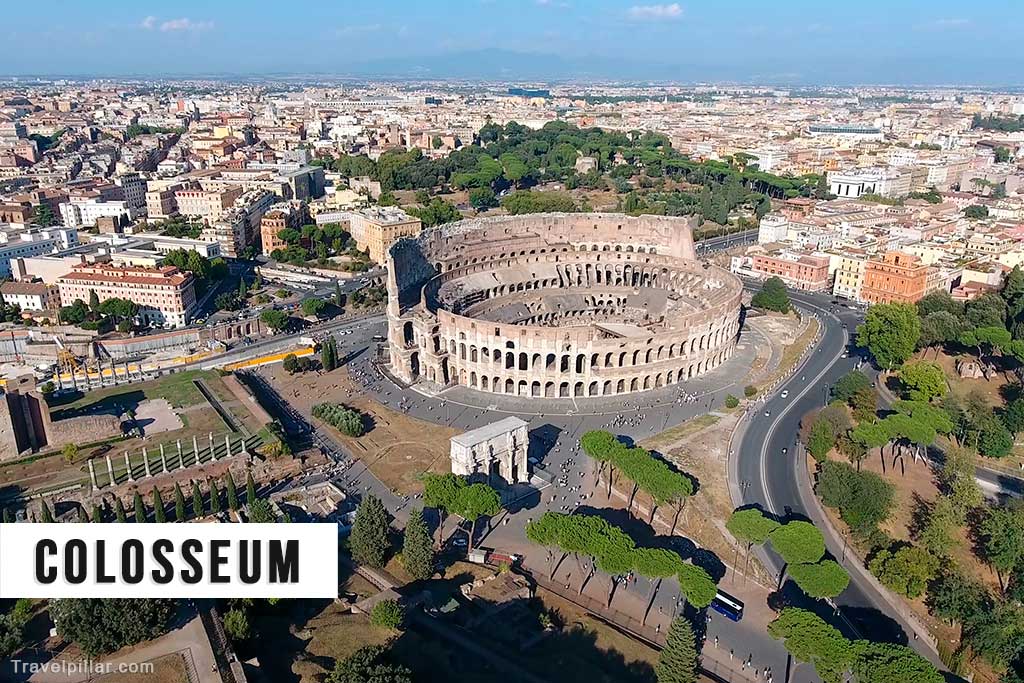
The Colosseum is one of the most recognisable landmarks of Rome and a symbol of the city’s imperial past. Constructed under Emperor Vespasian and completed by his son Titus in 80 AD, it was the largest amphitheatre of the Roman world, designed to host public spectacles and demonstrate the power and generosity of the emperors. Built primarily from travertine stone, tuff, and concrete, it represents an enduring achievement of Roman engineering and architecture.
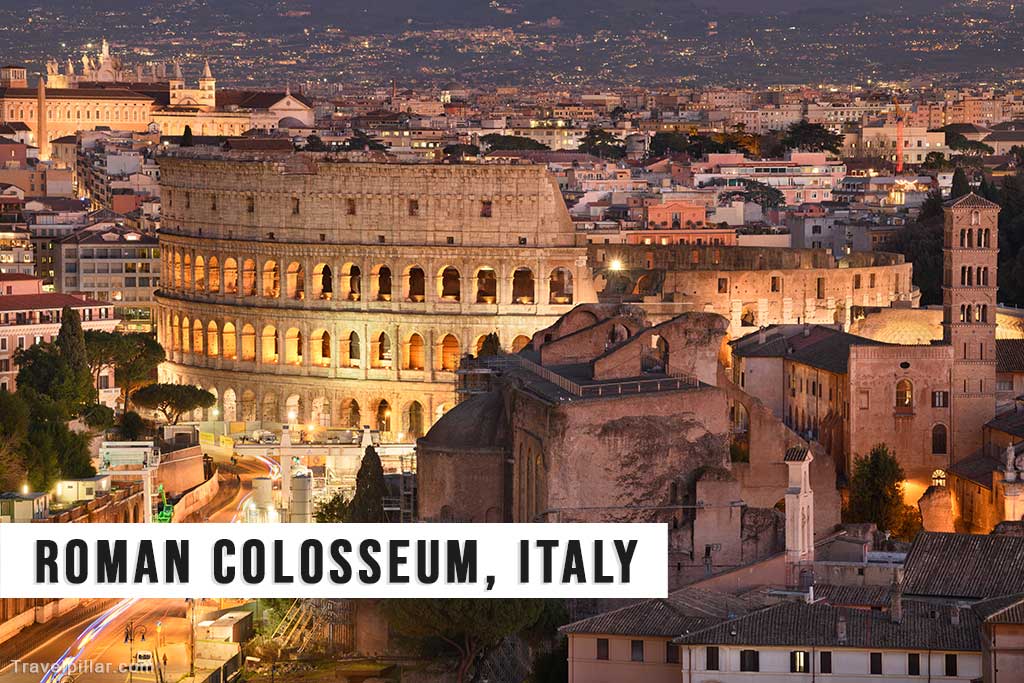
The amphitheatre could hold an estimated 50,000 to 80,000 spectators. Its seating arrangements reflected Roman society, with the elite occupying the best positions and the general population seated higher up. Events included gladiatorial contests, wild animal hunts, mock naval battles, and public executions. These spectacles reinforced political authority, entertained the population, and showcased Rome’s ability to stage complex and large-scale performances. The Colosseum became both a cultural and political stage of the Roman Empire.

Architecturally, the Colosseum is notable for its use of arches and vaults, which distributed weight and allowed for rapid movement of crowds. The exterior consists of four storeys, three with arcades framed by columns in the Doric, Ionic, and Corinthian orders, and an upper storey with small windows. The arena floor was originally wooden and covered with sand. Beneath it lay the hypogeum, a network of tunnels and chambers used to house animals, slaves, and stage machinery. This underground system allowed for dramatic entrances during events.
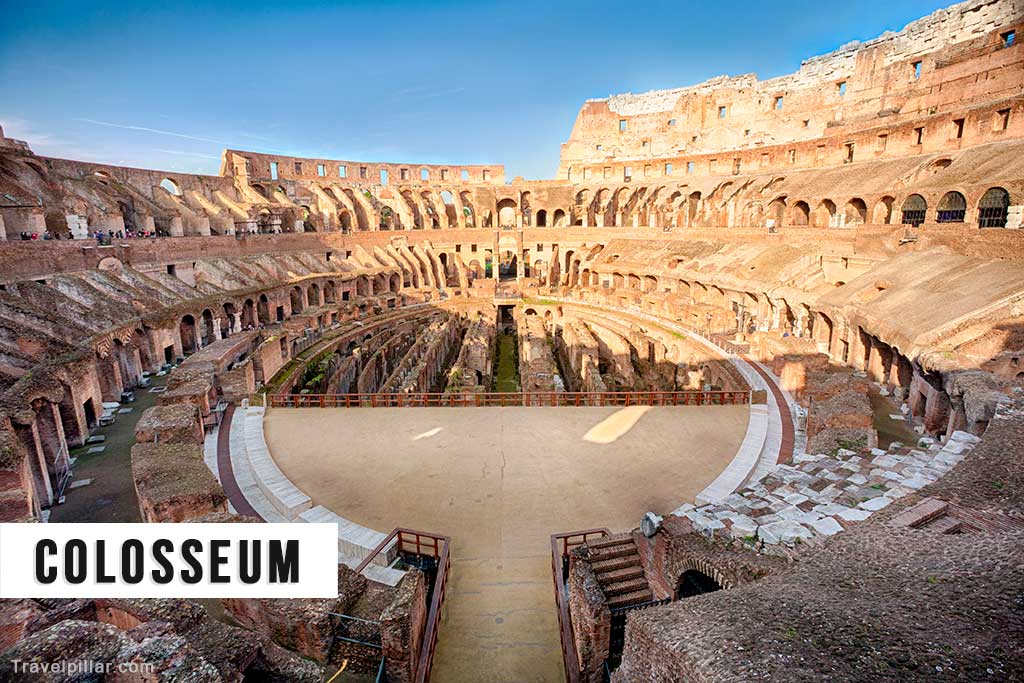
The decline of the Roman Empire brought changes to the amphitheatre’s use. By the early medieval period, it had ceased to function as a venue for spectacles. Parts of the structure were adapted for housing, workshops, and religious purposes. Earthquakes and stone quarrying caused significant damage, but the Colosseum continued to dominate the Roman landscape. From the Renaissance onwards, it became a source of building materials and later a subject of antiquarian interest.

Today the Colosseum is preserved as an archaeological monument and a UNESCO World Heritage Site, forming part of the wider historic centre of Rome. Conservation efforts have sought to stabilise the structure while allowing millions of visitors each year to explore it. Tours include access to the arena floor, the hypogeum, and the upper levels, offering insight into both the building’s scale and its historical significance.

The Colosseum remains one of the most visited attractions in Italy, representing both the grandeur and the complexity of ancient Rome. It continues to embody themes of power, entertainment, and architectural ingenuity, making it one of the most important monuments of European history.
Official tourism website:
https://colosseo.it/en/
Entrance tickets can be purchased for 24hr or 48hr entry and include access to the Colosseum, Roman Forum and Palatine Hill – check website for prices and opening hours
Google map 4.7/5
Arch of Constantine
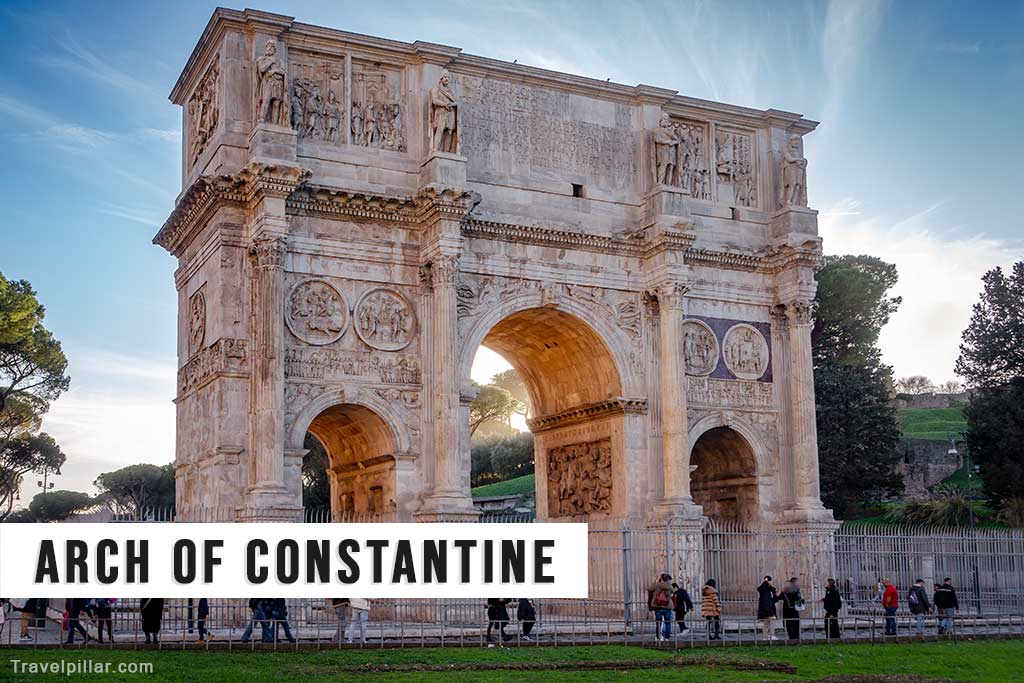
The Arch of Constantine stands beside the Colosseum and was dedicated in 315 AD to commemorate Constantine the Great’s victory over Maxentius at the Battle of the Milvian Bridge. Built from marble and decorated with reliefs reused from earlier monuments, it symbolises imperial power and continuity. The arch features three passageways and sculptural panels illustrating military triumphs, making it one of Rome’s most significant surviving triumphal arches.