
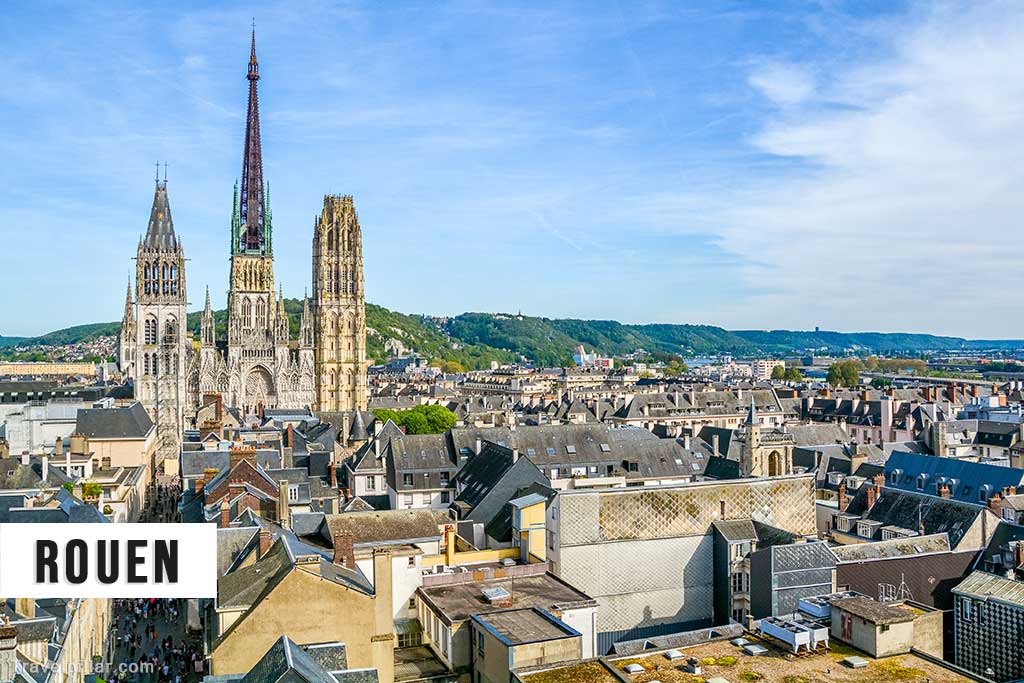
The Rouen Cathedral, formally known as Notre-Dame de Rouen, is a prominent Gothic architectural landmark located in the heart of Rouen, the capital of the Normandy region in northern France. Construction of the cathedral began in the early 12th century, and it underwent several phases of expansion and renovation until the 16th century. With its impressive facade, soaring spire, and intricate design, the cathedral has become a symbol of the city and a must-visit destination for those interested in art and history.

The exterior of the Rouen Cathedral is adorned with intricate sculptures, ornate portals, and flying buttresses, which exemplify the mastery of the Gothic style. The central spire, known as the Tour de Beurre or “Butter Tower,” reaches a height of 151 meters (495 feet), making it one of the tallest in France. The interior of the cathedral contains a vast nave, a beautiful choir screen, and a wealth of stained glass windows, some of which date back to the 13th century.
One of the cathedral’s most notable features is the tomb of Richard the Lionheart, the 12th-century King of England, who was also the Duke of Normandy. His heart, encased in a lead box, is buried within the cathedral.
The Rouen Cathedral has inspired several artists throughout history, including the famous Impressionist painter Claude Monet. Between 1892 and 1893, Monet created a series of more than 30 paintings capturing the cathedral’s facade at different times of day and under various weather conditions. These works, known as the “Rouen Cathedral Series,” are considered some of Monet’s most celebrated pieces and have contributed to the enduring fame of the cathedral.
Today, the Rouen Cathedral remains an active place of worship and a testament to the skill and artistry of the medieval craftsmen who constructed it. Visitors from around the world continue to be captivated by its architectural grandeur and historical significance.
Google map