
The Twelve Apostles, according to the New Testament of the Bible, were the primary disciples of Jesus Christ. They were instrumental in establishing the early Christian Church after the crucifixion and resurrection of Jesus.
The list of the Twelve Apostles as mentioned in the Bible (Matthew 10:2–4, Mark 3:14–19, and Luke 6:12–16) includes the following individuals:
Peter (previously known as Simon)
Peter, originally named Simon, was a Galilean fisherman called by Jesus to follow him. He is considered the leader of the early Christian community and is regarded as the first Bishop of Rome, establishing his role as the first pope in Catholic tradition. Peter was crucified in Rome under Emperor Nero, reportedly upside down at his own request, and is buried beneath St. Peter’s Basilica in Vatican City, which bears his name.
Andrew
Andrew was the brother of Peter and originally a fisherman from Bethsaida. According to tradition, he preached Christianity in regions around the Black Sea and Greece. He is believed to have been martyred in Patras, Greece, crucified on an X-shaped cross, now known as Saint Andrew’s Cross. Andrew is regarded as the patron saint of Scotland, Greece, and Russia. His relics are kept in the Cathedral of Saint Andrew in Patras and in Amalfi, Italy.
James the Greater
James the Greater was the son of Zebedee and the brother of John. He is traditionally believed to have preached in Judea and Spain. According to tradition, he was martyred by beheading in Jerusalem around 44 CE under Herod Agrippa I, becoming the first apostle to be martyred. His remains are believed to be enshrined in Santiago de Compostela in Spain, making it a major pilgrimage destination along the Camino de Santiago.
John
John, also known as John the Evangelist, was the brother of James the Greater and a son of Zebedee. He is traditionally regarded as the author of the Gospel of John, three Epistles, and the Book of Revelation. Known as the “Beloved Disciple,” he was present at key events including the Crucifixion. Unlike the other apostles, he is believed to have died of old age in Ephesus, where his tomb remains venerated.
Philip
Philip was from Bethsaida and is known for introducing Nathanael (Bartholomew) to Jesus. He is featured in the Gospel of John questioning Jesus during the feeding of the five thousand and at the Last Supper. Tradition holds that he preached in Asia Minor, particularly in Phrygia, where he was martyred in Hierapolis, reportedly by crucifixion or upside down crucifixion. His remains are associated with the ruins of his martyrium in Hierapolis, modern-day Turkey.
Bartholomew (Nathanael)
Bartholomew is traditionally identified with Nathanael mentioned in the Gospel of John. He is believed to have preached in regions including India, Armenia, and Mesopotamia. According to tradition, he was martyred in Armenia by being flayed alive and then beheaded. He is venerated as the patron saint of tanners, leather workers, and Armenia. His relics are believed to rest in the Church of San Bartolomeo all’Isola in Rome and in St. Bartholomew’s Cathedral in Lipari.
Matthew
Matthew, also known as Levi, was a tax collector before following Jesus. He is traditionally credited as the author of the Gospel of Matthew, which emphasises Jesus’ role as the Messiah fulfilling Jewish prophecy. After preaching in Judea, tradition holds that he travelled to regions such as Ethiopia or Persia, where he was martyred. He is regarded as the patron saint of tax collectors, accountants, and bankers. His feast day is celebrated on 21 September.
Thomas
Thomas, also known as Didymus, is remembered for initially doubting Jesus’ resurrection until seeing and touching his wounds, giving rise to the term “Doubting Thomas.” Tradition holds he travelled to India to spread Christianity, where he established Christian communities, particularly in Kerala. He was martyred near Chennai, where the San Thome Basilica now stands over his traditional tomb. He is regarded as the patron saint of India and architects, reflecting his missionary legacy and craftsmanship.
James the Less
James the Less is traditionally identified as the son of Alphaeus and is sometimes associated with James, the brother of Jesus, who led the Jerusalem Church. He is believed to have preached in Jerusalem and Egypt. According to tradition, he was martyred by being thrown from the Temple pinnacle and then beaten to death. He is regarded as the author of the Epistle of James and is the patron saint of pharmacists and the dying.
Thaddaeus (Lebbaeus, Jude or Judas)
Thaddaeus, also known as Jude or Judas son of James, is traditionally identified with Saint Jude, the patron saint of lost causes. Little is recorded about his life in the Gospels, but tradition holds that he preached in Judea, Samaria, Syria, and Mesopotamia. He is believed to have been martyred in Persia. Thaddaeus is often depicted holding an image of Christ’s face, linked to the legend of him carrying Jesus’ image to King Abgar of Edessa.
Simon the Zealot
Simon the Zealot is traditionally identified as a member of the Zealots, a Jewish political movement opposed to Roman rule, although this association is debated. Little is recorded about his life in the Gospels. Tradition holds that he preached in Egypt and Persia, often alongside Thaddaeus. He is believed to have been martyred, possibly by being sawn in half. Simon is venerated as the patron saint of sawyers and tanners in Christian tradition.
Judas Iscariot
Judas Iscariot is known for betraying Jesus to the authorities for thirty pieces of silver, leading to Jesus’ arrest and crucifixion. According to the Gospels, he later regretted his actions and returned the money before taking his own life. His role as betrayer has made his name synonymous with treachery in Christian tradition. He is often depicted in art holding a money bag, representing his payment for the betrayal.
The apostles listed above were known as the twelve original apostles. After the betrayal and death of Judas Iscariot, he was replaced by Matthias.
Matthias
Matthias was chosen by the remaining apostles to replace Judas Iscariot after Jesus’ ascension, as recorded in the Acts of the Apostles. Little is known about his life, but tradition holds that he preached in Judea and regions such as Cappadocia or Ethiopia. He is believed to have been martyred, either by stoning or beheading. Matthias is venerated as the patron saint of carpenters, tailors, and those with smallpox. His feast day is celebrated on 14 May.
Paul
Paul is also considered an apostle in the Christian tradition. However, his apostleship is distinct from the original twelve apostles. Paul did not follow Jesus during his earthly ministry and was not among the original twelve apostles chosen by Jesus.
Instead, Paul, formerly known as Saul, underwent a dramatic conversion experience on the road to Damascus where he reported seeing a vision of the resurrected Jesus. After this experience, Paul began preaching the teachings of Jesus and establishing Christian communities. His tireless missionary work, especially among non-Jewish people (Gentiles), earned him the title “Apostle to the Gentiles.” Paul was eventually arrested in Rome and martyred by beheading under Emperor Nero. He is buried at the Basilica of St. Paul Outside the Walls in Rome.
Famous places around the world named after the apostles:
Saint Peter’s Basilica, Vatican City, Italy
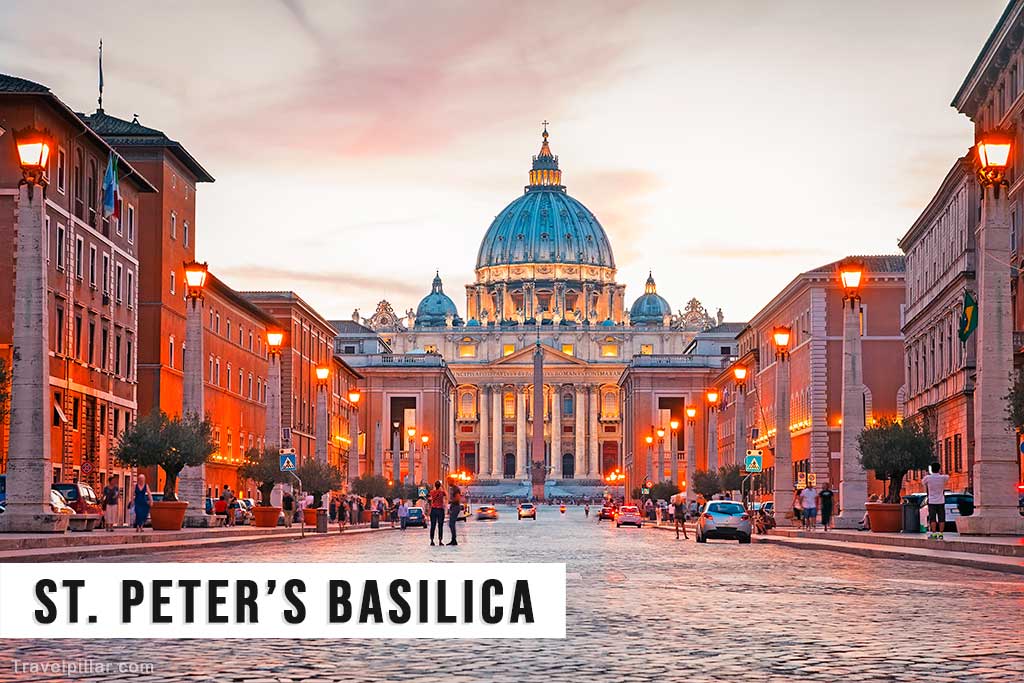
One of the most famous and significant churches in Christianity, Saint Peter’s Basilica is believed to be located over the tomb of Peter, who is regarded as the first pope of the Catholic Church.
Saint Paul’s Cathedral, London, UK

This iconic cathedral is named after Paul the Apostle and is one of the most recognizable sights in London.
Saint Andrew’s Cathedral, Scotland
Named after Andrew, the patron saint of Scotland, the cathedral’s ruins are a notable landmark.
Santiago de Compostela, Spain
This city, whose name translates to “Saint James of the Field of Stars”, is a major pilgrimage destination. The cathedral is said to be the burial place of James, the son of Zebedee.
St. Bartholomew-the-Great Church, London, UK
Saint Bartholomew the Great, often shortened to Great St Bart’s, is an Anglican church in London, and it’s one of the oldest churches in London.