
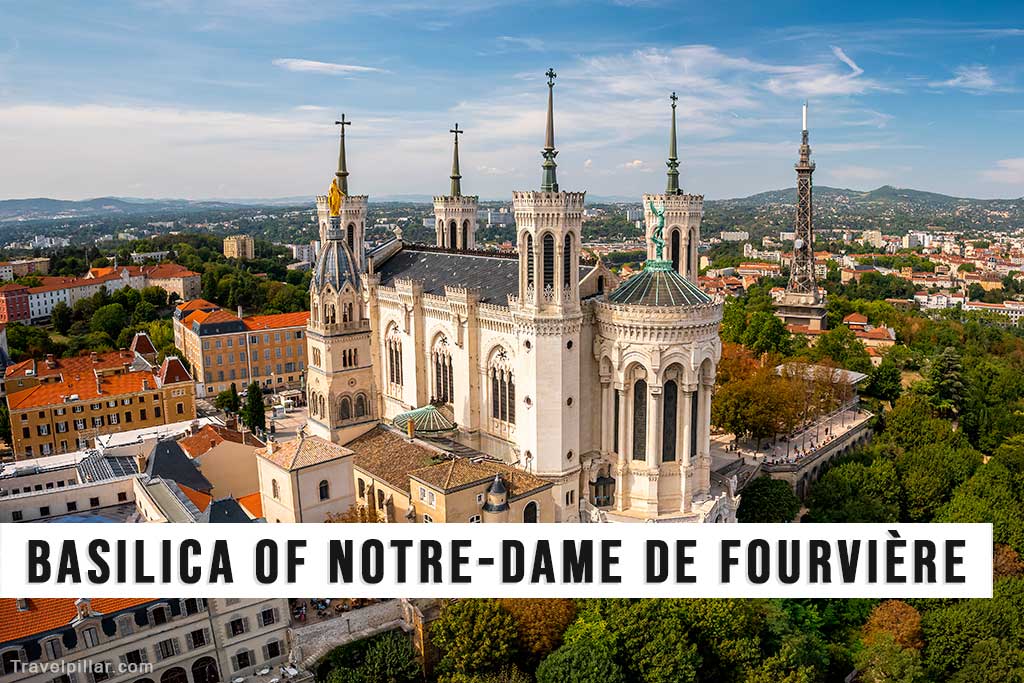
The Basilica of Notre-Dame de Fourvière is a prominent religious structure located on Fourvière Hill in Lyon, overlooking the city and the Saône River. Constructed between 1872 and 1884, the basilica was built as a response to the Franco-Prussian War and as a symbol of gratitude to the Virgin Mary, who was believed to have protected the city. It stands on the site of earlier religious buildings, including a Roman forum and a 12th-century chapel.
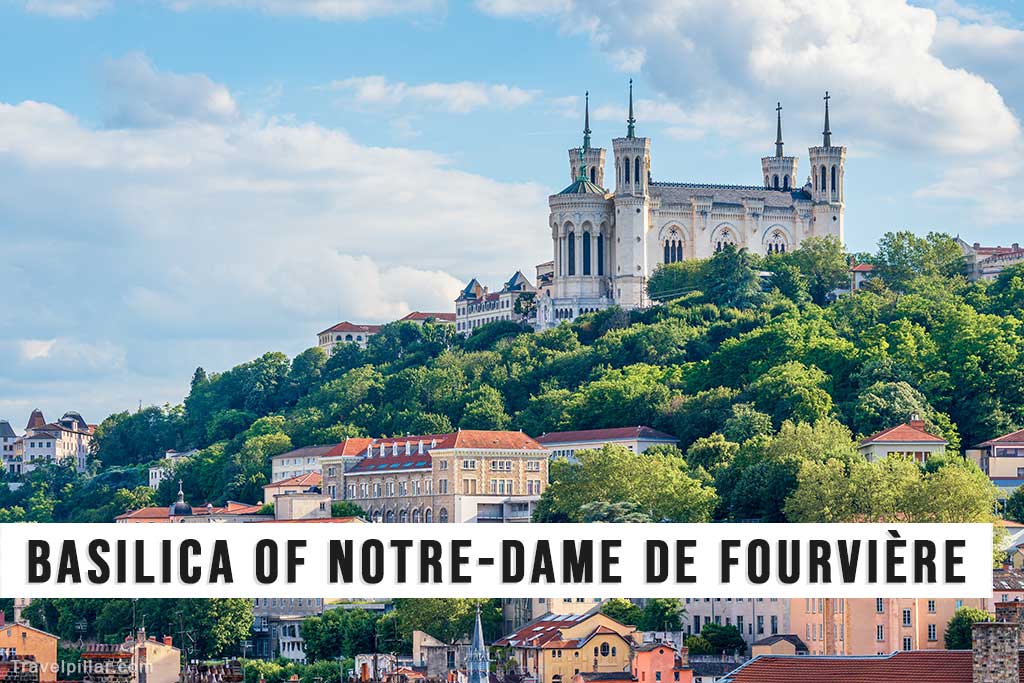
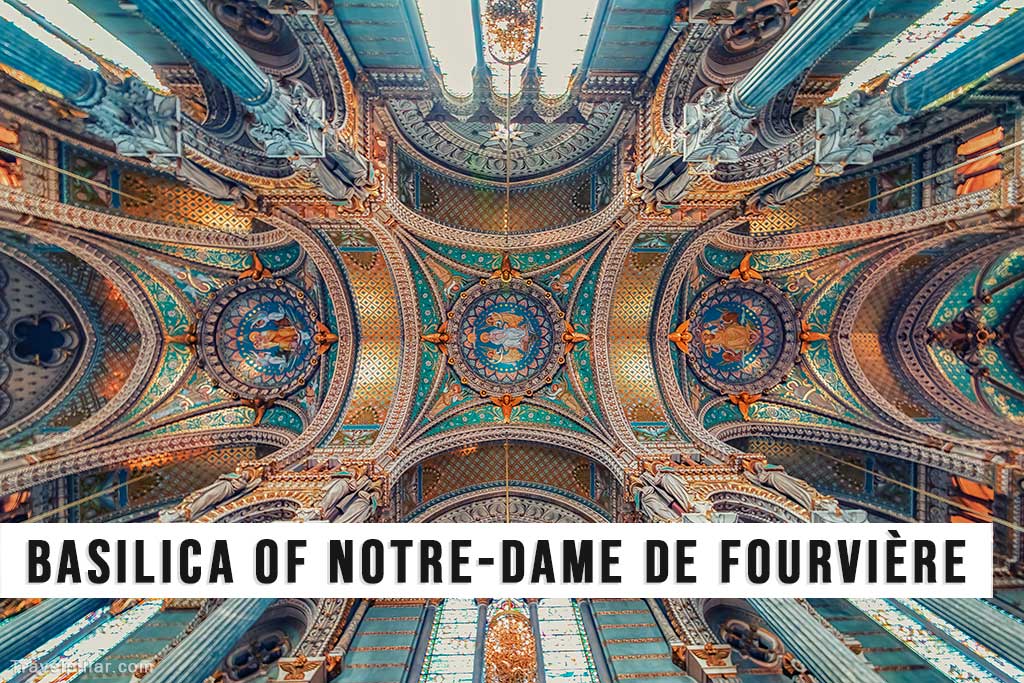
Designed by architect Pierre Bossan, the basilica incorporates both Romanesque and Byzantine architectural elements. Its white stone façade features four octagonal towers and is topped with a gilded statue of the Virgin Mary. The interior includes detailed mosaics, stained glass windows, and marble columns. A second, lower chapel, known as the crypt, is dedicated to Saint Joseph and mirrors the ornate style of the upper church.
The basilica serves both religious and cultural purposes. It remains an active place of Catholic worship, hosting regular services and major religious celebrations. It also functions as a pilgrimage site, particularly during the annual Fête de l’Immaculée Conception in December, when the hill is illuminated and draws large crowds.
Adjacent to the basilica is the panoramic esplanade offering views over the city of Lyon and its surrounding plains. Nearby are other points of interest, including the metallic tower of Fourvière—a structure resembling the Eiffel Tower—and the ancient Roman theatres of Lugdunum, located further along the hill.
Access to the basilica is available by foot, car, or the funicular railway from Vieux Lyon. The site includes a museum, shop, and visitor information centre. Interpretive panels and guided tours provide context on the basilica’s construction, art, and historical significance.
The Basilica of Notre-Dame de Fourvière is a major landmark in Lyon. Its elevated location, architectural style, and religious function make it a central element of the city’s cultural and urban identity.
Official website: https://www.fourviere.org/en/
Google map 4.8/5