
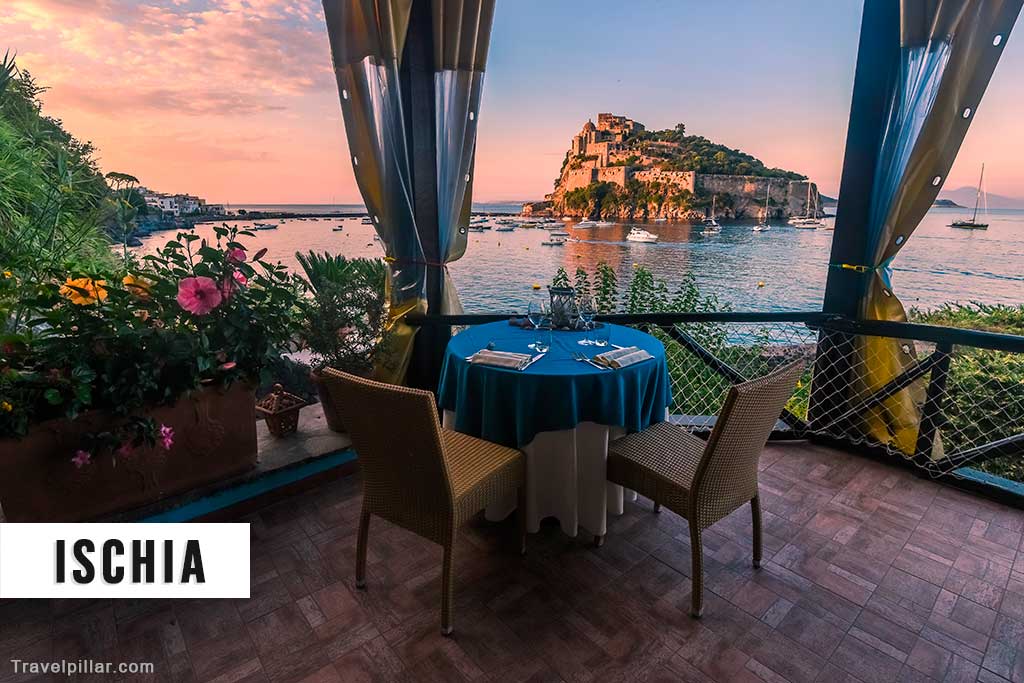
Ischia is a volcanic island located in the Tyrrhenian Sea at the northern end of the Gulf of Naples. It is the largest of the Phlegraean Islands, covering approximately 46 square kilometres. Known for its thermal springs, coastal landscapes, and historic sites, Ischia is a year-round destination that combines natural features with a developed tourism infrastructure. The island is divided into several municipalities, including Ischia Porto, Forio, Lacco Ameno, and Sant’Angelo.
Ischia’s volcanic origin accounts for its geothermal activity, which supports numerous thermal parks and spa facilities. These include Poseidon Gardens, Negombo Thermal Park, and Castiglione Thermal Park, offering pools with varying temperatures, mineral treatments, and sea access. The island’s thermal waters have been used for therapeutic purposes since ancient Roman times.
One of Ischia’s most prominent landmarks is Castello Aragonese, a fortified castle situated on a rocky islet connected to Ischia Ponte by a stone causeway. Originally built by Hiero I of Syracuse in the 5th century BCE and expanded in later centuries, it contains chapels, prison cells, and panoramic terraces. The site is open to visitors and hosts exhibitions and cultural events.
Beaches on the island vary in size and composition, ranging from sandy stretches like Maronti Beach to smaller coves near Forio and Sant’Angelo. Hiking opportunities are available on Mount Epomeo, the island’s highest point at 789 metres, offering views over the Gulf of Naples and surrounding islands.
Ischia is accessible by ferry or hydrofoil from Naples, Pozzuoli, and Sorrento. Local transport includes buses, taxis, and scooters, with roads connecting the various towns and attractions. Accommodations range from spa hotels to small guesthouses, supporting a mix of short-term tourism and long-stay wellness visitors.
The island also features archaeological sites, churches, and botanical gardens such as La Mortella, created by Susana Walton. While tourism is the primary economic activity, agriculture, particularly wine production and citrus farming, remains significant. Ischia combines natural geology, historical architecture, and local traditions, making it a varied destination within the Campania region.