
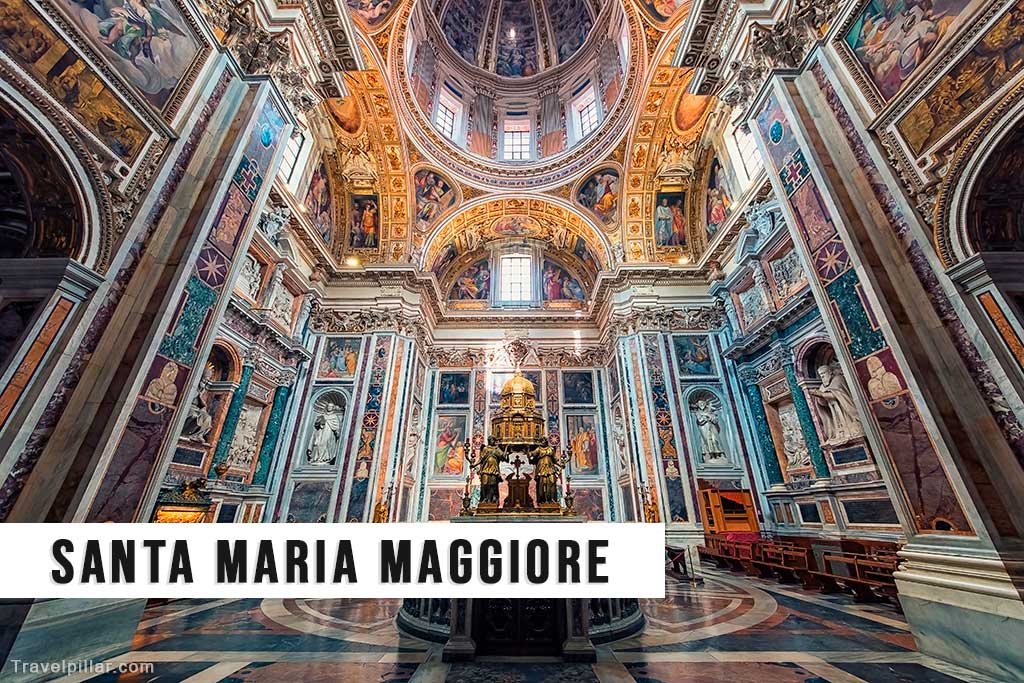
Santa Maria Maggiore is one of Rome’s four major papal basilicas and the largest church in the city dedicated to the Virgin Mary. It is located on the Esquiline Hill and was built under Pope Sixtus III between 432 and 440 CE following the Council of Ephesus, which affirmed Mary’s title as Mother of God. The basilica has been expanded and renovated over centuries, resulting in a structure that combines early Christian, medieval, Renaissance, and Baroque elements.
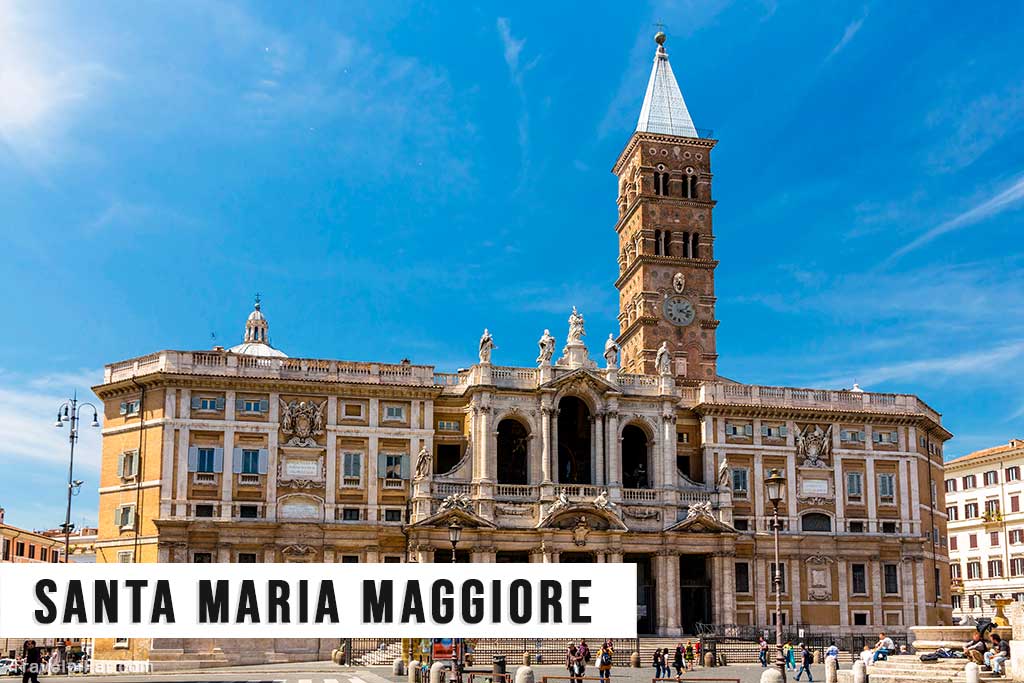
The basilica retains its original 5th-century plan with a wide central nave flanked by two aisles, separated by 36 Ionic columns of marble and granite. Above the nave columns are mosaics from the 5th century depicting Old Testament scenes, considered among the oldest Christian mosaics in Rome. The triumphal arch at the nave’s end features mosaics showing the infancy of Christ, while the apse mosaic, created in the late 13th century by Jacopo Torriti, depicts the Coronation of the Virgin.
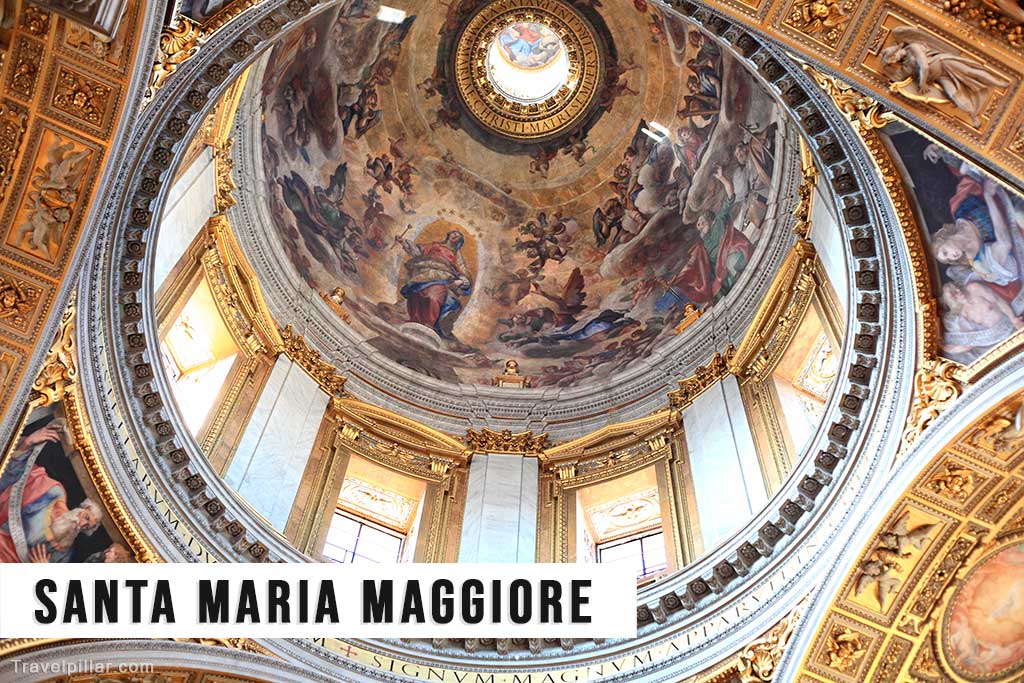
The coffered ceiling, gilded with the first gold brought from the Americas in the late 15th century, was designed under Pope Alexander VI Borgia. The basilica’s bell tower, completed in the 14th century, is the tallest in Rome at approximately 75 metres. The Borghese Chapel (or Pauline Chapel) and the Sistine Chapel (not to be confused with the Vatican Sistine Chapel) were later additions, serving as private chapels for prominent families and popes.
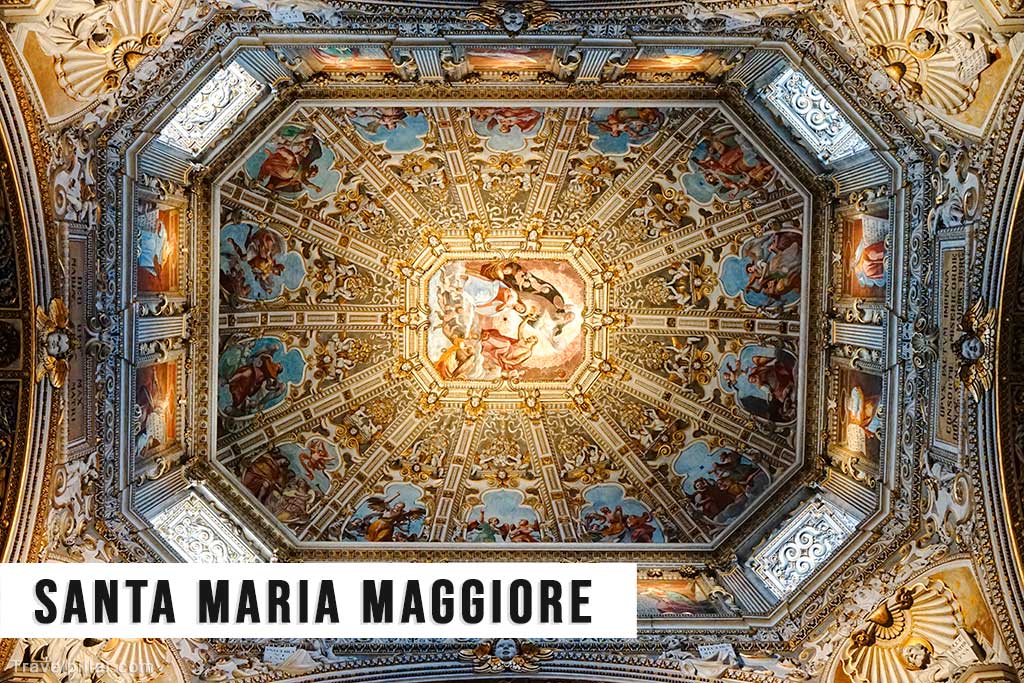
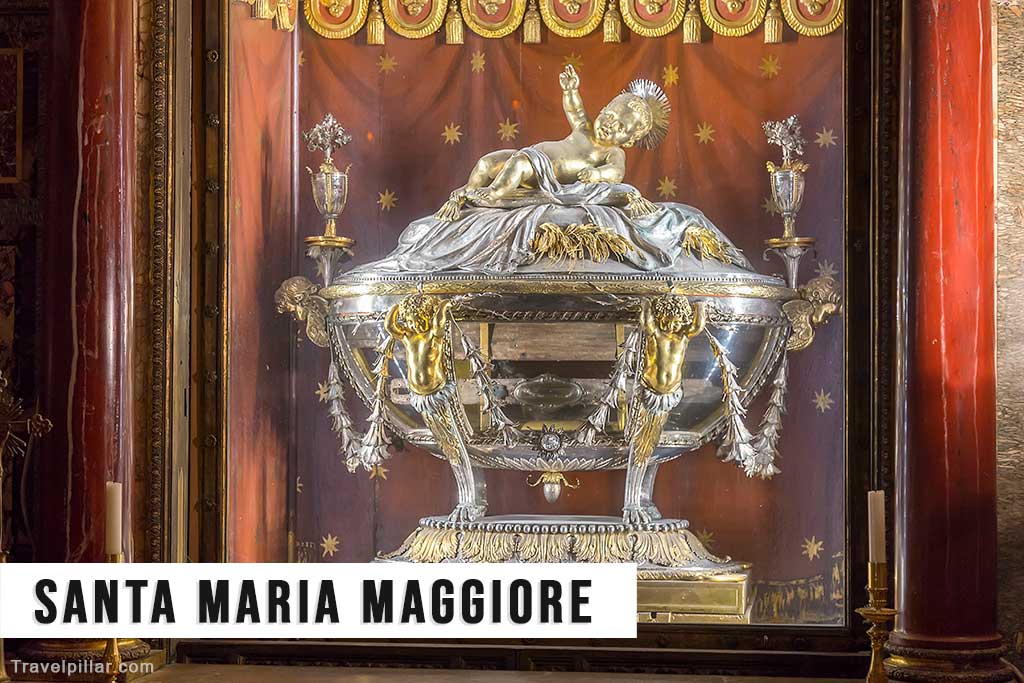
Beneath the high altar lies the Crypt of the Nativity, said to contain relics of the Holy Crib, a relic traditionally believed to be part of the manger from Bethlehem. Santa Maria Maggiore is also known for its annual celebration of the Miracle of the Snow on 5 August, commemorating the legend of a miraculous summer snowfall indicating the site for its construction.
Today, Santa Maria Maggiore remains an active basilica with papal ceremonial status. It continues to attract pilgrims and visitors for its historical mosaics, layered architectural styles, and significance as a major Marian shrine within the city’s religious landscape.
Official website: https://www.basilicasantamariamaggiore.va/
Google map 4.8/5