
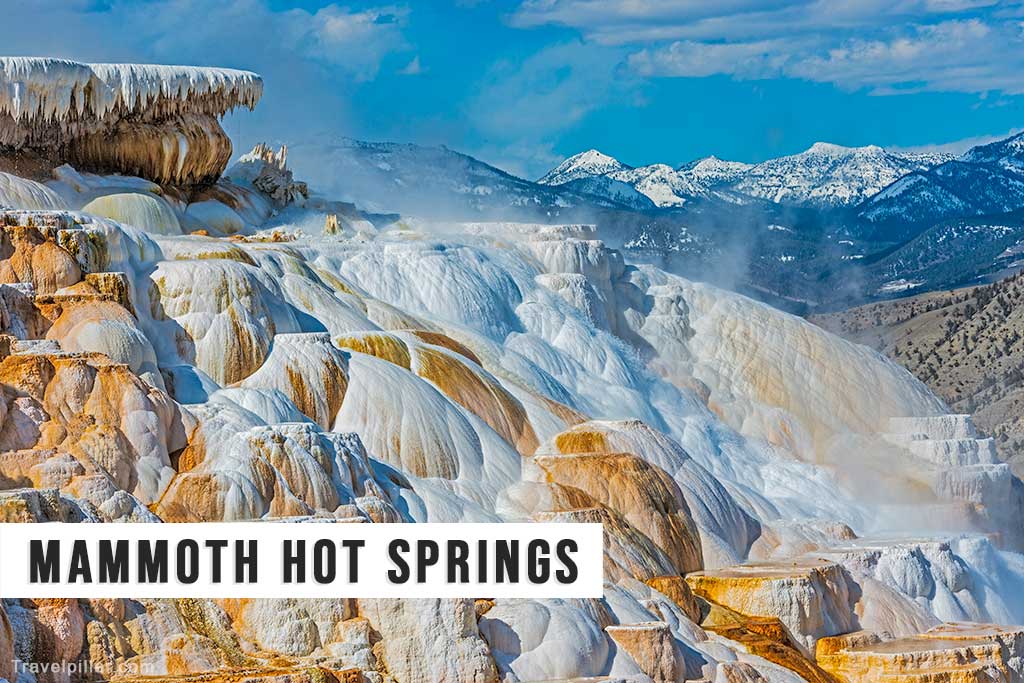
Mammoth Hot Springs is a large geothermal area in the northwestern section of Yellowstone National Park, near the park’s North Entrance. It is distinguished by its extensive travertine terraces, formed over thousands of years as hot water from deep within the Earth rises through limestone, dissolving calcium carbonate and depositing it at the surface. The resulting formations are dynamic, with colours ranging from white to shades of orange, brown, and green due to the presence of thermophilic microorganisms.
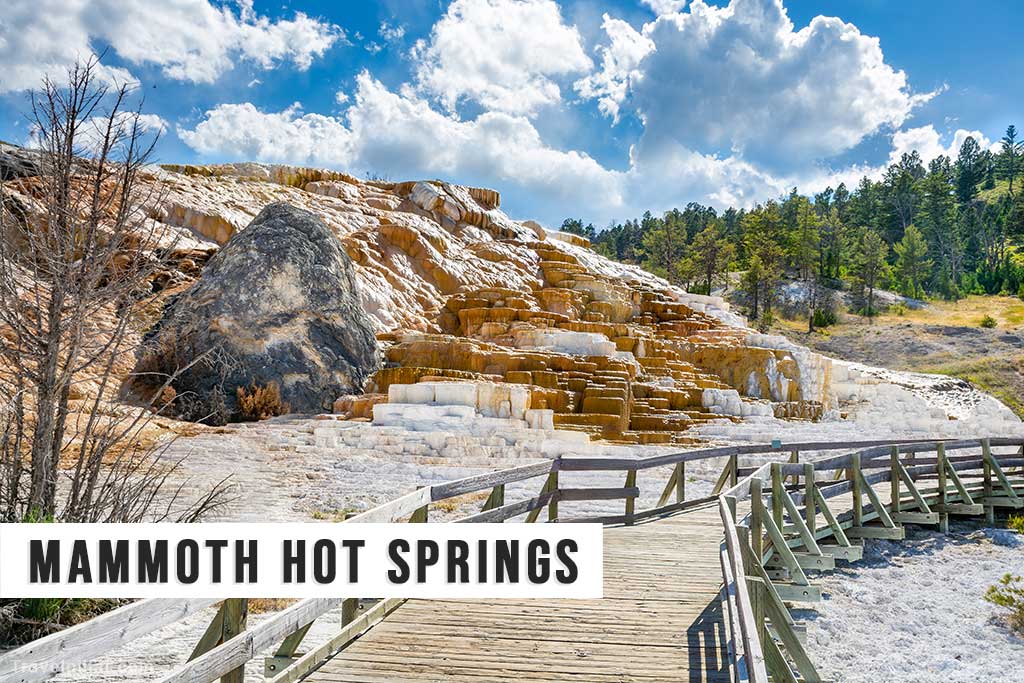
The hot springs are divided into two main areas: the Lower Terraces and the Upper Terraces. The Lower Terraces are accessible via boardwalks and include well-known features such as Minerva Terrace, Palette Spring, and Cleopatra Terrace. These formations are noted for their intricate patterns and active water flow, which can change rapidly as underground channels shift. The Upper Terraces, accessible by a one-way loop road, offer views of larger, less accessible formations such as Orange Spring Mound and New Highland Terrace.
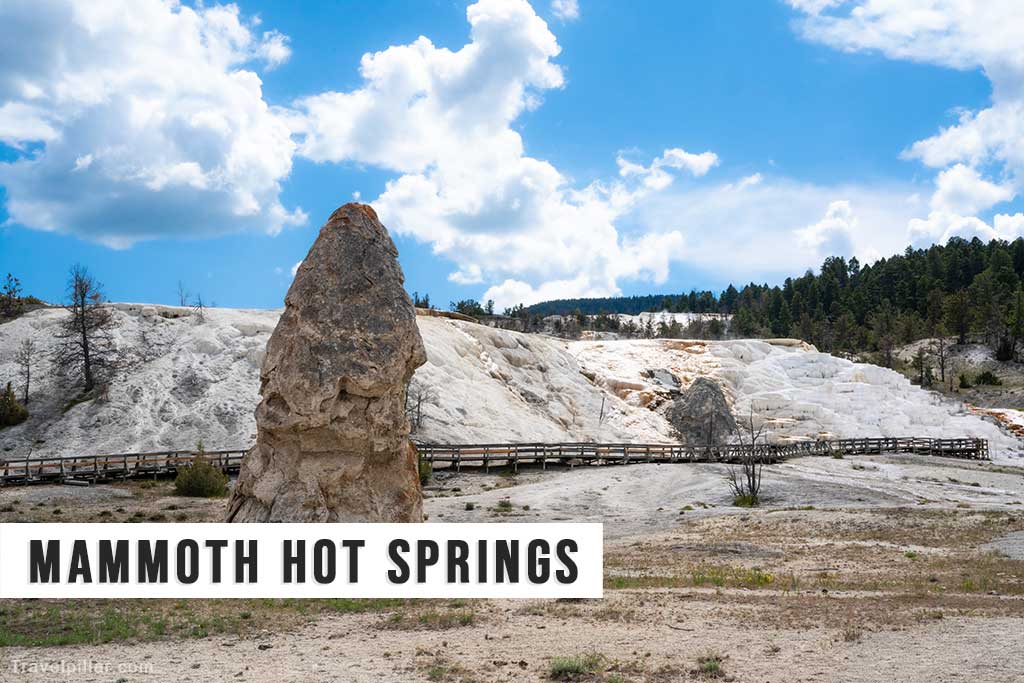
Mammoth Hot Springs is a rare example of a geothermal feature forming on limestone rather than volcanic rock, which is more typical in Yellowstone. The heat source for the springs is the same underlying magma chamber that fuels other hydrothermal areas in the park, but the presence of carbonate rock has created unique formations not found elsewhere in the region.
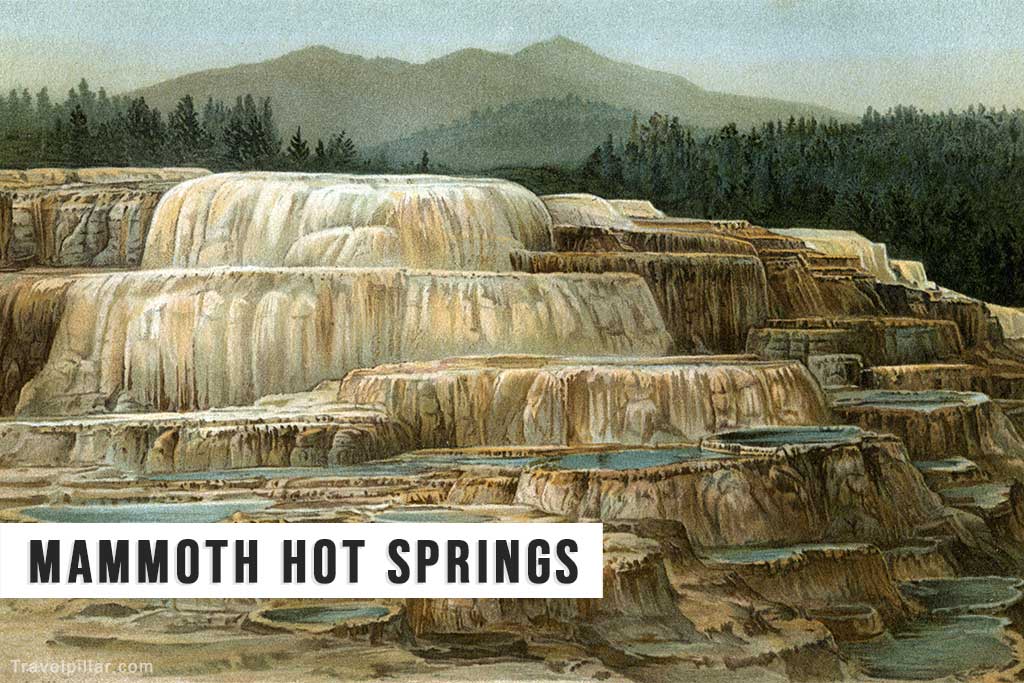
The flow and appearance of individual terraces can vary significantly over time, sometimes changing within days or weeks. Some springs may become dormant while new ones become active, making each visit potentially different. The terraces are fragile, and walking off designated boardwalks is prohibited to protect both the formations and visitor safety.
The Mammoth area is also home to the historic Fort Yellowstone, established in the late 19th century when the U.S. Army managed the park. Today, it serves as the park’s headquarters. Elk are frequently seen grazing in the surrounding lawns, particularly in autumn during the rutting season.
Accessible year-round, Mammoth Hot Springs is one of the park’s most visited geothermal areas, combining geological interest, distinctive formations, and historical context within a single location. Its active and ever-changing nature makes it a key destination for understanding Yellowstone’s geothermal diversity.
Google map 4.7/5