
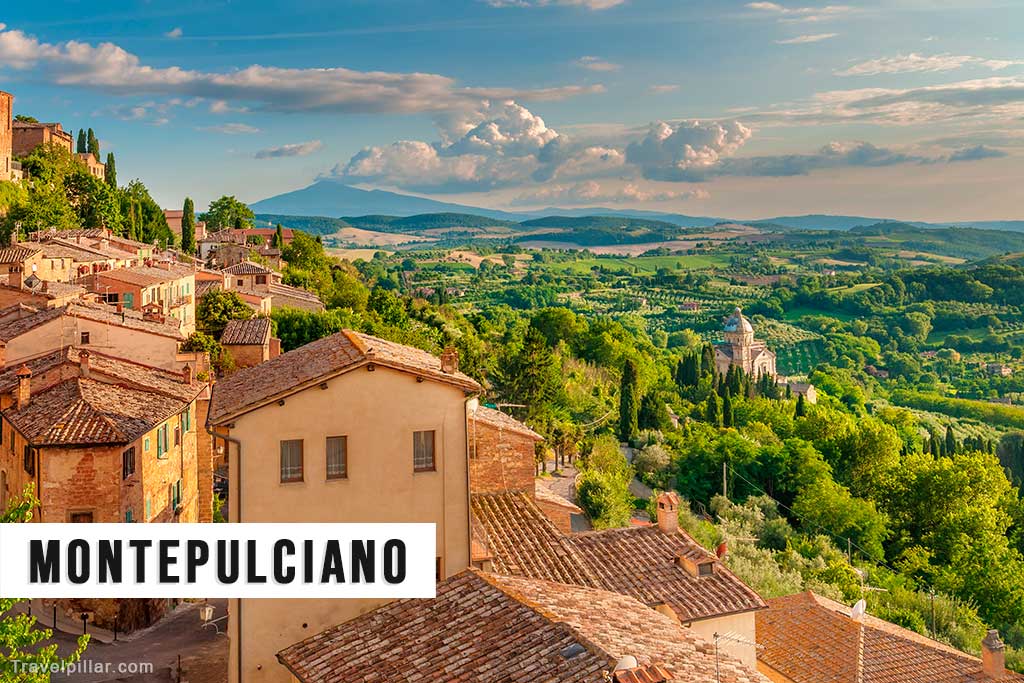
Perched on a limestone ridge in southern Tuscany, Montepulciano is a charming hilltop town renowned for its rich history, architectural splendor, and world-class wine production. A visit to Montepulciano offers a captivating journey through the region’s cultural heritage and an opportunity to indulge in its renowned gastronomy.
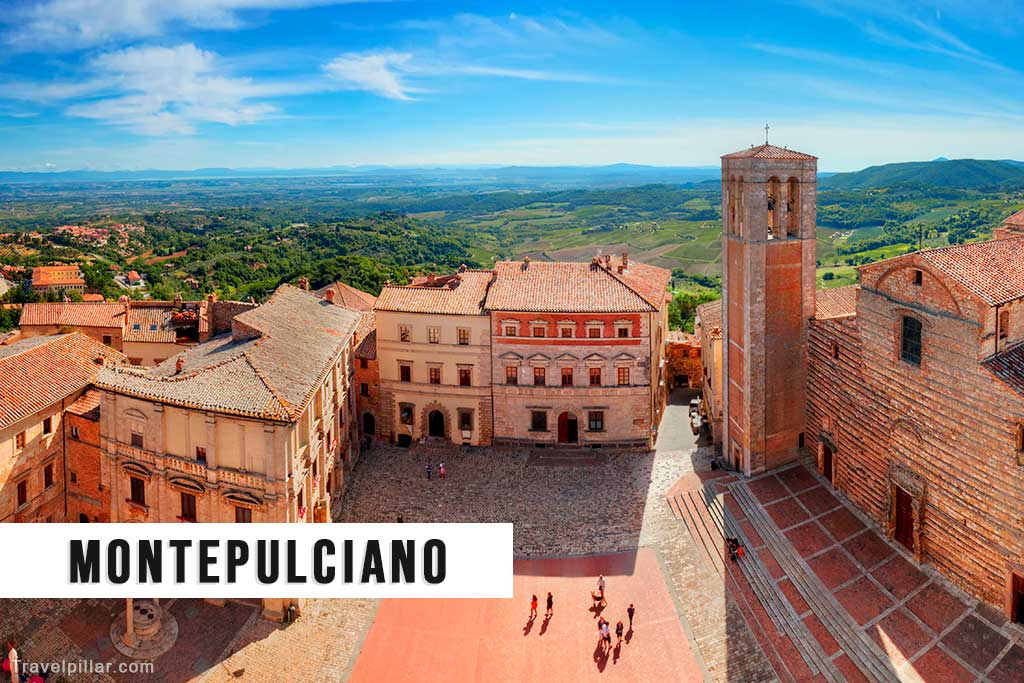
Montepulciano’s historic center is a maze of narrow, winding streets lined with well-preserved Renaissance palaces and churches. The town’s main square, Piazza Grande, is a showcase of architectural treasures, including the Palazzo Comunale, the Cathedral of Santa Maria Assunta, and the Palazzo Contucci. The Palazzo Comunale, inspired by the design of Florence‘s Palazzo Vecchio, features a tower that offers panoramic views of the surrounding countryside.
Montepulciano’s most famous export is its Vino Nobile di Montepulciano, a prestigious red wine made from the local Prugnolo Gentile grape. The town is home to numerous wineries and enoteche, where visitors can sample and purchase this celebrated wine. A visit to the historic cellars of Cantina Contucci, located beneath the Palazzo Contucci, provides a fascinating glimpse into the winemaking process and the opportunity to taste their exceptional wines.
Another notable attraction is the Church of San Biagio, situated just outside the town walls. This impressive Renaissance church, designed by Antonio da Sangallo the Elder, boasts a harmonious façade and a remarkable central-plan layout.
Overall Montepulciano offers a delightful blend of history, architecture, and wine culture. Its well-preserved historic center, combined with the surrounding picturesque landscapes, make it a must-visit destination for anyone seeking to explore the essence of Tuscany.
Montepulciano Highlights
Piazza Grande
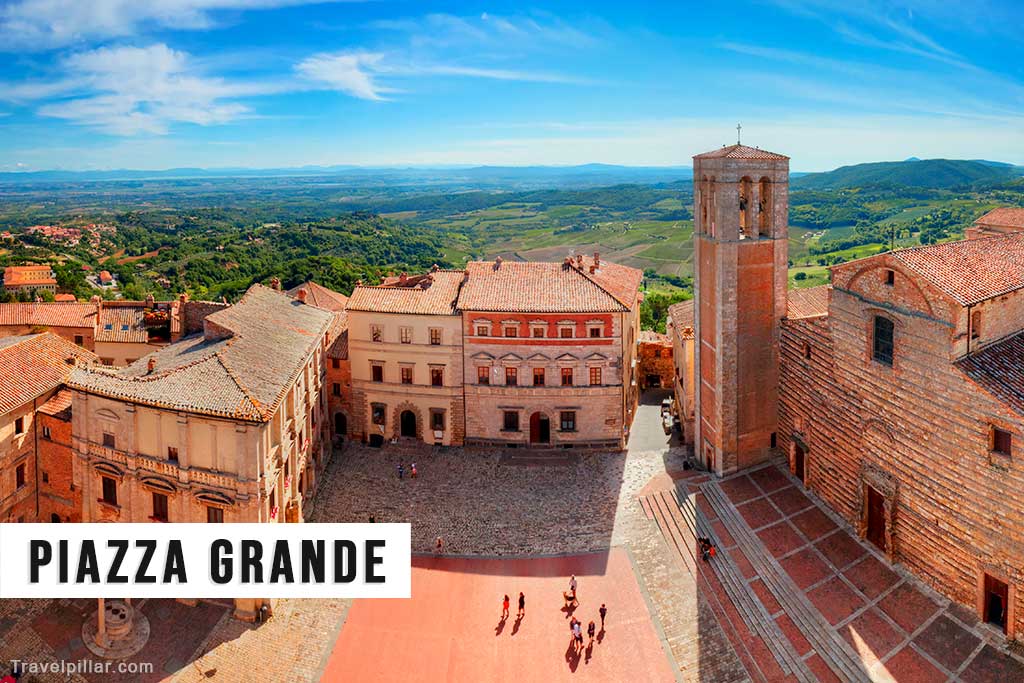
Piazza Grande is the civic and architectural heart of Montepulciano, located at the town’s highest point. Surrounded by the cathedral, town hall, and Renaissance palaces, the square reflects Montepulciano’s prosperity during the 15th and 16th centuries. It remains the main site for public events, including traditional festivals. The combination of religious, civic, and residential buildings illustrates the balance of power and cultural ambitions of the town’s Renaissance elites.
Google map 4.7/5
Montepulciano Cathedral (Cattedrale di Santa Maria Assunta)
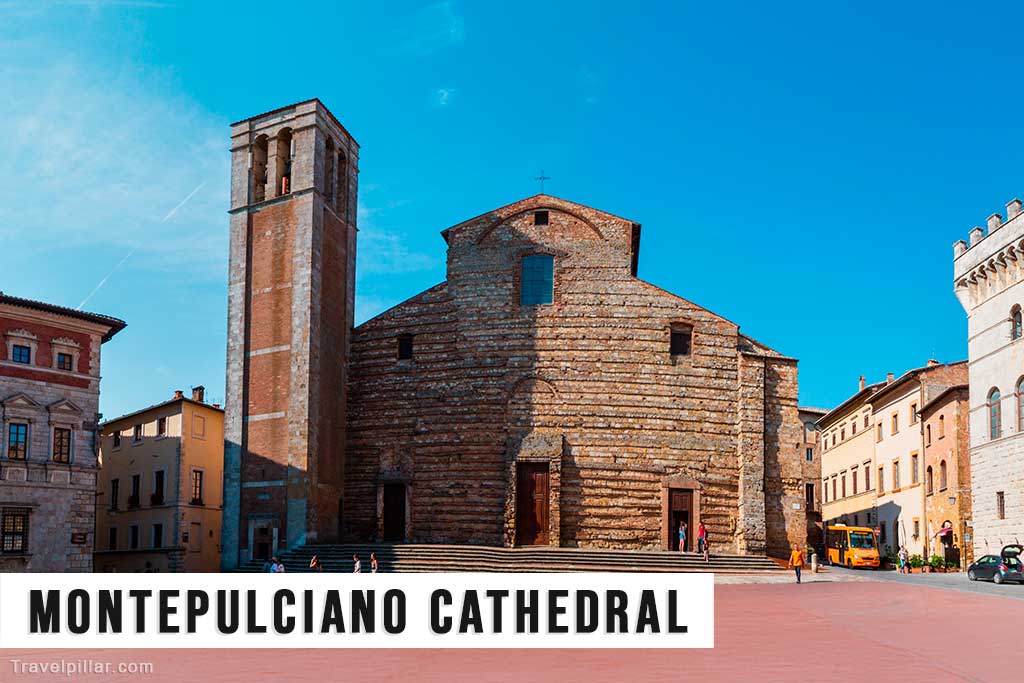
The Cathedral of Montepulciano (Cathedral Saint Mary Of The Assumption), completed in the late 16th century, replaced an earlier parish church on Piazza Grande. Its unfinished façade contrasts with a spacious Renaissance interior containing notable artworks, including the triptych of the Assumption by Taddeo di Bartolo. The cathedral reflects Montepulciano’s Renaissance ambitions and religious devotion, serving as the central place of worship while contributing to the architectural character of the town’s main square.
Google map 4.4/5
Palazzo Comunale
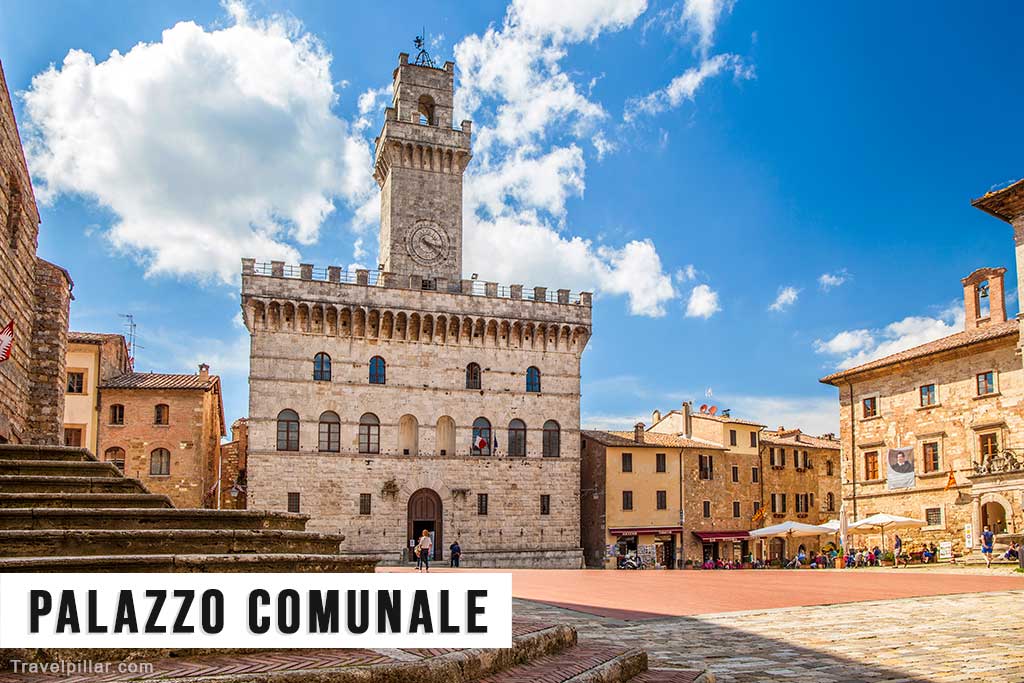
Palazzo Comunale, Montepulciano’s town hall, was built in the 14th century and later remodelled in the Renaissance style, inspired by Florence’s Palazzo Vecchio. Its crenellated tower and Gothic-Renaissance façade dominate Piazza Grande. Visitors can climb the tower for extensive views across the Val d’Orcia and Val di Chiana. The palace reflects Montepulciano’s civic pride and the influence of Florentine political and architectural models on the town.
San Biagio Church (Tempio di San Biagio)
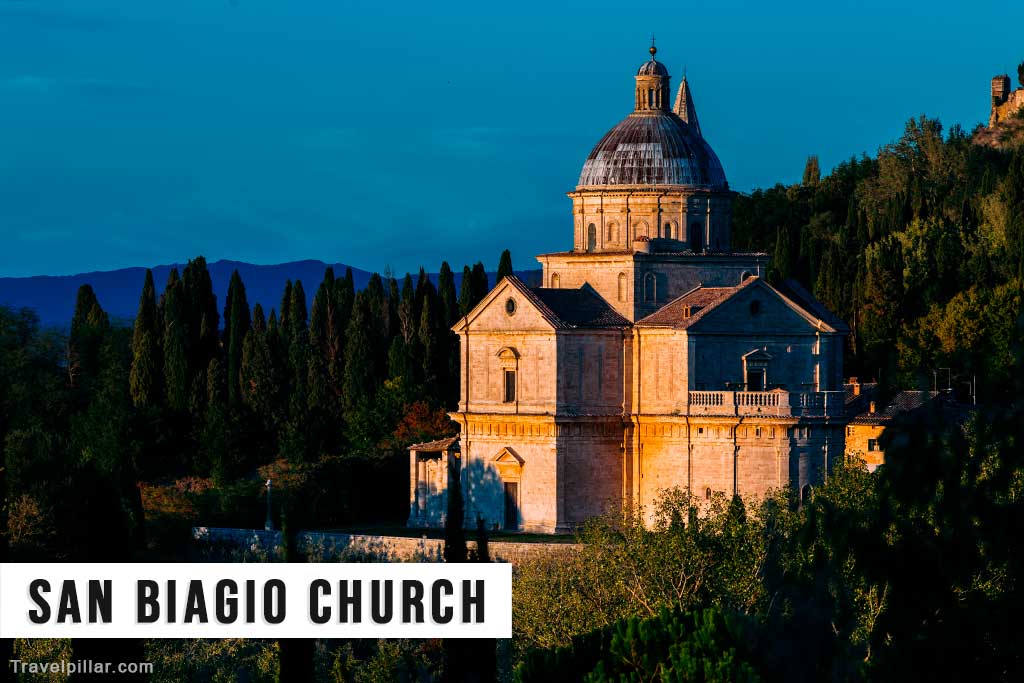
San Biagio Church, located just outside Montepulciano’s walls, is considered a masterpiece of Renaissance architecture. Designed by Antonio da Sangallo the Elder and completed in the 16th century, it features a Greek-cross plan, domed roof, and harmonious proportions. Set in the countryside with vineyards and cypress trees, the church symbolises both religious devotion and the Renaissance ideal of architecture integrated with nature. It remains one of Montepulciano’s most recognisable landmarks.
Google map 4.6/5
Museo Civico di Montepulciano
The Museo Civico di Montepulciano, housed in Palazzo Neri Orselli, presents archaeological, historical, and artistic collections related to the town and surrounding area. Exhibits include Etruscan artefacts, medieval objects, and Renaissance paintings by local and regional artists. The museum documents Montepulciano’s cultural development across centuries, highlighting its artistic output and archaeological heritage, while its setting in a historic palace reflects the integration of culture within the town’s fabric.
Google map 4.5/5
Via di Gracciano nel Corso
Via di Gracciano nel Corso is the principal street running through Montepulciano’s historic centre. Lined with Renaissance palaces, churches, shops, and cafés, it serves as the main thoroughfare for residents and visitors alike. The street links the town’s gates to Piazza Grande, reflecting Montepulciano’s medieval and Renaissance urban structure. It remains both a commercial centre and a route that illustrates the layering of history in the town’s development.
Historic Wine Cellars and Wine Tasting
Ercolani Wine Cellars “Underground City” and Museum
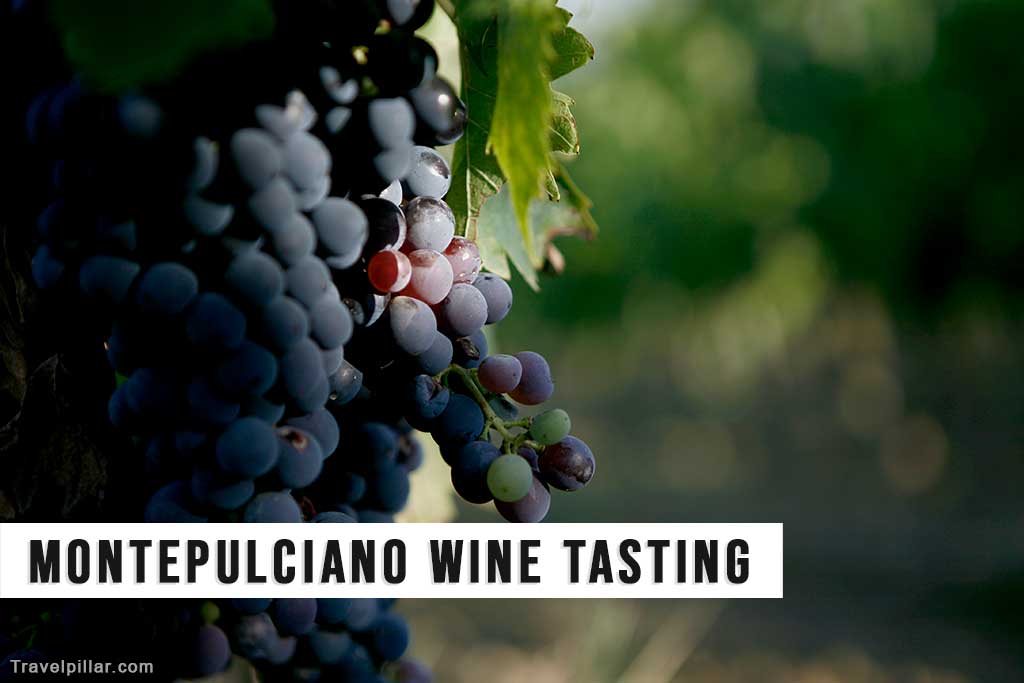
The Ercolani Cellars, often referred to as Montepulciano’s “Underground City,” extend beneath historic buildings in the town centre. Dating back to the Renaissance and earlier periods, the tunnels were used for wine production, storage, and shelter. Today, they house a museum displaying artefacts and exhibits on local history. Visitors can tour the extensive underground network, view traditional tools, and sample Vino Nobile di Montepulciano, linking viticulture with the town’s cultural heritage.
Official website: https://www.ercolanimontepulciano.it/en/
Google map 4.8/5
De’ Ricci Cantine Storiche (historic wine cellars)
Montepulciano’s historic wine cellars, known as Cantine Storiche, are located beneath Renaissance palaces and noble residences throughout the town. These underground spaces, some dating to the Middle Ages, were adapted for the production and storage of wine. Today, many are open to visitors for tours and tastings of Vino Nobile di Montepulciano, the town’s signature wine. They illustrate the long connection between Montepulciano’s architecture, economy, and viticulture.
Official website: https://www.cantinadericci.it/en/
Google map 4.8/5
Talosa Cantina Storica (historic wine cellars)
Talosa Cantina Storica, located in the historic centre of Montepulciano, is a notable winery with underground cellars dating back to the 16th century. The vaulted brick chambers, once part of Renaissance buildings, provide an atmospheric setting for wine ageing. Visitors can tour the historic cellars and sample Vino Nobile di Montepulciano, linking the region’s winemaking tradition with its architectural heritage. The site highlights Montepulciano’s integration of wine culture into its urban fabric.
Official website: https://www.talosa.it/en/
Google map 4.7/5
Wineries just outside of Montepulciano (half day tours)
Poliziano Winery
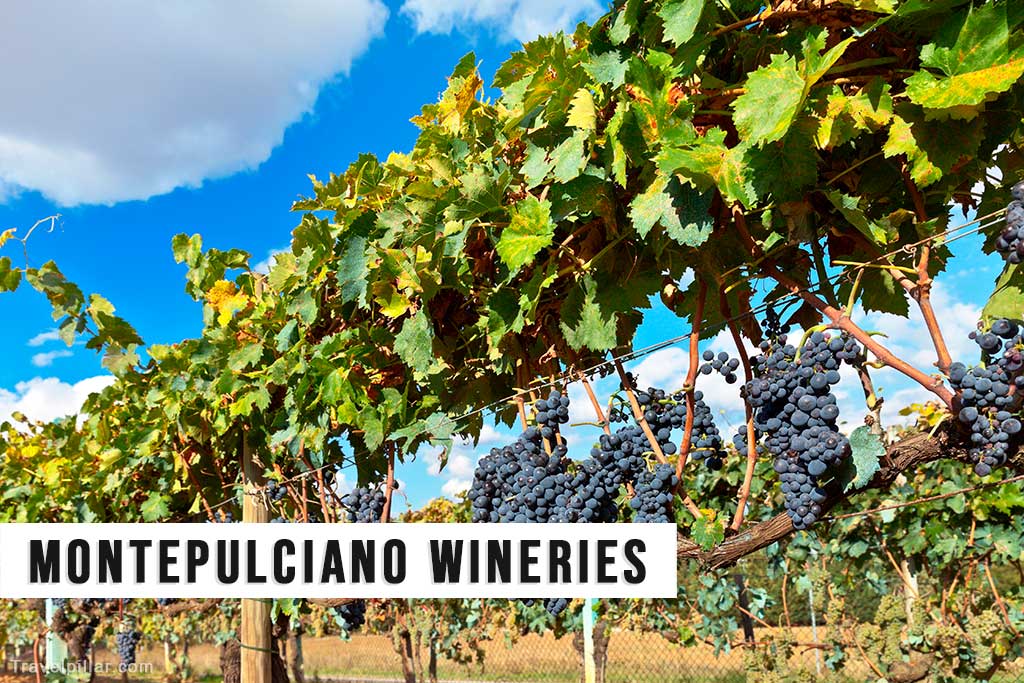
Poliziano Winery, founded in 1961 near Montepulciano, is a modern estate producing Vino Nobile di Montepulciano and other Tuscan wines. Covering over 100 hectares, it combines traditional viticulture with updated techniques to maintain consistency and quality. Visitors can tour the vineyards and cellars, followed by guided tastings. The winery reflects Montepulciano’s adaptation of historic wine traditions to contemporary production, making it one of the area’s leading wine producers.
Official website: https://carlettipoliziano.com/en/
Google map 4.8/5
Icario Winery
Icario Winery, located on the outskirts of Montepulciano, produces Vino Nobile di Montepulciano alongside other Tuscan wines. Established with a focus on quality and modern techniques, the estate combines contemporary architecture with traditional viticulture. Visitors can tour the vineyards and cellars, learn about the production process, and participate in tastings. The winery highlights Montepulciano’s ongoing role in Tuscany’s wine industry, blending innovation with respect for the region’s established winemaking traditions.
Official website: https://www.icario.it/en/
Google map 4.6/5
Avignonesi Winery
Avignonesi Winery, located near Montepulciano, is one of Tuscany’s most prominent wine estates. Established in the 16th century and expanded under later ownership, it is recognised for producing Vino Nobile di Montepulciano, Rosso di Montepulciano, and Vin Santo. The winery emphasises organic and biodynamic practices across its extensive vineyards. Visitors can tour the estate, explore the cellars, and take part in structured tastings, making Avignonesi a significant destination for wine tourism in the region.
Official website: https://www.avignonesi.it
Google map 4.5/5