
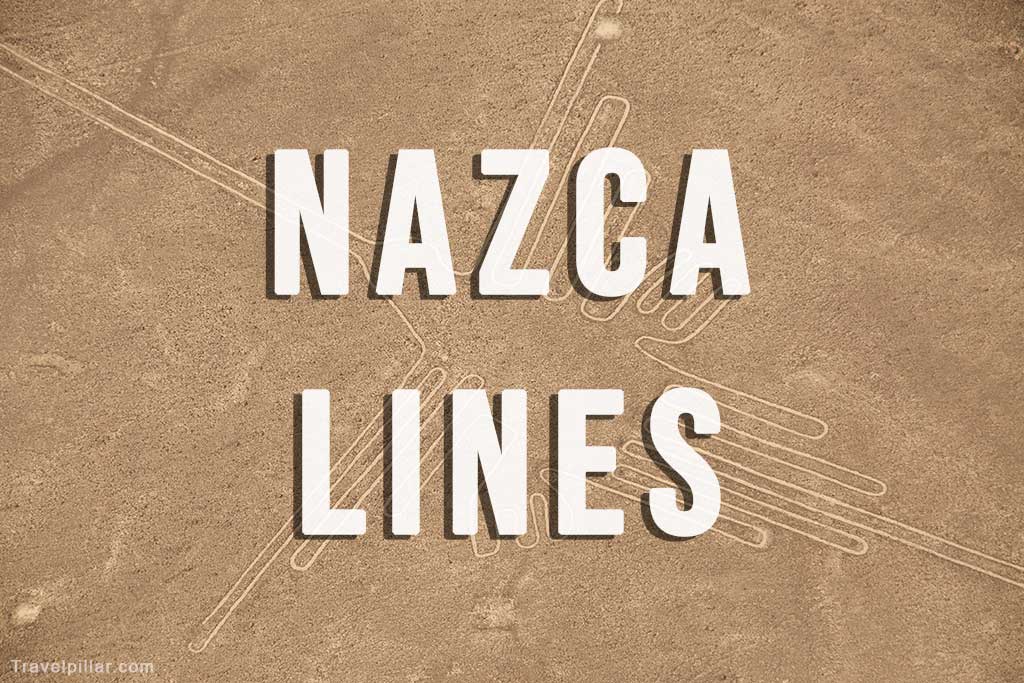
The Nazca Lines are a series of geoglyphs located in the Nazca Desert of southern Peru. Created by the ancient Nazca culture between 400 and 650 AD, the lines consist of over 800 straight lines, and over 70 geometric shapes and symbols including animals, plants, geometric shapes, and human-like figures. Some of the most recognizable symbols include the monkey, hummingbird, spider, condor, and the famous Nazca astronaut. The largest of the Nazca Lines is the Pelican, measuring over 285 meters in length.
The purpose of the lines is still unknown, but many theories suggest they may have had astronomical, religious, or cultural significance.
To view the Nazca Lines, visitors can take a flight from the nearby town of Nazca. The flight provides a unique aerial view of the designs, allowing visitors to fully appreciate their scale and complexity. There are also viewing platforms on the ground where visitors can see some of the smaller designs.
The Nazca Lines were designated a UNESCO World Heritage Site in 1994, and their preservation is of utmost importance. Unfortunately, their delicate nature has been threatened by human activity, including mining and tourism. In recent years, efforts have been made to promote responsible tourism and conservation of the area.
Visiting the Nazca Lines is a truly unique experience that allows visitors to marvel at the ingenuity and artistic talent of the ancient Nazca culture. While the purpose of the lines may remain a mystery, their beauty and significance are undeniable.