
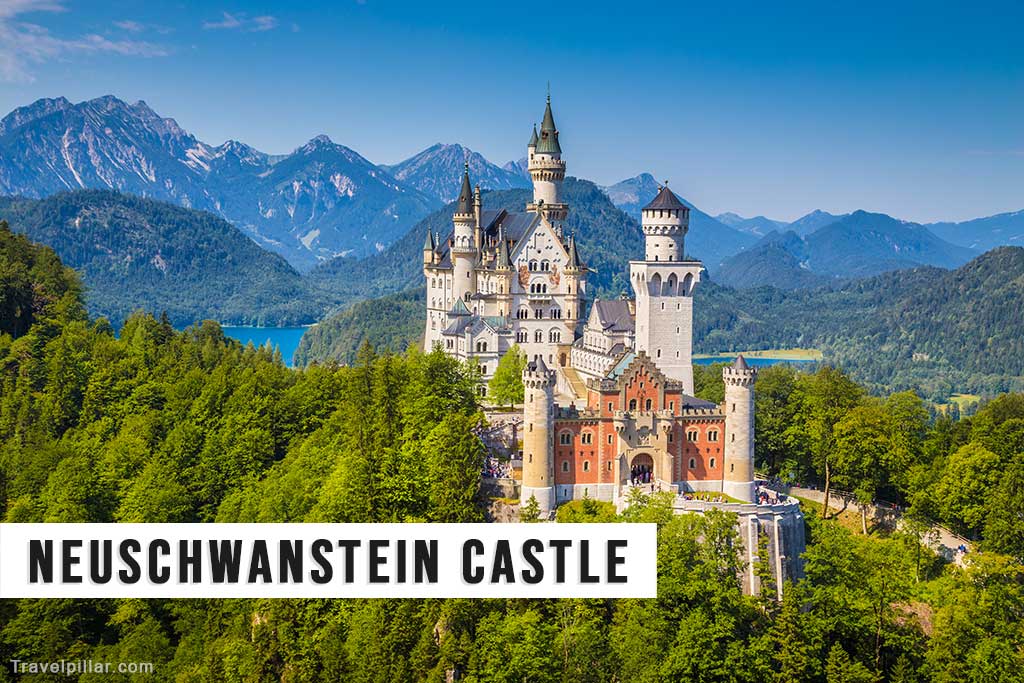
Neuschwanstein Castle is located in Bavaria, near the town of Füssen, and is one of the most visited landmarks in Germany. Built in the late 19th century, it was commissioned by King Ludwig II of Bavaria as a personal retreat and a monument to medieval ideals of kingship and chivalry. Construction began in 1869 but was never fully completed. Despite this, the castle has become an iconic symbol of Romantic architecture.
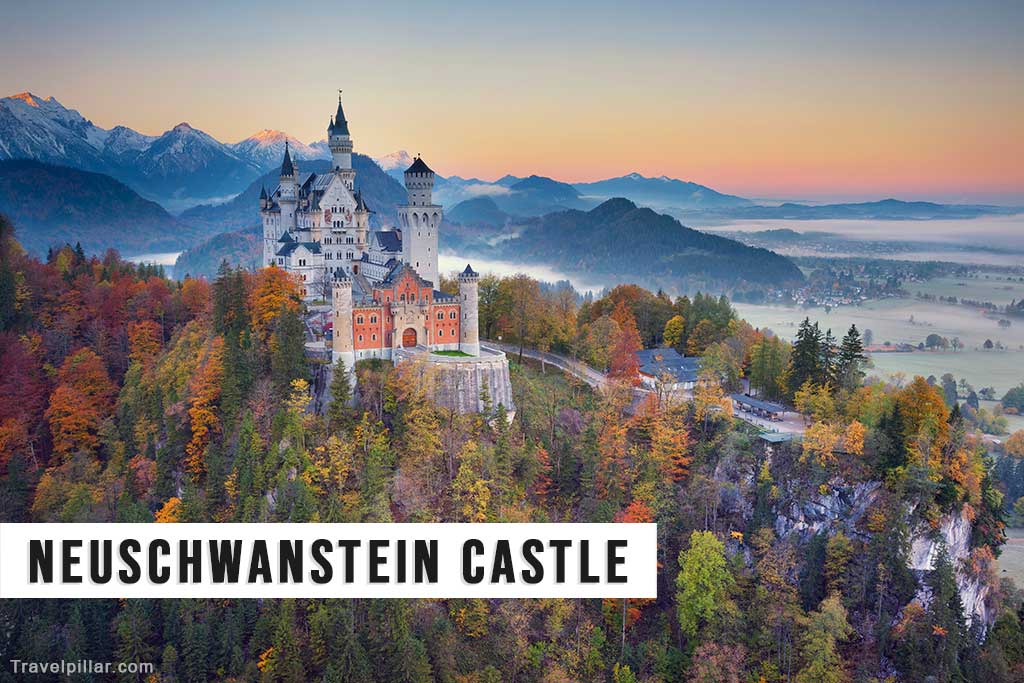
The design reflects a combination of medieval and 19th-century elements, intended to recreate the atmosphere of a knight’s castle rather than serve defensive purposes. Christian Jank, a theatrical set designer, contributed to the plans, while architects Eduard Riedel and Georg von Dollmann adapted the vision into practical structures. The result is a building with towers, turrets, and decorative facades, positioned dramatically on a hill above the surrounding valley.
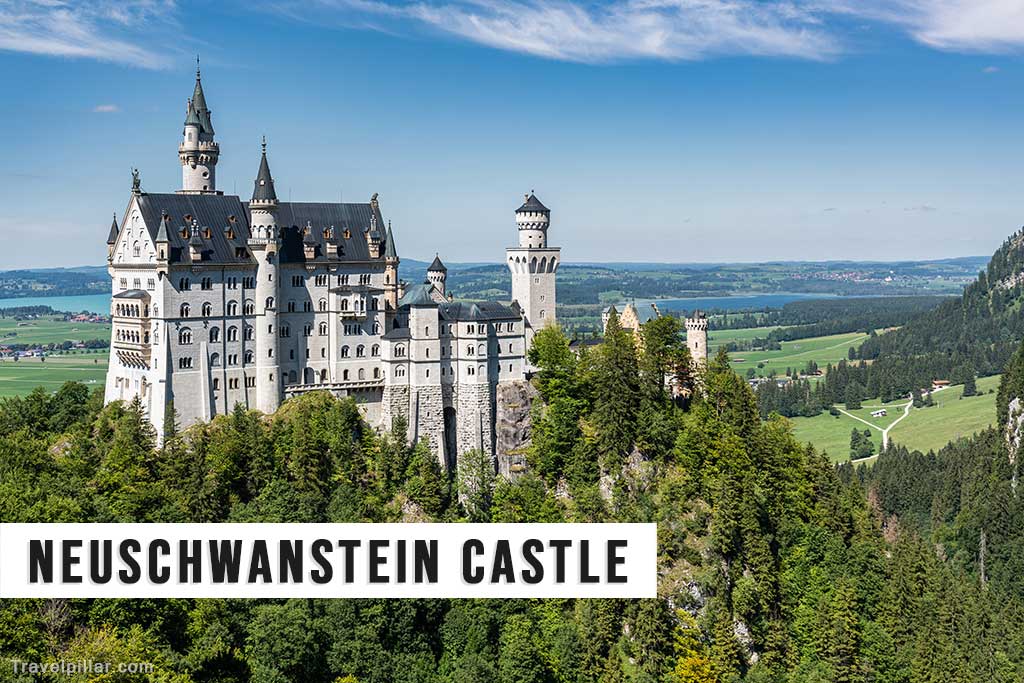
Interior rooms are richly decorated with murals inspired by Germanic legends, particularly those associated with the operas of Richard Wagner, whom Ludwig admired. The Throne Hall and the Singers’ Hall are among the most notable spaces, designed to evoke grandeur and ceremonial splendour. Other rooms, though more modest in function, retain a high level of artistic detail. The castle incorporated modern technology for its time, including running water, central heating, and telephone lines.
Neuschwanstein Castle remained incomplete at the king’s death in 1886 and was opened to the public shortly afterward. It quickly became a major tourist destination, attracting visitors from across Europe and later worldwide. The castle’s setting, overlooking the Hohenschwangau Valley and framed by the Bavarian Alps, enhances its appeal.
Today Neuschwanstein is managed by the Bavarian Palace Department and draws millions of visitors annually. Its fairy-tale appearance inspired cultural works, including Disney’s Sleeping Beauty Castle, and it continues to represent both the romantic vision of King Ludwig II and the wider appeal of Bavaria’s historic landscape.
Google map 4.6/7