
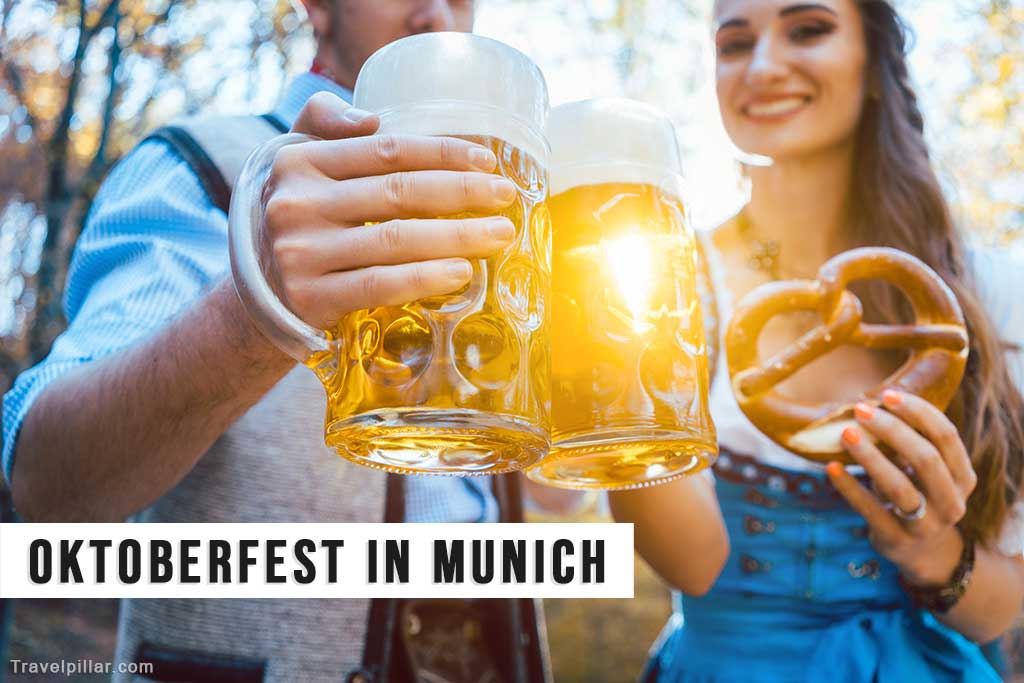
Oktoberfest is the largest folk festival in the world and takes place annually in Munich, Bavaria, Germany. Established in 1810 to celebrate the marriage of Crown Prince Ludwig, later King Ludwig I, it has since developed into a recurring cultural and social event. Held from late September to early October, it attracts millions of visitors from Germany and abroad.
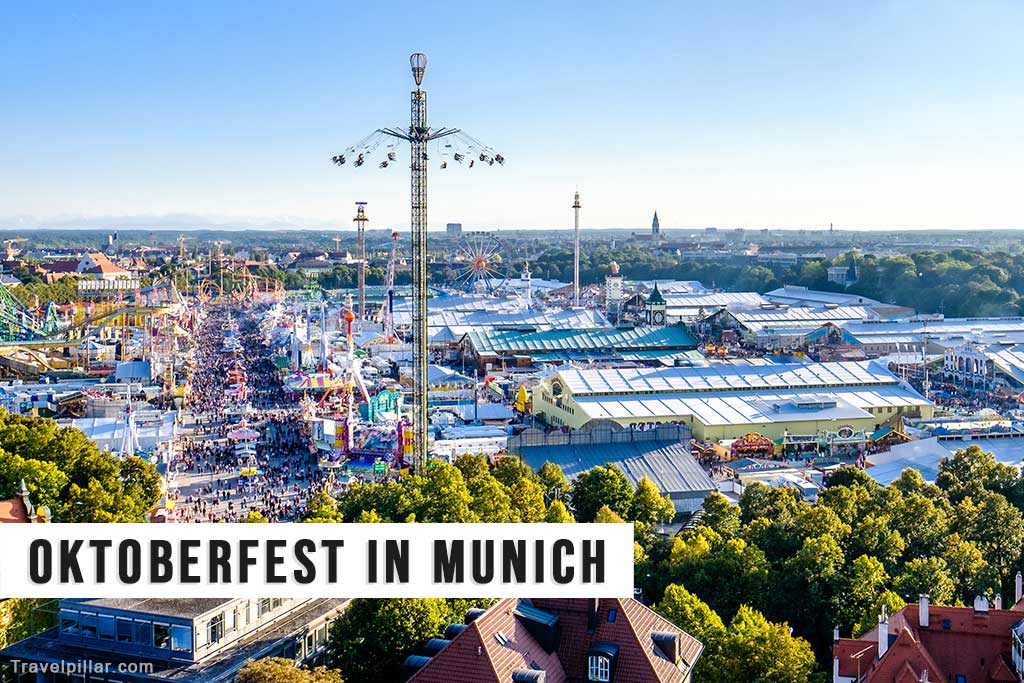
The festival is centred on the Theresienwiese, a large open space south of Munich’s city centre. Temporary beer halls are erected by the city’s major breweries, each decorated in traditional Bavarian style. These tents provide food, music, and beer served in one-litre mugs known as Maß. Bavarian dishes such as roast chicken, pretzels, and sausages accompany the drinks, reflecting the region’s culinary traditions.
Beyond the beer tents, Oktoberfest includes fairground rides, parades, and folk performances. The opening ceremony features the traditional tapping of the first keg by Munich’s mayor, marking the start of festivities. Parades showcase traditional costumes, music, and floats, while families often attend during the day when the atmosphere is more focused on cultural displays than evening celebrations.
Oktoberfest has become a symbol of Bavarian identity, combining regional traditions with international recognition. It contributes significantly to Munich’s economy and tourism sector, while maintaining elements of its historic origins. The festival reflects the combination of local heritage, communal gathering, and large-scale organisation, ensuring its status as one of Germany’s most significant cultural events.
Google map Munich
Oktoberfest Highlights
1. Beer Tents
The beer tents are the focal point of Oktoberfest, operated by Munich’s breweries. Each tent has its own atmosphere, decoration, and music, but all serve beer in one-litre mugs (Maß). The tents accommodate thousands of people and feature traditional food and entertainment.
2. Opening Ceremony
The opening ceremony begins with a procession of breweries and participants in traditional costume. Munich’s mayor performs the ceremonial tapping of the first keg, declaring “O’zapft is!” (“It is tapped”). This marks the official start of Oktoberfest.
3. Traditional Costumes
Traditional Bavarian dress is a defining feature of the festival. Men often wear lederhosen, while women wear dirndls. Costumes are worn both by locals and visitors, adding to the sense of tradition and visual identity.
4. Bavarian Food
Food plays a central role, with roast chicken, sausages, pretzels, and pork knuckles among the most popular dishes. Meals are served in the tents and at outdoor stalls, reflecting Bavarian culinary heritage.
5. Music and Dancing
Live brass bands perform traditional Bavarian music in the beer tents, accompanied by communal singing and dancing. Popular folk songs and drinking chants create a lively atmosphere. Evening sessions often become more energetic and celebratory.
6. Parades
Oktoberfest parades showcase traditional costumes, horse-drawn brewery wagons, and music groups. The Trachten and Riflemen’s Parade is one of the largest, involving thousands of participants from Bavaria and beyond, emphasising the cultural dimension of the festival.
7. Fairground Rides
The festival grounds include a large fairground with rides, rollercoasters, and traditional attractions such as carousels. These provide entertainment for families and add a recreational element to the event, beyond the beer tents.