
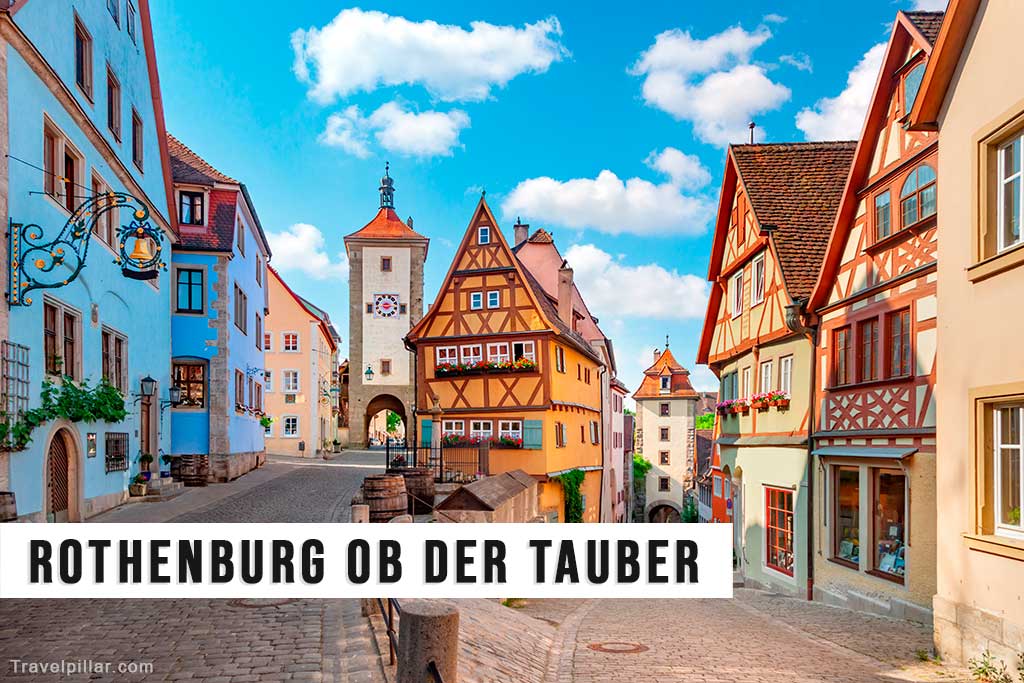
Rothenburg ob der Tauber is a medieval town in Bavaria, located on the River Tauber along the Romantic Road. Known for its well-preserved old town, it is one of the best examples of a fortified medieval settlement in Germany. The town flourished in the Middle Ages as a free imperial city, reaching its peak in the 14th and 15th centuries through trade and agriculture.
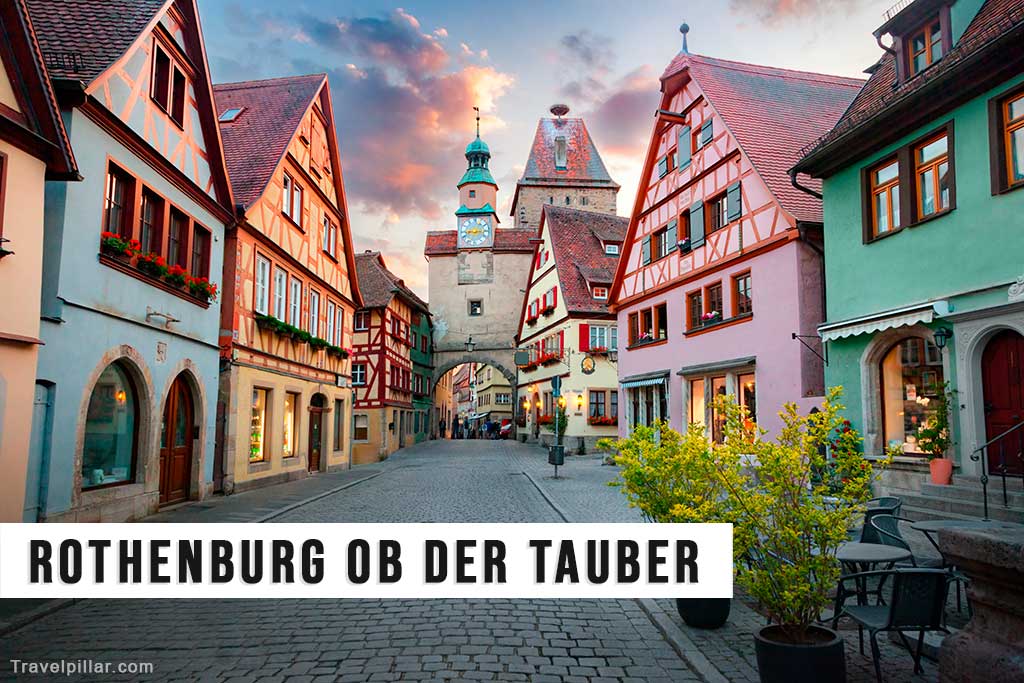
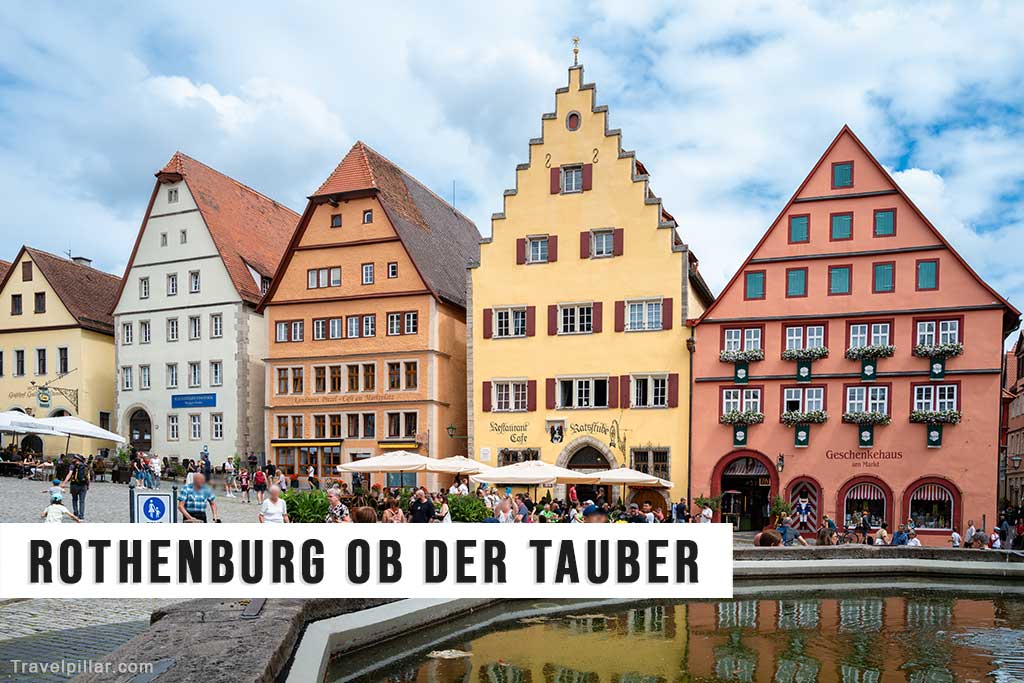
The old town is surrounded by defensive walls and towers that remain largely intact. Visitors can walk along the town walls, which provide views over the rooftops and surrounding countryside. Within the walls, narrow streets, half-timbered houses, and market squares preserve the historic layout. The Marktplatz forms the central square, with the Town Hall, built in Gothic and Renaissance styles, standing as one of Rothenburg’s most prominent buildings.
Religious and civic monuments highlight the town’s history. St. James’s Church, built between the 14th and 15th centuries, contains the Holy Blood altarpiece carved by Tilman Riemenschneider, one of the finest examples of late Gothic wood sculpture. The Medieval Crime and Justice Museum illustrates aspects of law, punishment, and daily life in the past. Other museums include the Christmas Museum, reflecting the town’s reputation for seasonal traditions.
Rothenburg ob der Tauber is also notable for its role in cultural memory. Its intact appearance led to its preservation during the Second World War, when local authorities agreed to spare the town from destruction. Since then, it has become a symbol of Germany’s medieval heritage and a popular destination for both domestic and international tourism.
Today the town combines heritage with tourism, offering guided tours, seasonal events, and markets. Its preserved architecture and defensive works illustrate medieval urban development, while its location along the Romantic Road ensures its continuing importance as one of Germany’s most visited historic towns.