
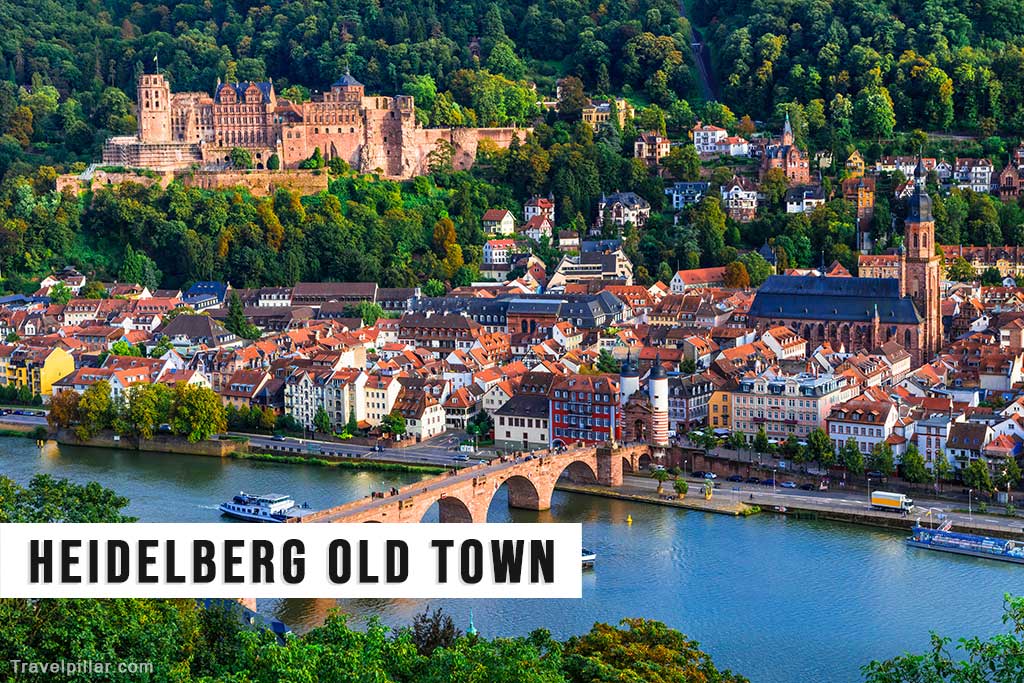
Heidelberg Old Town, or Altstadt, is one of the best-preserved historic districts in Germany, situated along the River Neckar and overlooked by Heidelberg Castle. Stretching for about 1.5 kilometres, the Old Town reflects a layered history shaped by medieval foundations, baroque reconstruction, and modern cultural activity. Its streets and squares illustrate the city’s development as a centre of learning, trade, and political influence in the Palatinate.
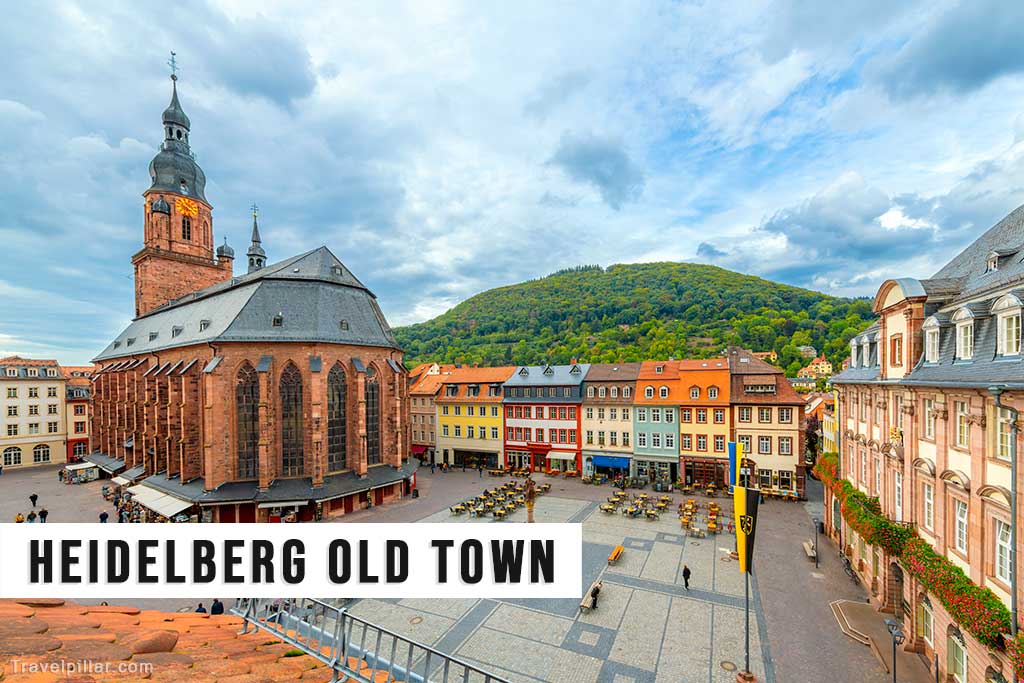
The heart of the Old Town is the Hauptstrasse, one of the longest pedestrian streets in Europe. Lined with baroque houses, shops, and cafes, it runs parallel to the river and connects many of Heidelberg’s landmarks. Market Square, with the Church of the Holy Spirit, is one of the central spaces, used historically for trade and civic gatherings. The church itself, begun in the 14th century, is notable for its Gothic structure and association with both Protestant and Catholic traditions.
Heidelberg Castle dominates the Old Town from its hillside position. Constructed between the 13th and 17th centuries, it represents a mix of Gothic and Renaissance architecture. Though partly ruined after wars and lightning strikes, it remains one of Germany’s most visited castles, with gardens, terraces, and the large Heidelberg Tun wine barrel. The castle illustrates the city’s status as a residence of the Electors Palatine.
Other landmarks include the Old Bridge, built in the 18th century, which links the Old Town to the opposite bank of the Neckar. The bridge is marked by a baroque gate and statues, reinforcing Heidelberg’s historic identity. The Old University, founded in 1386 and one of the oldest in Germany, reflects the city’s continuing importance as a centre of scholarship.
Today Heidelberg Old Town combines heritage with modern life. Museums, cultural institutions, and festivals contribute to its atmosphere, while preserved architecture and the castle ensure its reputation as one of Germany’s most attractive historic urban centres.
Heidelberg Old Town Highlights
1. Heidelberg Castle
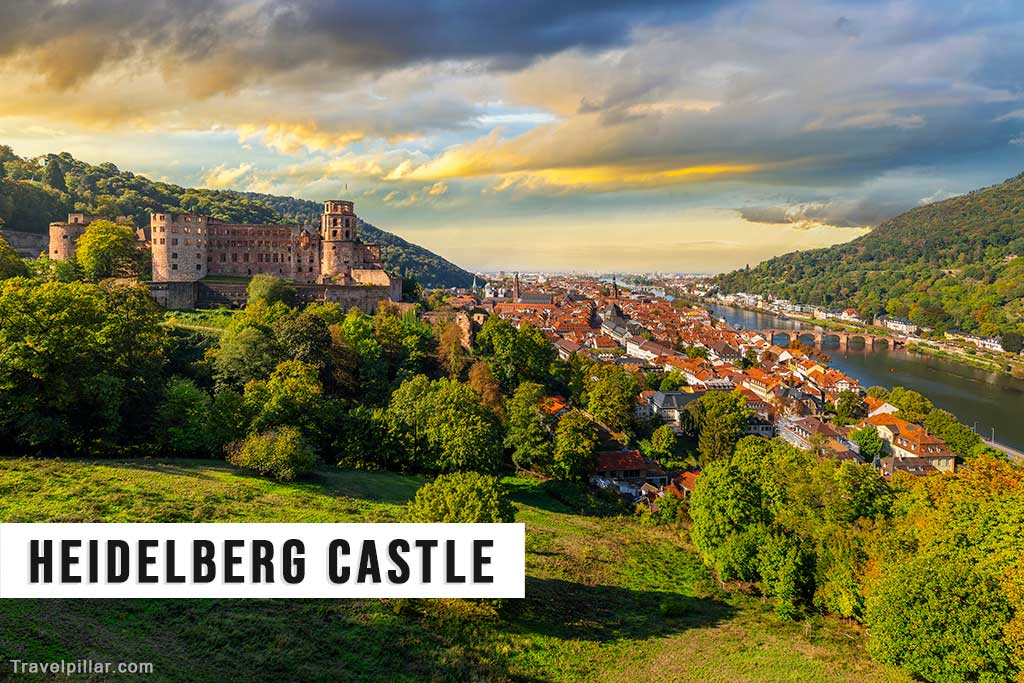
Heidelberg Castle, dating from the 13th to 17th centuries, dominates the Old Town from its hillside location. A mix of Gothic and Renaissance styles, it contains courtyards, the Heidelberg Tun wine barrel, and gardens with views over the Neckar Valley. Though partly ruined, it remains the city’s most prominent landmark.
2. Hauptstrasse
Hauptstrasse is one of Europe’s longest pedestrian streets, running through the heart of the Old Town. It is lined with baroque houses, shops, and cafes, combining commerce with historic character. The street connects major landmarks and remains a central artery of Heidelberg’s urban life.
3. Church of the Holy Spirit
The Church of the Holy Spirit, located in Market Square, is Heidelberg’s principal church. Built in Gothic style from the 14th century, it has served both Protestant and Catholic congregations. Its tall tower is a defining element of the Old Town skyline.
4. Old Bridge
The Old Bridge, built in 1788, links the Old Town with the opposite bank of the Neckar. Its baroque gate and statues emphasise its ceremonial role as well as its practical function. It remains one of Heidelberg’s most recognisable landmarks.
5. Market Square
Market Square is the central civic space of the Old Town, surrounded by historic buildings including the Town Hall and the Church of the Holy Spirit. The baroque fountain of Hercules stands at its centre. It has long served as a focal point for trade and public gatherings.
6. Old University
Founded in 1386, Heidelberg University is the oldest in Germany. The Old University building in the Old Town houses the Aula, or ceremonial hall, decorated with portraits of scholars. The site reflects Heidelberg’s continuing role as a centre of learning.
7. Student Prison (Studentenkarzer)
The Student Prison, in use from the 16th to 19th centuries, was where misbehaving students were confined for minor offences. Its walls are covered with graffiti and drawings left by students. Today it is a museum illustrating aspects of university life.
8. Jesuit Church
The Jesuit Church, completed in the 18th century, is one of the largest baroque churches in Heidelberg. Its white interior, ornate altars, and twin towers contrast with the Gothic style of the Church of the Holy Spirit. It reflects the influence of the Counter-Reformation in the city.
9. Kornmarkt
Kornmarkt is a smaller square near the castle path, framed by baroque houses and overlooked by the ruins above. A statue of the Virgin Mary stands at its centre. The square combines civic space with views that connect the Old Town to its castle backdrop.
10. Karlstor
Karlstor, completed in 1781, is a triumphal arch built in honour of Elector Karl Theodor. Located at the eastern end of the Old Town, it was constructed in classical style. It marks the transition between the old centre and later urban expansion.