
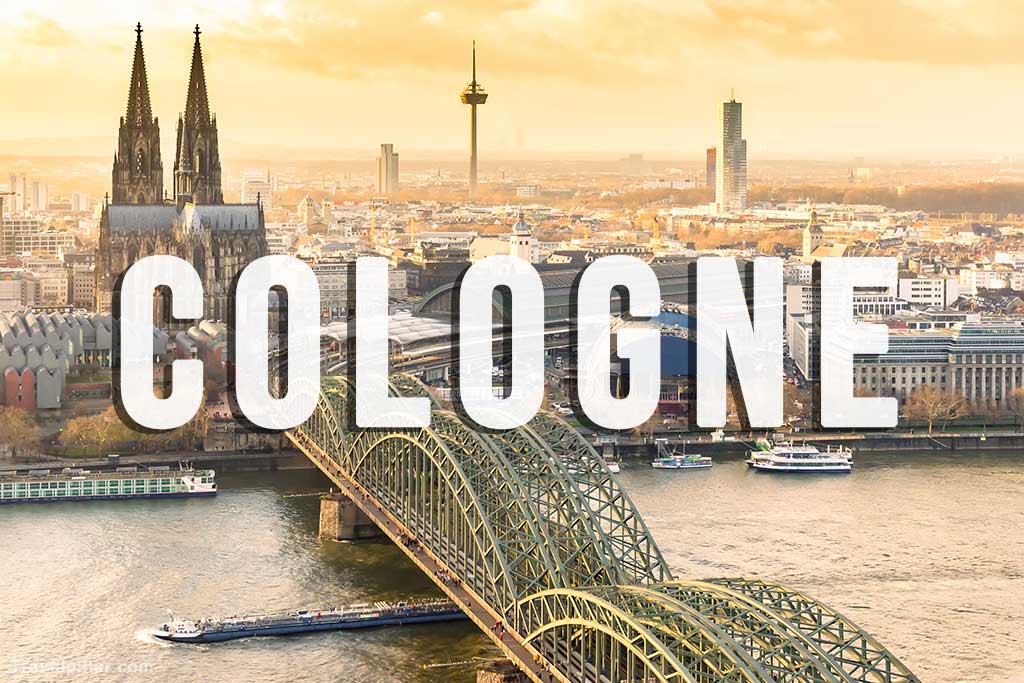
Cologne, located on the River Rhine in western Germany, is one of the country’s oldest cities, with origins dating back to Roman times. Established as Colonia Claudia Ara Agrippinensium in the 1st century AD, it developed into an important commercial and cultural centre. Today it remains the largest city in North Rhine-Westphalia and a significant hub for trade, media, and tourism.
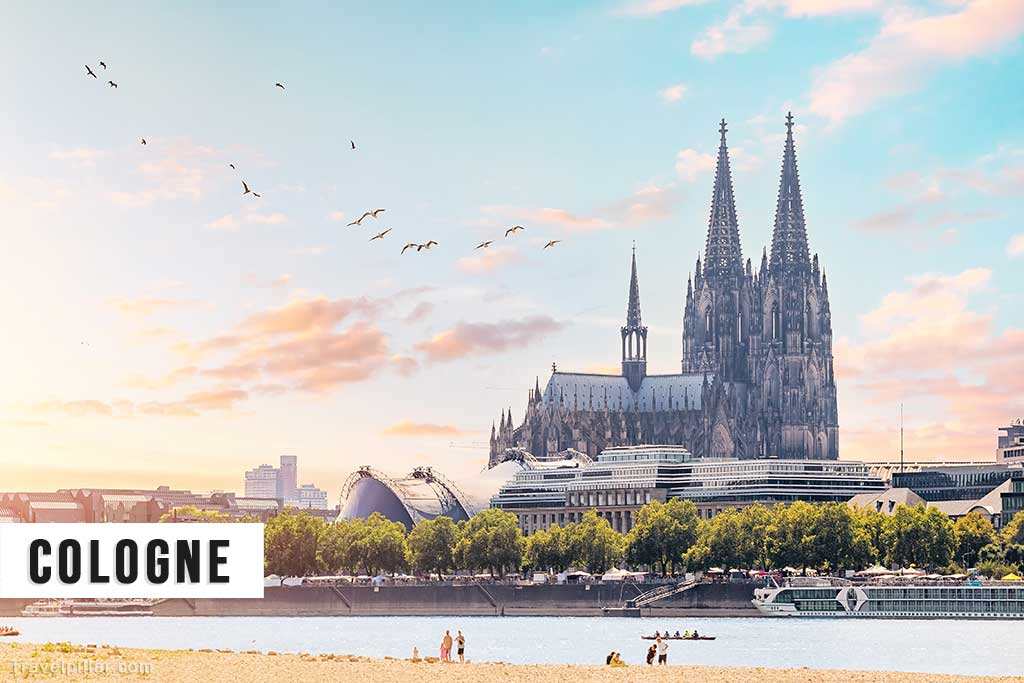
The city’s most recognisable landmark is Cologne Cathedral, a Gothic structure begun in the 13th century and completed in the 19th. With twin spires rising to 157 metres, it is one of the tallest churches in the world and houses the Shrine of the Three Kings, a major medieval reliquary. The cathedral, designated a UNESCO World Heritage Site, symbolises both Cologne’s religious importance and its resilience following wartime damage.
Cologne also preserves Roman remains, including sections of the city wall, gates, and mosaic floors, many of which are displayed in the Romano-Germanic Museum. The Old Town, with its narrow streets and reconstructed houses, contains churches, squares, and the historic town hall, reflecting the city’s medieval prosperity.
Modern Cologne is equally recognised for its cultural institutions. The Museum Ludwig houses one of Europe’s most important collections of modern art, including works by Picasso and Warhol. The city is also known for events such as Carnival and for Kölsch, a regional beer served in traditional pubs. Together, Cologne’s history, architecture, and culture make it one of Germany’s most significant urban destinations.
Top 10 Cologne
1. Cologne Cathedral
Cologne Cathedral, completed in the 19th century after centuries of construction, is Germany’s most visited landmark. Its Gothic spires reach 157 metres, and the interior contains stained glass, chapels, and the Shrine of the Three Kings. The cathedral survived wartime bombing and remains a UNESCO World Heritage Site.
2. Romano-Germanic Museum
The Romano-Germanic Museum preserves archaeological finds from Cologne’s Roman past. Its highlights include a large mosaic floor from a Roman villa and collections of glass, jewellery, and inscriptions. The museum illustrates the city’s importance as Colonia Claudia Ara Agrippinensium, founded in the 1st century AD.
3. Old Town
Cologne’s Old Town combines reconstructed medieval streets with narrow alleys, colourful houses, and traditional squares. It includes the historic Town Hall and several Romanesque churches. Pubs and restaurants serve Kölsch beer, maintaining the area’s role as a centre of civic and social life.
4. Museum Ludwig
The Museum Ludwig is one of Europe’s leading modern art museums. Its collections include major works by Picasso, Warhol, and Lichtenstein, as well as important holdings of Pop Art and contemporary photography. The museum reflects Cologne’s role as a cultural hub.
5. Great St. Martin Church
The Great St. Martin Church is one of Cologne’s twelve Romanesque churches. Rebuilt after wartime destruction, it retains its distinctive crossing tower and medieval character. Its history reflects both the city’s religious development and its resilience after reconstruction.
6. Cologne Chocolate Museum
The Cologne Chocolate Museum traces the history of chocolate from ancient cultures to modern production. Exhibits include machinery, artefacts, and a working chocolate fountain. The museum combines industrial heritage with culinary culture, appealing to visitors of all ages.
7. Hohenzollern Bridge
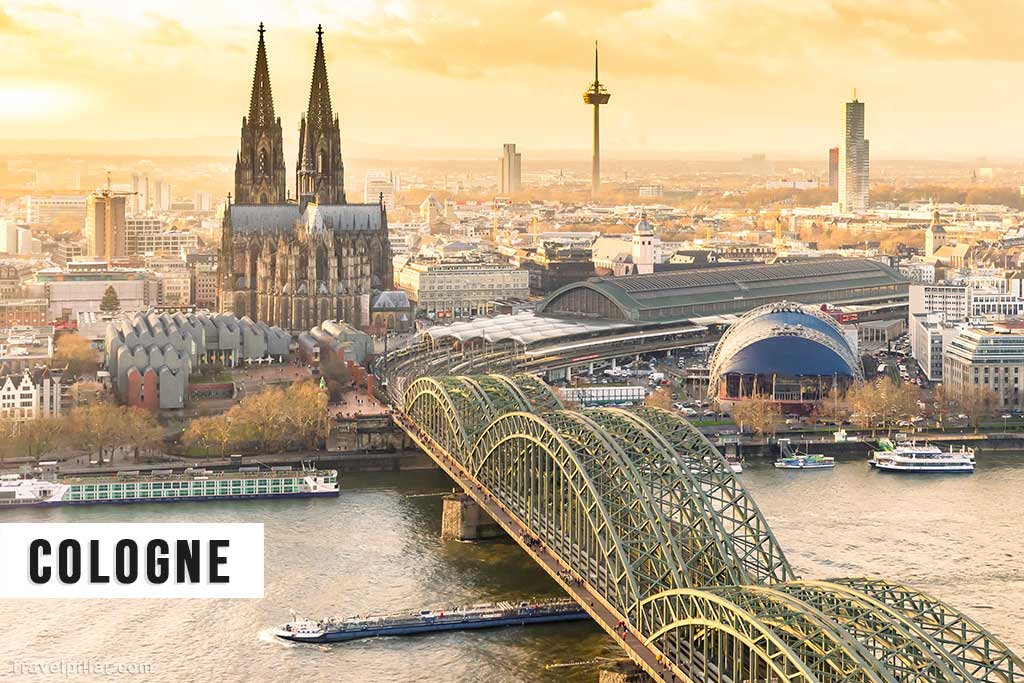
The Hohenzollern Bridge crosses the Rhine near the cathedral. Originally built in 1911, it was rebuilt after wartime destruction. Today it is used by trains and pedestrians, and its railings are covered in “love locks.” The bridge offers views of Cologne’s skyline.
8. Cologne Zoo and Botanical Garden
Founded in the 19th century, Cologne Zoo is one of Germany’s oldest zoological gardens. It contains a wide range of species in themed enclosures. Nearby, the Flora Botanical Garden features landscaped grounds with historic greenhouses, providing a green retreat within the city.
9. Cologne Carnival
Cologne Carnival is one of Germany’s largest festivals, centred on parades, music, and costumes. Rooted in medieval tradition, it culminates in the days leading up to Lent. The event illustrates the city’s communal spirit and continues to attract large numbers of participants and visitors.
10. Rhine Promenade
The Rhine Promenade runs along the river, offering views of bridges, passing boats, and the city skyline. It provides walking routes, cafes, and open spaces for recreation. The promenade highlights Cologne’s connection to the Rhine and its role as a trading and cultural centre.