
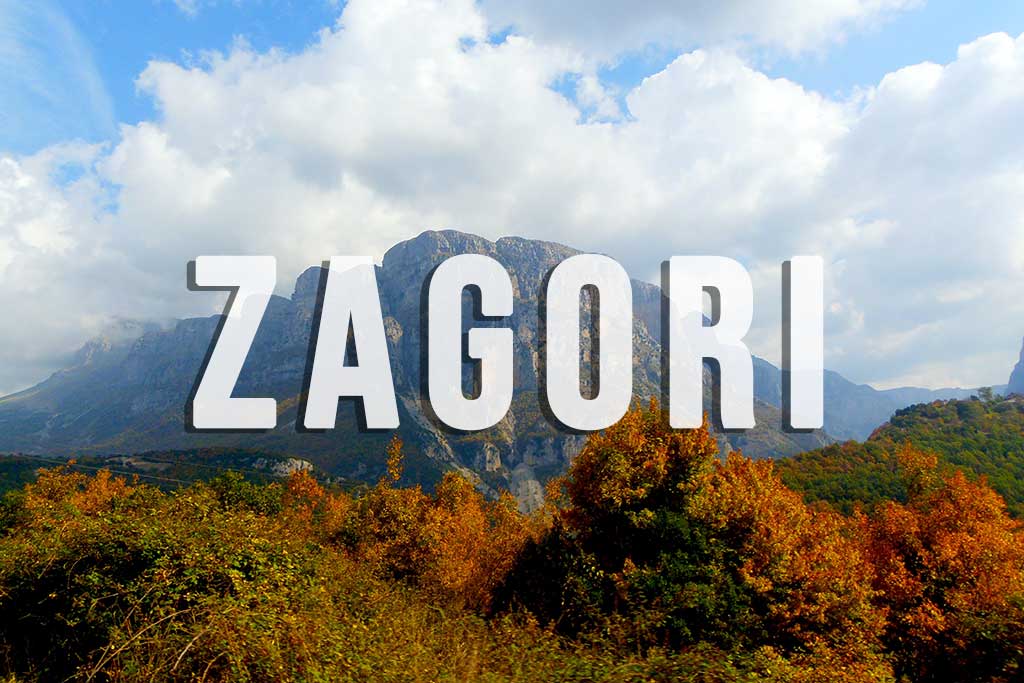
Zagori is a mountainous region in Epirus, northwestern Greece, located within the Pindus mountain range. It is composed of a network of traditionally organised villages set across high-altitude terrain, historically shaped by isolation and limited access. This geography played a central role in the development of Zagori’s distinct architectural and social character.
The region is best known for its stone-built settlements, many of which date from the 17th to 19th centuries. Houses, churches, and bridges were constructed using local stone, resulting in a consistent architectural style adapted to the mountain environment. Arched stone bridges, built to connect villages and trade routes, remain an important feature of the landscape and reflect the region’s former economic networks.
Zagori is also closely associated with the Vikos Gorge, one of the deepest gorges in the world relative to its width. The gorge forms part of Vikos–Aoös National Park and has historically acted as both a natural barrier and a source of medicinal plants used in traditional healing practices. The surrounding terrain includes forests, rivers, and alpine zones, supporting a high level of biodiversity.
Historically, Zagori enjoyed a degree of autonomy during the Ottoman period, which allowed local communities to develop education, trade, and cultural institutions. Many residents became merchants and scholars who maintained connections with urban centres while supporting their home villages. This relationship contributed to the construction of schools, libraries, and religious buildings across the region.
In the modern era, improved road access has reduced isolation, but many villages remain small and lightly populated. Tourism now plays a role in the local economy, focused on hiking, cultural heritage, and landscape rather than large-scale development. Traditional paths, known as kalderimia, link settlements and follow historic routes across the mountains.
Zagori’s importance lies in its preservation of a mountain-based way of life shaped by geography, craftsmanship, and local governance. The region provides a clear example of how human settlement adapted to challenging terrain while maintaining social cohesion, architectural continuity, and long-term interaction with the natural environment.
Official tourism website: https://www.visitgreece.gr