
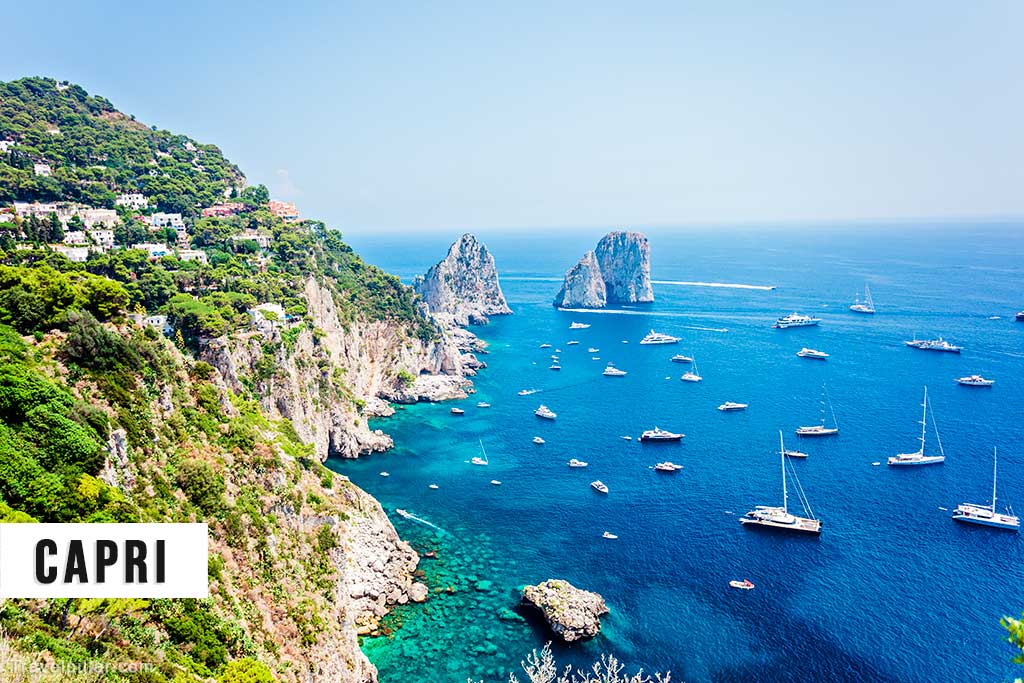
Capri is a small island located in the Gulf of Naples in southern Italy. Known for its stunning natural beauty, glamorous atmosphere, and rich history, Capri is a popular tourist destination that attracts visitors from all over the world.
The island is home to a number of stunning natural attractions, including the famous Blue Grotto, a sea cave known for its brilliant blue waters, and the Faraglioni, a series of dramatic rock formations that rise out of the sea. Visitors can also explore the island’s beautiful beaches, scenic hiking trails, and charming coastal towns.
In addition to its natural beauty, Capri is also known for its glamorous atmosphere and rich cultural heritage. The island has been a popular destination for artists, writers, and intellectuals for centuries, and has a rich history that is reflected in its stunning architecture and cultural landmarks.
One of the highlights of Capri is the town of Anacapri, which is situated on the highest point of the island and offers stunning views over the surrounding landscape. Anacapri is home to a number of beautiful historic buildings, including the Villa San Michele, a stunning 19th-century villa that was once owned by the Swedish physician and writer Axel Munthe.
Overall, Capri is a beautiful and fascinating destination that offers a perfect blend of natural beauty, history, and culture, making it a must-visit destination for anyone traveling to southern Italy.
Google map of the island of Capri 4.6/5
The Top 10 Things to See and Do in Capri
Capri Boat Tour
A Capri boat tour offers a complete circuit around the island, providing access to natural landmarks such as the Blue Grotto, Faraglioni Rocks, Grotta Verde, and Grotta Bianca. Tours vary in duration and vessel type, from group boats to private charters. Passengers typically see coastal cliffs, coves, and sea caves. Some tours allow for swimming stops. Departure points include Marina Grande, with bookings available in advance or on the day.
Google map Porto Turistico di Capri 4.4/5
Faraglioni Rocks (Faraglioni di Capri)
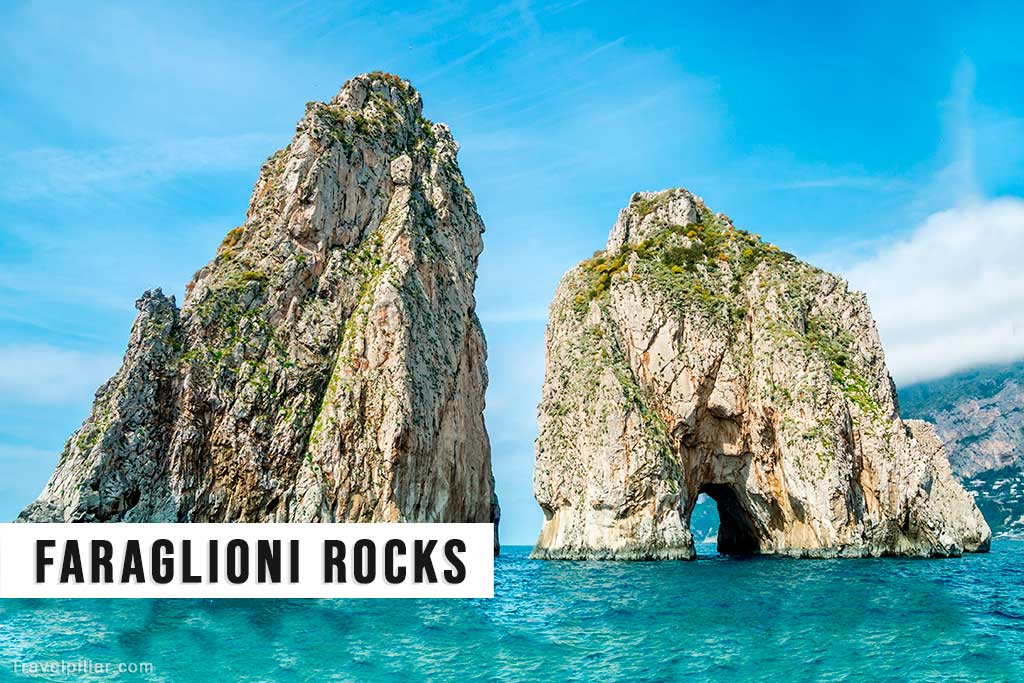
The Faraglioni Rocks are three coastal limestone stacks located off the southern shore of Capri. Formed by erosion, they rise sharply from the sea and are named Stella, Mezzo, and Scopolo. The rocks are a geological symbol of the island and a well-known natural landmark. They are best viewed by boat or from vantage points such as the Gardens of Augustus or the Belvedere of Punta Tragara. Swimming is possible nearby.
Google map 4.9/5
Grotta Verde
The Grotta Verde, or Green Grotto, is a sea cave located on the southern coast of Capri near Punta di Torre. It is known for the green light effect created by sunlight reflecting off the seabed and illuminating the cave’s interior. The grotto is accessible by boat and is often included in island tours. Visitors can swim in the area, and the cave is less crowded than the Blue Grotto.
Google map 4.8/5
Grotta Bianca
The Grotta Bianca, or White Grotto, is a sea cave on the eastern coast of Capri, named for the pale limestone formations inside. It consists of two sections: a lower part accessible by boat and an upper chamber reachable via a rock staircase. Stalactites and natural arches are visible within the cave. The Grotta Bianca is typically visited as part of a boat tour around the island and is less frequented than other grottos.
Google map 4.7/5
Grotta Azzurra (Blue Grotto)
The Grotta Azzurra, or Blue Grotto, is a sea cave on the northwest coast of Capri, accessible by small rowboat through a narrow entrance. Sunlight entering below the waterline creates a vivid blue illumination inside the cave. It has been a noted attraction since Roman times, with ancient statues found within. Entry is dependent on calm sea conditions and requires an admission fee. Visits are brief due to limited space and high demand.
Google map 4.4/5
Capri Funicular Railway (Funicolare di Capri)
The Capri Funicular connects Marina Grande, the island’s main port, with the town of Capri. Operating since 1907, it runs on a single track with a midpoint passing loop and takes approximately five minutes to ascend. The funicular is a practical and efficient way to reach the town centre, avoiding steep roads. Tickets are purchased at the terminal in Marina Grande. Service is frequent, with seasonal adjustments based on visitor demand.
Google map 4.3/5 Stazione a Valle (Marina Grande Station)
Google map 4.3/5 Stazione a Monte Station (Piazzetta)
Google map 4.8/5 Funicolare Telescope (Viewpoint)
Monte Solaro
Monte Solaro is the highest peak on Capri, reaching 589 metres. It provides panoramic views of the island, the Bay of Naples, and the Amalfi Coast. The summit can be reached by chairlift from Anacapri or by a walking trail. At the top are the remains of Fortino di Bruto and a small café. The area features native flora and bird species, making it suitable for both sightseeing and light hiking.
Google map 4.8/5 Monte Solaro
Chairlift to the top of Monte Solaro
The Monte Solaro Chairlift connects the centre of Anacapri to the summit of Monte Solaro, the island’s highest point. The ride takes approximately 12 minutes and offers uninterrupted views of Capri’s landscape and coastline. Operated by a single-seat lift system, it provides an alternative to the walking path. The upper station includes a café and access to panoramic viewpoints. Tickets are available at the base station in Piazza Vittoria, Anacapri.
Google map Monte Solaro Chairlift (lower station) 4.7/5
Google map Monte Solaro Chairlift (upper station) 4.8/5
Anacapri
Anacapri is a town located on the higher western side of Capri, accessible by bus or taxi from Marina Grande. It offers a quieter atmosphere than Capri town and features sites such as Villa San Michele, the Monte Solaro Chairlift, and the Church of San Michele. Narrow streets, local shops, and traditional architecture define the area. Anacapri serves as a base for hiking trails and excursions to natural and historical landmarks.
Capri (Town)
Capri Town is the main settlement on the island of Capri, situated above Marina Grande and accessed by funicular, bus, or taxi. The central square, Piazza Umberto I, serves as a hub for cafés, shops, and public buildings. The town includes the Gardens of Augustus, Via Krupp, and several historic churches. Narrow pedestrian streets connect to upscale boutiques and hotels. Capri Town is a focal point for tourism, dining, and local administration.
Google map Capri central square (Piazza Umberto I) 4.5/5
Villa San Michele
Villa San Michele is a historic house museum located in Anacapri, built by Swedish physician Axel Munthe in the early 20th century. The villa incorporates classical architectural elements and houses Roman, Egyptian, and medieval artefacts. Surrounded by landscaped gardens, it offers panoramic views over the Bay of Naples. The property includes a small chapel and various sculptures. Villa San Michele is open to the public and operates as a museum and cultural site.
Google map 4.7/5
Gardens of Augustus / Giardini di Augusto (near Capri Town)
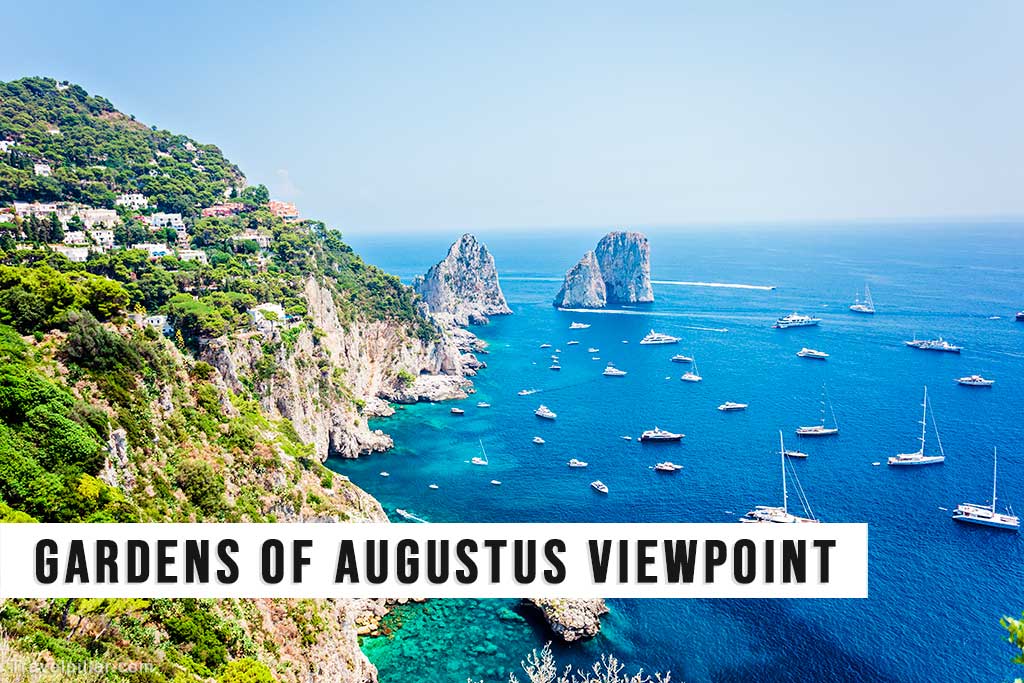
The Gardens of Augustus are a series of terraced botanical gardens located near Capri Town. Established in the early 20th century, they feature Mediterranean plant species and offer views of the Faraglioni Rocks and the Bay of Marina Piccola. The gardens also overlook the winding Via Krupp, though access to the path is often restricted. Entry requires a small fee. The site is compact but provides a strategic viewpoint for photography and sightseeing.
Google map Giardini di Augusto 4.7/5
Google map Capri viewpoint 4.8/5
Belvedere Tragara
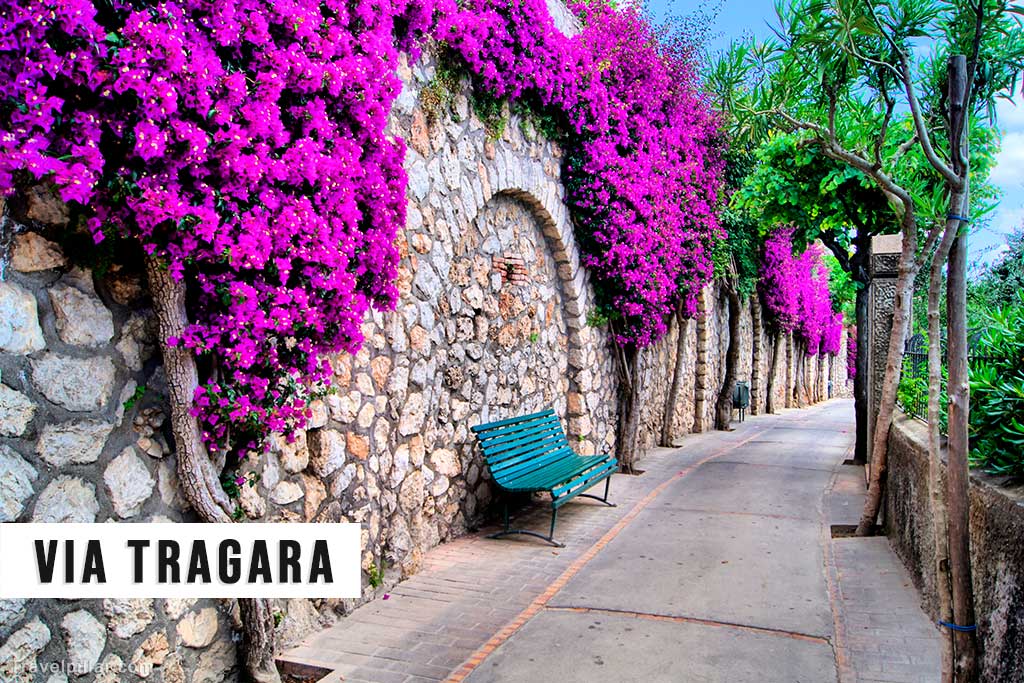
Belvedere Tragara is a panoramic terrace located at the end of Via Tragara, a pedestrian walkway in Capri Town. It offers direct views of the Faraglioni rock formations and the southern coastline of the island. The terrace is surrounded by Mediterranean vegetation and upscale residences, including historic villas. Accessible by foot, it serves as a quiet observation point and is a common starting location for coastal walks such as the Pizzolungo trail.
Google map 4.8/5
Church of San Michele
The Church of San Michele is an 18th-century Baroque church located in Anacapri. It is best known for its hand-painted majolica tile floor depicting the expulsion of Adam and Eve from the Garden of Eden. Built in 1719, the church features an octagonal plan and a central dome. Access to the floor is limited to a raised walkway. The church is open to visitors and maintained as a historical and artistic site.
Google map 4.7/5
Via Krupp
Via Krupp is a historic switchback footpath connecting the Gardens of Augustus with Marina Piccola. Commissioned by German industrialist Friedrich Alfred Krupp in the early 20th century, the path is carved into the cliffside and features a series of sharp hairpin turns. It offers views of the sea and surrounding landscape. Due to rockfall risks, Via Krupp is often closed to the public, though it remains visible from above as a notable feature.
Marina Piccola
Marina Piccola is a small bay on the southern coast of Capri, located below the cliffs of Monte Solaro. It is known for its sheltered position, clear waters, and views of the Faraglioni Rocks. The area includes public and private beach clubs, as well as a small harbour. Accessible by bus, taxi, or footpath, Marina Piccola is a popular location for swimming, sunbathing, and short boat excursions around the island.
Google map 4.4/5
Marina Grande
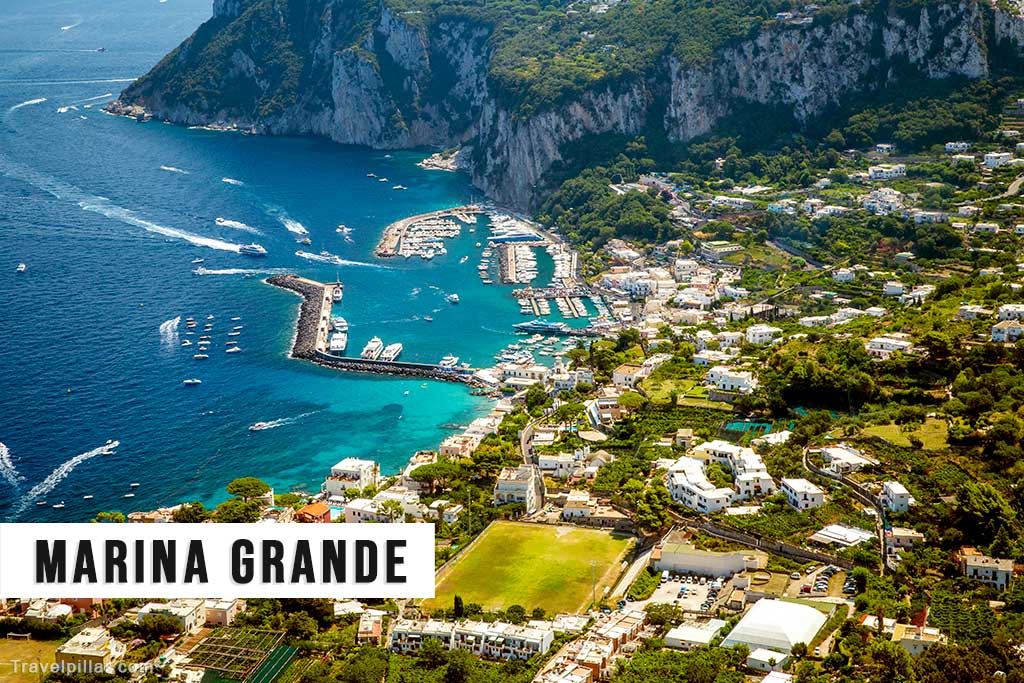
Marina Grande is the main port of Capri and the primary point of arrival for ferries and hydrofoils from Naples and Sorrento. Located on the island’s northern coast, it includes a marina, a small beach, and various shops and restaurants. Transportation services such as the Capri funicular, buses, and taxis operate from here. Marina Grande also serves as the departure point for boat tours around the island and visits to sea caves.
Google map 4.3/5
Arco Naturale
The Arco Naturale is a natural limestone arch located on the eastern side of Capri. Formed by erosion, it stands approximately 12 metres wide and 20 metres high, offering views of the sea through its opening. The arch is a remnant of a collapsed cave from the Paleolithic era. It is accessible via a walking path from Capri Town. The surrounding area includes additional trails and coastal viewpoints of geological interest.
Google map 4.8/5
Piazza Umberto I / Piazza di Capri (in Capri Town)
Piazza Umberto I, commonly known as the Piazzetta, is the main square in Capri Town. It functions as the island’s social and commercial centre, surrounded by cafés, the town hall, and the clock tower. Originally a marketplace, it is now a pedestrian-only area frequented by visitors and locals. The square is a starting point for exploring nearby attractions, including Via Camerelle, the Gardens of Augustus, and historic churches within the town.
Google map 4.5/5
Villa Lysis
Villa Lysis is a historic residence located on the northeastern coast of Capri, built in 1905 by French poet Jacques d’Adelswärd-Fersen. The villa combines Neoclassical and Art Nouveau architectural elements and was intended as a retreat for artistic and personal reflection. Surrounded by gardens and terraces, it offers views of the Gulf of Naples. Open to the public, Villa Lysis is accessed via a walking path from Capri Town and hosts occasional cultural events.
Google map 4.7/5