

Jatiluwih Rice Terraces are located in central Bali, on the slopes of Mount Batukaru, and form one of the island’s most extensive agricultural landscapes. The terraces cover a large area of hillside and are part of a UNESCO World Heritage-listed cultural landscape that recognises Bali’s traditional subak irrigation system. This cooperative water management method dates back centuries and reflects the organisation of farming communities across the island.
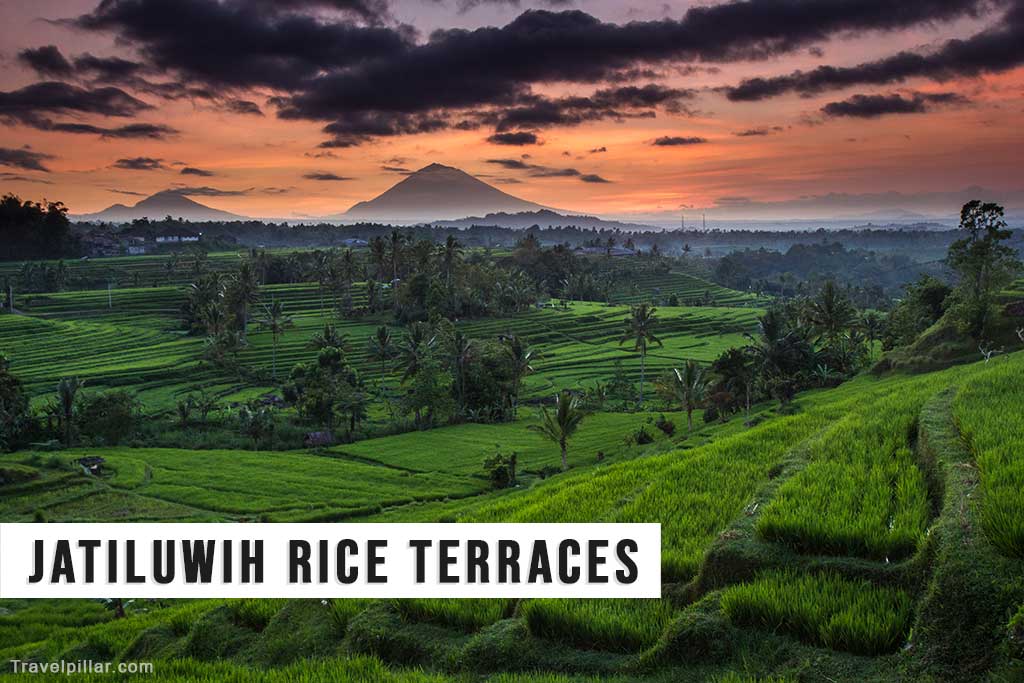
The terraces are defined by a series of stepped fields following the natural contours of the land. Water is distributed through channels and small dams, allowing rice to be cultivated across varying elevations. The system is designed to maximise efficiency while maintaining soil stability and consistent irrigation. The appearance of the terraces changes throughout the growing cycle, from flooded fields to green growth and eventual harvest.
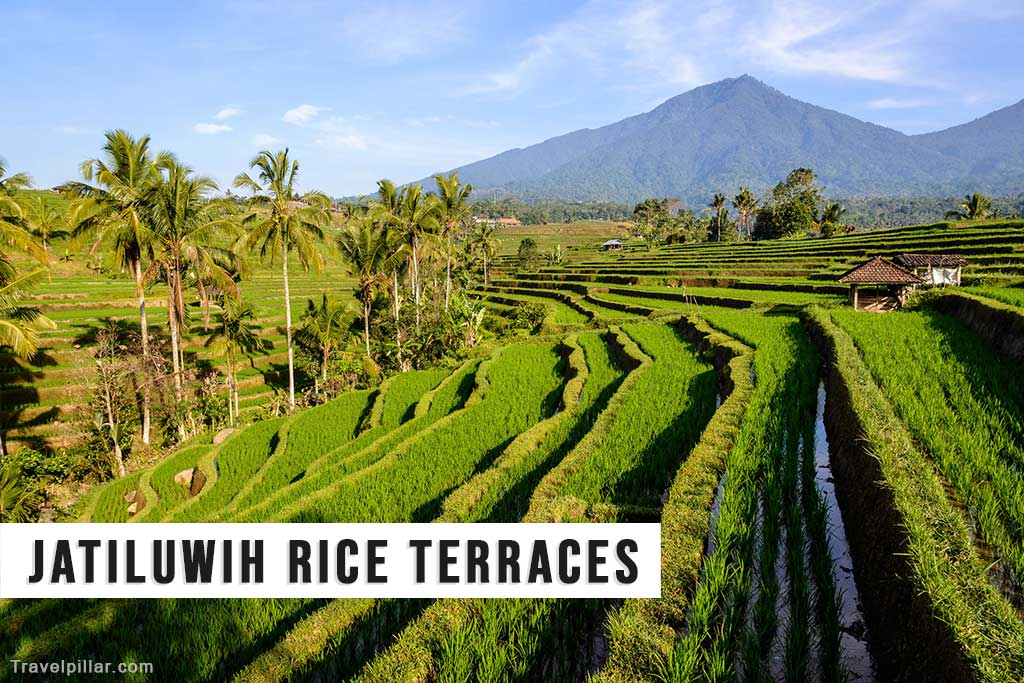
Unlike smaller or more compact sites, Jatiluwih offers a broader and less developed setting. The scale of the terraces allows for extended walking routes through the landscape, with paths running alongside fields and irrigation channels. The area is relatively quiet compared to more visited locations, providing a clearer view of working agricultural practices.
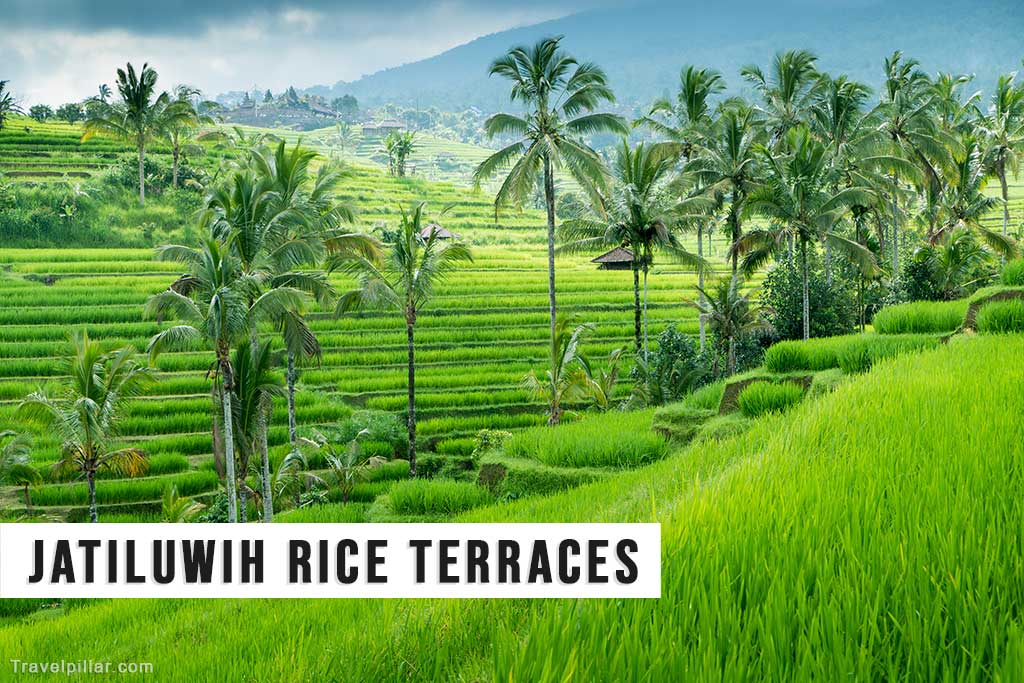
Farming activity continues throughout the terraces, and visitors can observe different stages of rice cultivation depending on the time of year. The site reflects the ongoing use of traditional methods, rather than a preserved or staged environment.
Facilities are limited but include small restaurants and viewing points located along access roads. These provide opportunities to observe the terraces from higher ground without entering the fields.
Jatiluwih is situated approximately 40 kilometres north-west of Ubud and requires a longer journey than more central attractions. However, its scale and continuity make it one of the most representative examples of Bali’s agricultural landscape, combining practical land use with long-established cultural systems.