
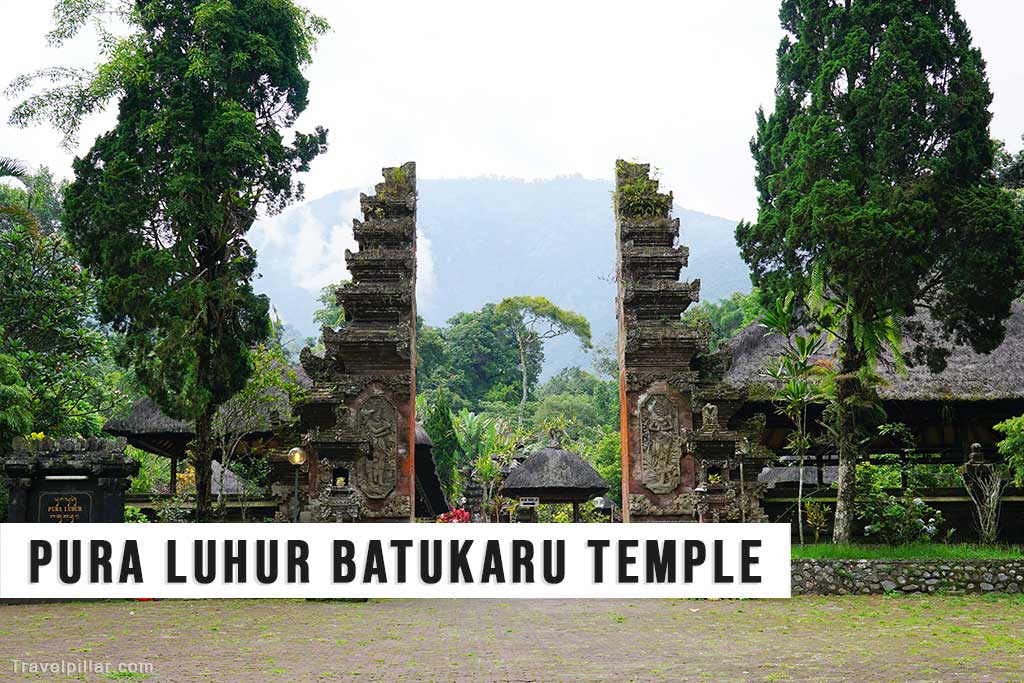
Pura Luhur Batukaru is a Hindu temple located on the southern slopes of Mount Batukaru, the second-highest volcano in Bali. Situated in a forested and relatively remote area in Tabanan Regency, the temple forms part of a network of directional temples believed to protect the island. Its setting, surrounded by dense vegetation and agricultural land, contributes to a quieter atmosphere compared to more frequently visited coastal temples.
The temple dates back to at least the 11th century and is associated with the region’s historical rulers. It is dedicated to the ancestral spirits and deities linked to Mount Batukaru, which is considered a sacred site in Balinese Hindu belief. The temple plays an ongoing role in religious ceremonies and local spiritual practices.
Architecturally, Pura Luhur Batukaru follows a traditional Balinese layout, with a series of courtyards arranged along a central axis. Access is through a split gateway, leading into landscaped grounds that include shrines, pavilions and multi-tiered meru towers. The structures are constructed from stone and wood, with carved decorative elements reflecting religious symbolism. Compared to more elaborate temple complexes, the design is relatively restrained, consistent with its natural surroundings.
The temple is set within a protected forest area, and the environment is characterised by tall trees, moss-covered stone and a cooler, more humid climate. This setting reinforces its function as a place of retreat and spiritual reflection. The surrounding region is also associated with agriculture, particularly rice cultivation supported by traditional irrigation systems.
Visitors are required to follow local customs, including wearing a sarong and sash when entering the temple grounds. As it remains an active place of worship, certain areas are reserved for religious use.
Pura Luhur Batukaru is located approximately 40 kilometres from Ubud and is often visited in combination with nearby sites such as the Jatiluwih Rice Terraces. Due to its more remote location, it receives fewer visitors, offering a more subdued experience.
Today, the temple continues to serve both religious and cultural functions, reflecting the relationship between landscape, agriculture and spirituality in Bali.
Google map 4.8/5