

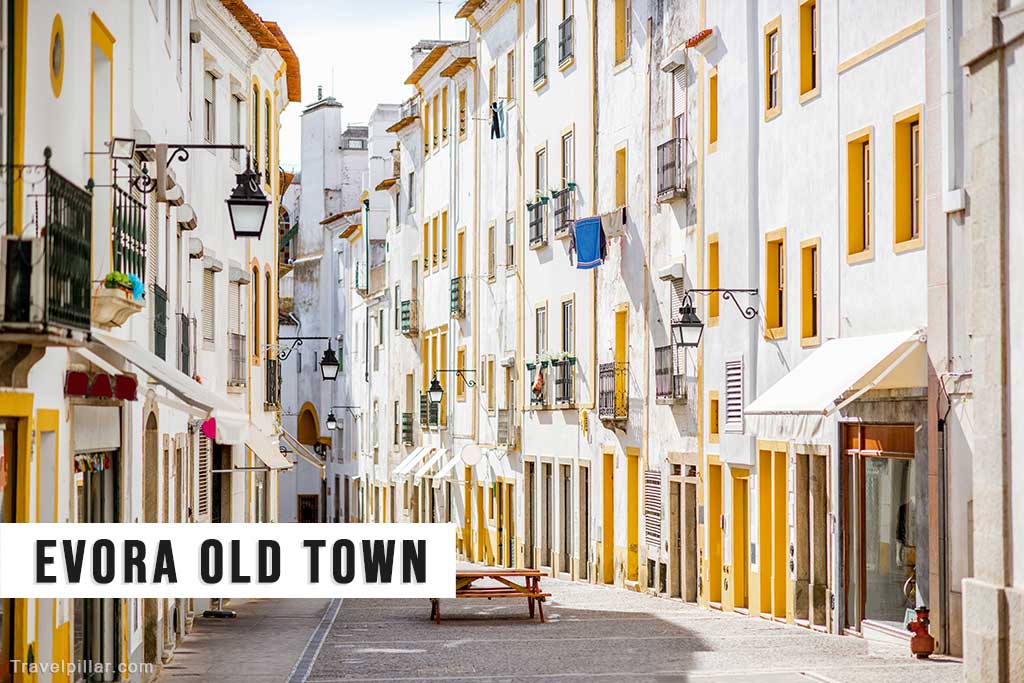
Evora is a historic city in the Alentejo region of Portugal, known for its well-preserved medieval architecture and rich cultural heritage. Designated a UNESCO World Heritage site, the city boasts a diverse array of monuments, including the Roman Temple of Evora, the Gothic-style Cathedral of Evora, and the 16th-century Chapel of Bones. Evora’s charming streets, whitewashed houses, and vibrant squares create an inviting atmosphere for visitors seeking to explore the city’s history and traditions in a picturesque setting.
Google map of Evora
The Best Things to Do in Evora
The Roman Temple of Évora
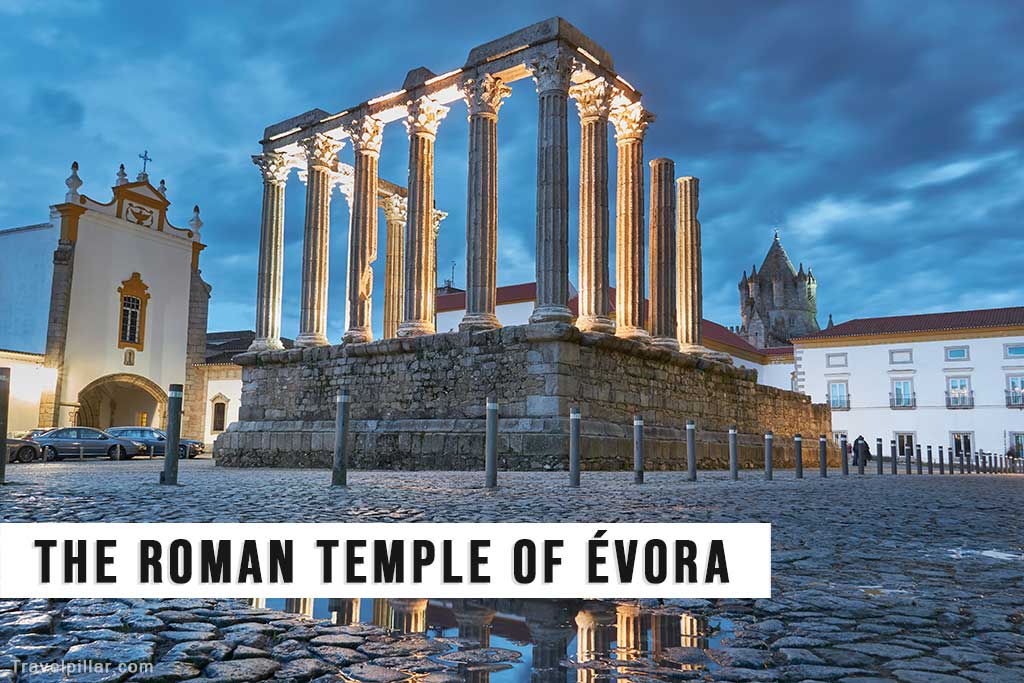
The Roman Temple of Évora is an ancient temple in the heart of Evora, Portugal, dating back to the 1st century AD. Often referred to as the Temple of Diana, the well-preserved ruins showcase Corinthian columns and a granite base, serving as a testament to the city’s Roman past. As one of the most significant Roman monuments in Portugal, the Roman Temple of Évora offers visitors a unique opportunity to explore the architectural and historical legacy of the Roman Empire.
Google map 4.6/5
Évora Cathedral
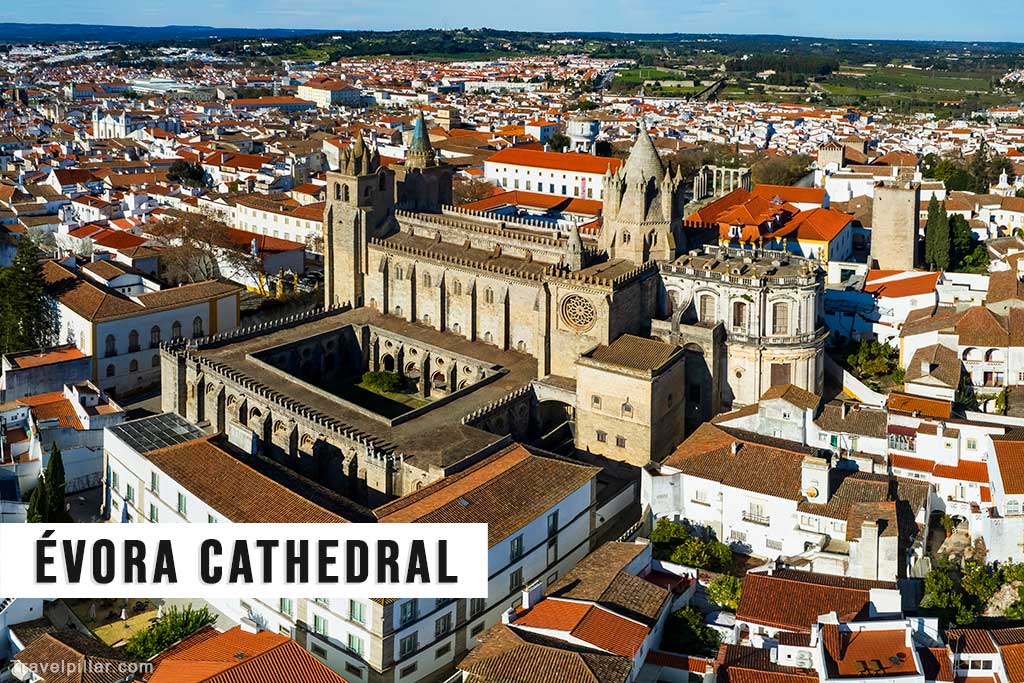
Évora Cathedral is a prominent Gothic-style religious building in Évora, Portugal, constructed between the 12th and 14th centuries. The cathedral features a striking façade, a mix of Romanesque and Gothic elements, and an impressive interior adorned with intricate stone carvings and religious artworks. Visitors can explore the cathedral’s cloisters, museum, and rooftop terrace, offering panoramic views of the city. Évora Cathedral is an important religious and architectural landmark in the region.
The Chapel of Bones (Capela dos Ossos)
The Chapel of Bones is a unique 16th-century chapel in Évora, Portugal, located within the Church of St. Francis complex. The chapel’s walls and columns are adorned with the bones and skulls of over 5,000 individuals, serving as a memento mori and a reminder of human mortality. A haunting inscription at the entrance reads, “We bones that are here, for yours we wait.” The Chapel of Bones offers visitors a thought-provoking and eerie experience in a historical setting.
Google map 4.5/5
Praça do Giraldo
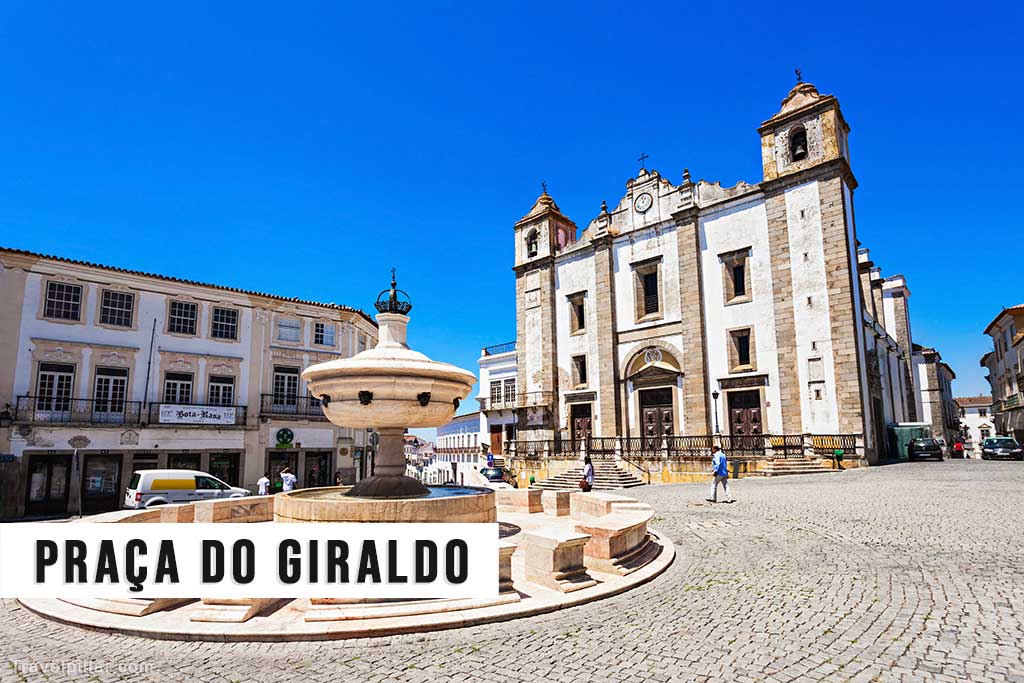
Praça do Giraldo is the main square in Évora, Portugal, serving as the city’s bustling hub of activity and social life. Surrounded by historic buildings, including the Church of St. Antão and the Renaissance-style Henriquina Fountain, the square is lined with cafes, shops, and restaurants. Praça do Giraldo is a vibrant gathering place for both tourists and locals, offering a lively atmosphere for enjoying the city’s history, culture, and culinary delights.
Google map 4.5/5
Museu Nacional Frei Manuel do Cenáculo
Museu Nacional Frei Manuel do Cenáculo, also known as the Évora Museum, is a cultural institution in Évora, Portugal, housing an extensive collection of art and artifacts. The museum’s exhibits span from prehistory to the 18th century, showcasing items such as Roman mosaics, medieval sculptures, and Portuguese paintings. Housed in the former Archbishop’s Palace, the Museu Nacional Frei Manuel do Cenáculo offers visitors an opportunity to explore the region’s rich history and artistic heritage.
Google map 4.6/5
Igreja e Mosteiro de São Francisco
Igreja e Mosteiro de São Francisco is a Gothic-Manueline style church and monastery in Évora, Portugal. Founded in the 13th century, the complex features a unique combination of architectural styles, including an ornate Manueline entrance and Gothic nave. The Church of St. Francis is also home to the Chapel of Bones, a macabre yet fascinating attraction. Visitors can explore the church’s interior, cloisters, and historical artifacts, appreciating its architectural and religious significance.
Google map 4.6/5
Évora Museum
Évora Museum, also known as Museu Nacional Frei Manuel do Cenáculo, is a cultural institution in Évora, Portugal, housing a comprehensive collection of art and artifacts. The museum’s exhibits span from prehistory to the 18th century, showcasing items such as Roman mosaics, medieval sculptures, and Portuguese paintings. Housed in the former Archbishop’s Palace, Évora Museum offers visitors an opportunity to explore the region’s rich history and artistic heritage.
Google map 4.6/5
Jardim Público de Évora
Jardim Público de Évora is a verdant public park in the heart of Évora, Portugal, offering a peaceful retreat from the city’s bustling streets. The park features tree-lined paths, manicured gardens, and a small pond, providing a tranquil setting for leisurely strolls and relaxation. Visitors can also explore the park’s historical monuments, such as the 16th-century Duke of Cadaval Palace and the remains of the medieval city wall, adding an extra layer of interest to this urban oasis.
Google map 4.6/5
Aqueduto da Água de Prata
Aqueduto da Água de Prata is a 16th-century aqueduct in Évora, Portugal, stretching approximately 18 kilometers from its source to the city. Designed by military architect Francisco de Arruda, the aqueduct was built to provide a reliable water supply to the city. The structure features a combination of Gothic and Renaissance elements, with its highest arches reaching 26 meters. Aqueduto da Água de Prata is an impressive example of engineering and architectural prowess, serving as an important historical landmark in Évora.
Google map 4.5/5
Ruínas Fingidas
Ruínas Fingidas are a series of artificial ruins located in Jardim Público de Évora, Portugal. Constructed in the 1860s as part of a Romantic garden design, the ruins were created to evoke a sense of history and mystique. Made from fragments of demolished buildings, the Ruínas Fingidas offer a unique and intriguing element to the park, providing visitors with a fascinating glimpse into the Romantic era’s fascination with the past.
Google map 4.5/5
Almendres Cromlech
Almendres Cromlech is a prehistoric megalithic complex situated near Évora, Portugal. Dating back to the 6th millennium BC, it is one of the largest and oldest such sites in Europe. The complex comprises over 90 standing stones, arranged in an elliptical formation. Almendres Cromlech holds significant archaeological and historical importance, offering visitors the opportunity to explore a tangible connection to ancient civilizations and their spiritual practices.
Fitapreta Vinhos
Fitapreta Vinhos is a renowned winery located in the Alentejo region near Évora, Portugal. Established in 2004, Fitapreta Vinhos combines traditional Portuguese grape varieties with innovative winemaking techniques to produce high-quality wines. Visitors can tour the winery, learn about the winemaking process, and sample a range of wines in the tasting room. Fitapreta Vinhos provides an enjoyable and educational experience for wine enthusiasts and those interested in the region’s viticulture.
Google map 4.6/5
Wineries in the Évora Region
Wineries in the Évora Region are an essential part of the Alentejo wine route, offering visitors the opportunity to explore Portugal’s rich viticulture heritage. The region is known for producing a diverse range of wines, from full-bodied reds to crisp whites, using both indigenous and international grape varieties. Wineries such as Cartuxa, Herdade do Esporão, and Fitapreta Vinhos welcome visitors to tour their facilities, learn about the winemaking process, and sample their products. A visit to the wineries in the Évora Region provides a delightful and immersive experience for wine lovers and those interested in the local culture.
Alentejo Wine Route
Alentejo Wine Route is a popular tourist trail in Portugal, taking visitors through the scenic Alentejo region, known for its vast vineyards, rolling hills, and picturesque landscapes. The route includes visits to renowned wineries, such as Herdade do Esporão, Cartuxa, and Fitapreta Vinhos, where guests can explore the vineyards, learn about the winemaking process, and taste a variety of wines. The Alentejo Wine Route offers an enriching experience for wine enthusiasts, as well as those interested in discovering the region’s cultural, historical, and gastronomical heritage.