
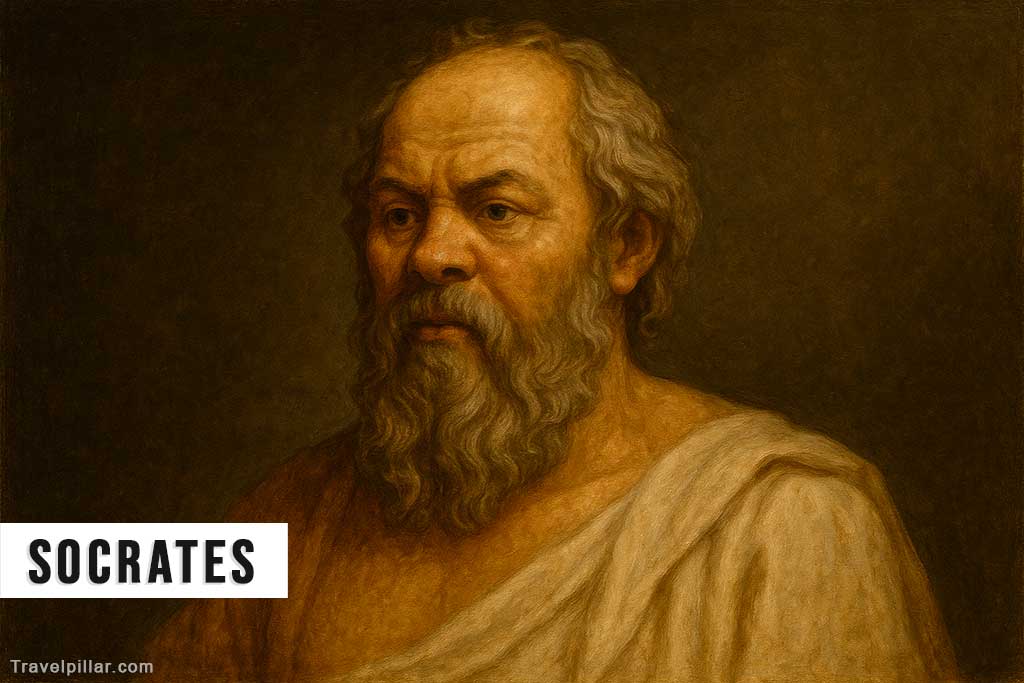
Socrates (469-399 BCE) is one of the most influential figures in the history of Western philosophy. He is known primarily through the writings of his students, most notably Plato. Socrates himself did not write any philosophical texts, but his teachings and methods had a profound impact on subsequent philosophical thought.
Socrates lived in Athens, Greece, during a period of intellectual and cultural flourishing. He devoted his life to the pursuit of wisdom and engaged in philosophical discussions with fellow Athenians. His unique approach to philosophy involved questioning others in order to expose inconsistencies, challenge assumptions, and arrive at a deeper understanding.
Socrates’ teaching method, known as the Socratic method or Socratic dialogue, involved a series of probing questions designed to encourage critical thinking and self-reflection. By engaging in dialogue, he aimed to lead others to a more accurate understanding of concepts, ethics, and the nature of reality. His method often exposed the limits of people’s knowledge, leading them to recognize their own ignorance.
Socrates was primarily concerned with ethical matters. He believed that the pursuit of knowledge and the development of virtue were essential for a well-lived life. He argued that the truly wise person is one who recognizes their own ignorance and constantly seeks to improve their understanding.
Socrates’ unconventional approach, along with his outspokenness and criticism of established authorities, eventually led to his trial and conviction. He was accused of impiety and corrupting the youth of Athens. Despite having the opportunity to escape, he chose to abide by the laws of Athens and accepted a death sentence, famously drinking poison hemlock as his execution.
Socrates’ legacy extends beyond his own lifetime. His teachings and methods laid the foundation for Western philosophy, inspiring subsequent generations of thinkers. Plato, his most famous student, further developed many of Socrates’ ideas in his own philosophical works. Through his emphasis on critical inquiry, intellectual honesty, and the importance of virtue, Socrates left an indelible mark on the philosophical tradition and continues to be celebrated as one of the greatest philosophers of all time.
>> Plato