
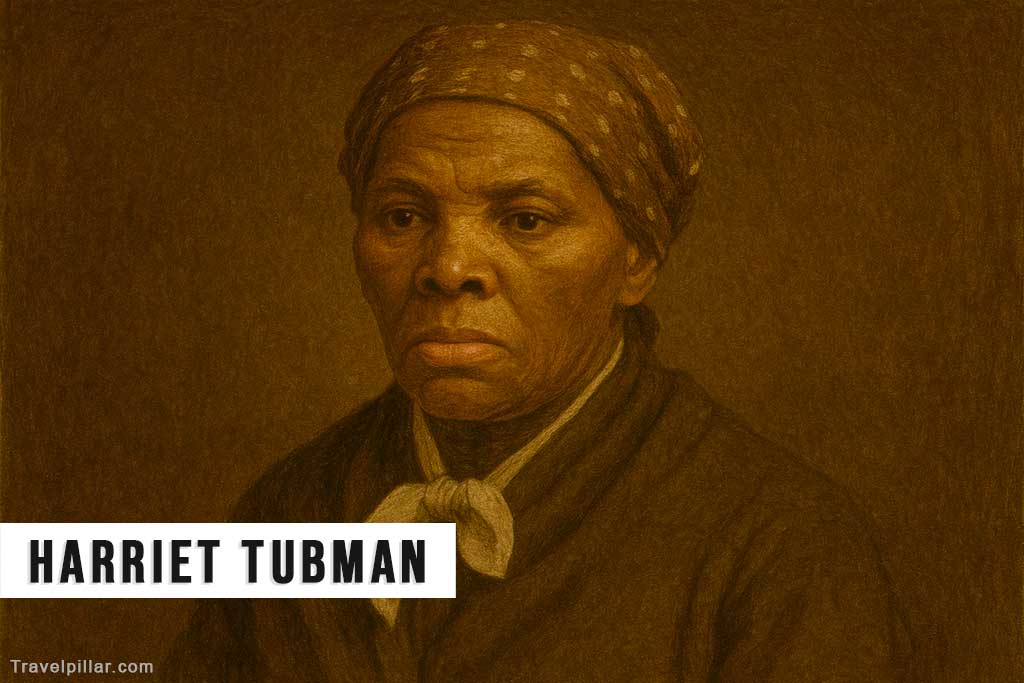
Harriet Tubman (1822–1913), born Araminta “Minty” Ross, was an American abolitionist, humanitarian, and Civil War spy, who became an enduring symbol of courage and freedom. She was born enslaved in Dorchester County, Maryland, experiencing first-hand the brutality of the institution. In 1849, Tubman bravely escaped her oppressors, journeying almost 90 miles north to Pennsylvania, where slavery was illegal.
However, her personal escape did not mark the end of her relationship with slavery. Instead, Tubman embarked on a perilous and courageous journey, undertaking approximately 13 clandestine missions back into the southern states. She navigated the so-called Underground Railroad, a secret network of safe houses and routes managed by abolitionist sympathizers, to liberate around 70 enslaved individuals, including her own family members.
Tubman’s actions earned her the epithet “Moses”, after the biblical figure who led the Israelites to freedom from Egypt. Her tireless efforts to defy and undermine the institution of slavery did not go unnoticed, making her a target for slaveholders and bounty hunters. Nonetheless, she never lost a “passenger” on her liberation missions.
During the American Civil War, Tubman served the Union Army in various capacities, including as a cook, a nurse, an armed scout, and a spy. Her intimate knowledge of the southern terrain proved invaluable, most notably in the Combahee River Raid, which resulted in the liberation of over 700 slaves in South Carolina.
After the Civil War, Tubman settled in Auburn, New York, where she advocated for women’s suffrage alongside her continued humanitarian endeavors, notably establishing a home for aged and indigent African Americans.
Tubman’s legacy continues to inspire and educate generations about the horrors of slavery and the fight for freedom and equality. In 2020, the U.S. Treasury Department announced that Tubman would be the new face of the $20 bill, a fitting tribute to her immeasurable contribution to the nation’s history.