
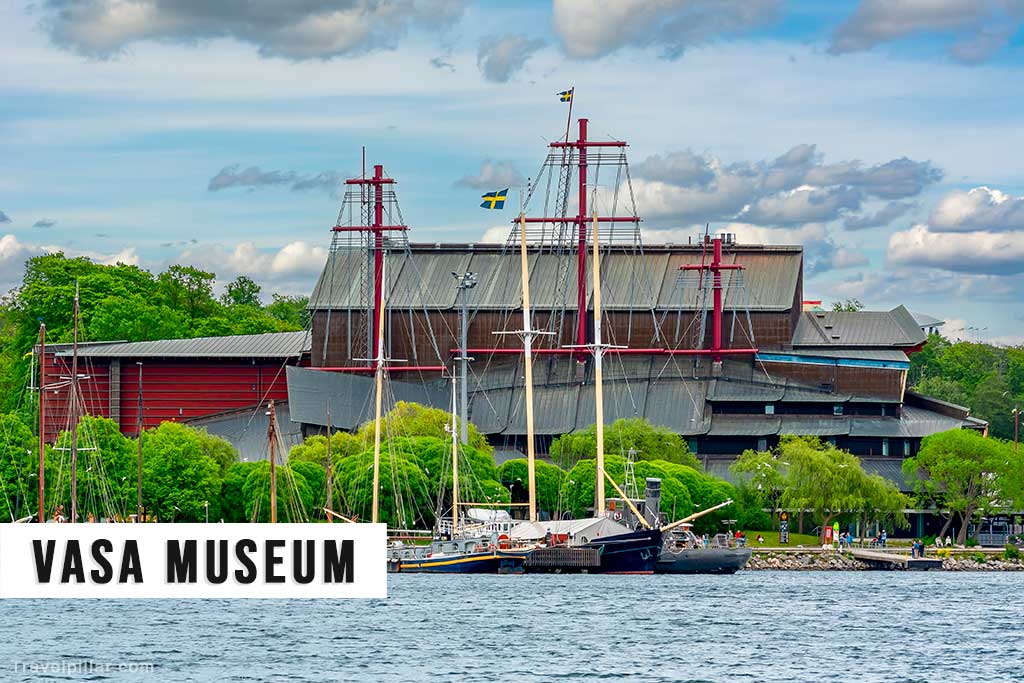
The Vasa Museum, or Vasamuseet, located on the island of Djurgården in Stockholm, Sweden, is a maritime museum that showcases the world’s only preserved 17th-century ship, the Vasa. Opened in 1990, it has since become one of Sweden’s most visited museums, attracting millions of tourists annually.

The Vasa was commissioned by King Gustavus Adolphus as part of the military expansion of Sweden. The ship, however, sank on its maiden voyage in 1628, just minutes after setting sail from Stockholm harbor. After more than three centuries submerged in the city’s harbor, the ship was rediscovered and salvaged in 1961 in a remarkably well-preserved condition, thanks to the low salinity of the Baltic Sea.
Today, the Vasa stands as the centerpiece of the museum, displayed in a purpose-built, climate-controlled hall. Its intricate carvings and sculptures, as well as the sheer scale of the ship, are striking, providing a unique insight into naval architecture, art, and warfare of the early 17th century.
The museum also houses nine other exhibitions that delve into various aspects of the ship and its era, including life onboard, the salvage operation, and the process of conserving the ship. Additionally, a cinema shows a film about the Vasa in multiple languages.
The Vasa Museum offers a remarkable journey into maritime history, showcasing a blend of tragedy, triumph, and testament to the craftsmanship of the past. The Vasa, as both a symbol of a historic disaster and an impressive artifact, continues to captivate audiences from around the world.
Official website: https://www.vasamuseet.se/en
Google map 4.7/5 of the Vasa Museum